Last reviewed:
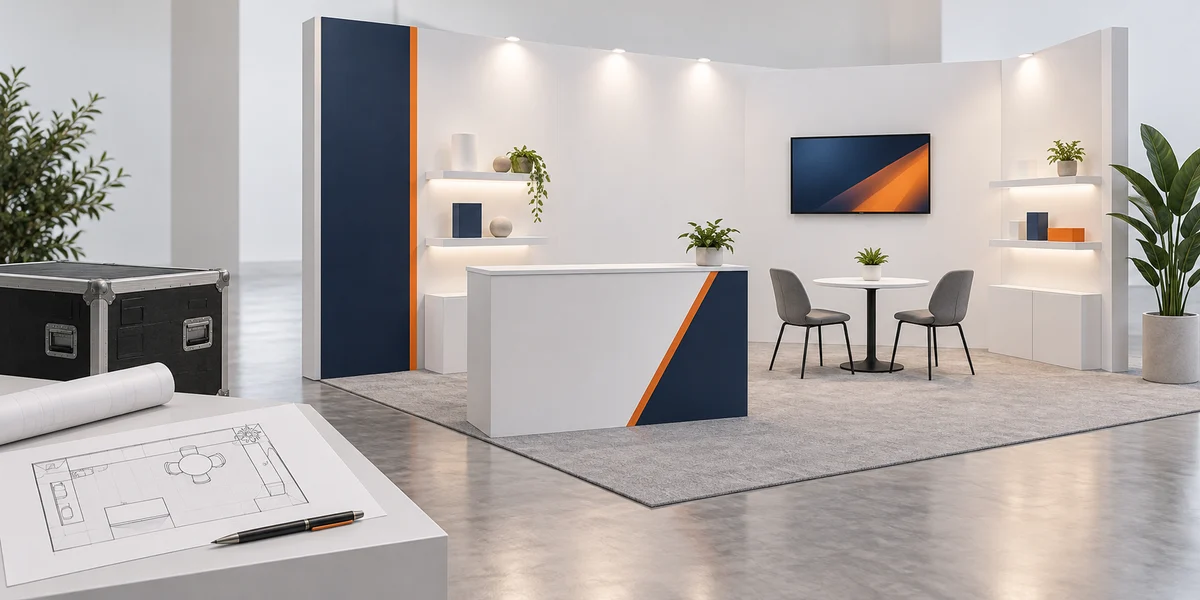
Booth-planning concept showing an open entrance and coordinated display areas.
Before planning a booth at Anaheim Convention Center, confirm your assigned space, current show manual, venue requirements and service providers. These inputs help you compare builder proposals, plan freight and installation, and identify expenses outside the booth quote.
Start With Anaheim Convention Center Resources and Your Show Manual
Use the Anaheim Convention Center planning resources to locate facility information, floor plans and published policies. Then obtain the exhibitor manual for your specific event, hall and booth assignment. Check three layers of requirements:
- Venue requirements: Applicable facility, safety, construction and access requirements, together with relevant fire and building requirements.
- Show requirements: Booth height, setbacks, sightlines, approvals, service-order deadlines and move-in or move-out assignments.
- Designated providers: Who may perform electrical, rigging, material handling, internet and other services, and how those services are ordered.
The show manual does not replace applicable venue, fire or building requirements. If documents conflict or leave a responsibility unclear, seek written clarification from show management and the relevant provider before finalizing the design.
Confirm the ACC Area and Rigging Scope
Identify whether your space is in Exhibit Halls A–E, ACC North, the Arena or another area before ordering suspended elements. The 2026 ACC rigging guidelines publish these distinctions:
| ACC area and task | Published arrangement to verify |
|---|---|
| Arena, Arena Lobby, ACC Levels Two and Three (including Ballrooms A–E), and ACC North 200 | Encore approves rigging designs and exclusively supplies rigging labor and hoists. |
| ACC North 100 and Exhibit Halls A–E: production rigging | Encore exclusively supplies production rigging labor and hoists. |
| ACC North 100 and Exhibit Halls A–E: exhibit booths and signage | The customer’s general service contractor may provide this rigging. Confirm the approved arrangement for your event. |
This table summarizes the published 2026 distinctions. Verify your assigned area, task, drawings and provider before ordering; the current event manual may add requirements.
The ACC’s on-site services resource names Smart City Networks for connectivity and Encore as its preferred production partner. Match each service order to the event’s current provider instructions, including electrical, internet and booth installation.
For an event-specific example, the ADLM 2026 exhibitor manual separates facility regulations, event rules, contractor submissions and service orders. Its dates and instructions apply to that event; use your own show’s current documents for planning.
What Should You Confirm Before Finalizing a Booth Design?
Confirm the booth dimensions, open sides, hall location and surrounding aisles before committing to structures or fabrication. A booth design that overlooks the assigned show’s height limits, structural approval process or rigging restrictions may need revision after production planning has started.
Design exploration can begin while documents are being collected, but mark unresolved requirements as assumptions. Review them before approving drawings, purchasing components or booking services.
| Planning input | Why it affects the booth | Where to confirm |
|---|---|---|
| Footprint, configuration and open sides | Determines entrances, visitor flow and display placement. | Assigned floor plan and show management. |
| Height, setbacks and structural approvals | Affects walls, towers, suspended elements and engineering needs. | Current show manual and applicable venue requirements. |
| Electrical, rigging and other designated services | Defines ordering responsibilities and work outside the builder’s scope. | Service kit, provider forms and written clarification. |
| Freight receiving and move-in assignment | Connects production, carrier arrival and installation scheduling. | Shipping instructions and event schedule. |
| Exhibitor-appointed contractor requirements | May require notices, insurance, registration and task-specific permissions. | Current EAC instructions and show management. |
Confirm Freight Receiving Separately From Visitor Access
Confirm the staff entrance and carrier check-in point as separate items. A campus floor plan can identify your hall, but the event’s freight instructions should establish the receiving route. Do not select a truck entrance from the public venue address alone.
- Locate the assigned hall and booth: Use the approved event floor plan and ACC facility information.
- Select the receiving method: Confirm whether the shipment is going to an advance warehouse or direct-to-show receiving.
- Check the full shipping instructions: Verify the destination address, show name, booth number, labels and receiving contact.
- Confirm check-in and unloading: Review any marshalling instructions, target arrival window, vehicle restrictions and permitted handling method with the designated provider.
- Brief the carrier and installation team: Share the verified route and dates with the carrier, then coordinate crew access and work around expected booth delivery.
The ADLM 2026 manual’s service-order section, for example, provides separate freight labels, marshalling directions, Quick Facts and a targeted freight schedule. Obtain the corresponding documents for your own show instead of reusing that event’s addresses or dates.
Keep these documents in a shared project folder and record each deadline, responsible person and approval status. A previous Anaheim or Las Vegas plan can provide questions to ask, but cannot establish the rules for a new event.
How Do Freight and Material Handling Affect Your Anaheim Booth Budget?
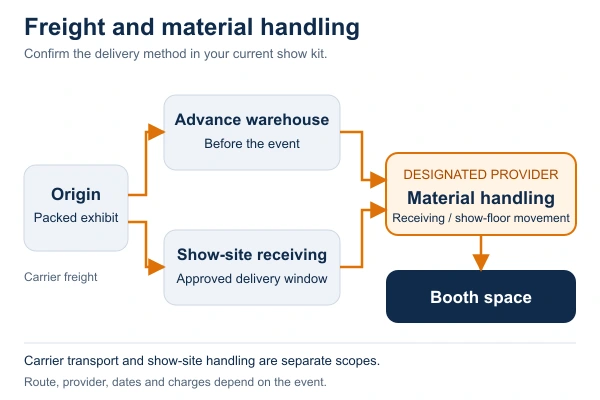
Transportation moves your shipment between its origin and the receiving destination. Material handling, often called drayage, covers receiving and movement under the show’s designated service arrangements. Depending on the event scope, it may include unloading, booth delivery, empty-container storage and outbound handling.
Budget these separately unless your written proposal explicitly combines them. Our Exhibit Transportation Services page explains the freight-planning handoffs; What Is Drayage? explains the distinction from carrier shipping.
Check the Actual Rate Basis and Handling Conditions
Material handling may be billed per hundredweight (CWT), per pound or under another event-specific schedule. For example, Fern’s published material handling information describes both hundredweight billing and a per-pound program. Use the rate sheet for your assigned event to establish the applicable method and charges.
Before estimating the charge, confirm:
- The rate basis, any minimums and rounding rules.
- Shipment classifications, packaging and weight documentation.
- Receiving locations, dates and applicable late or off-schedule charges.
- What inbound handling, empty storage and outbound handling include.
- Any approved hand-carry or personally operated vehicle delivery arrangements.
Some shows may permit limited hand-carry or personally operated vehicle deliveries. That permission does not automatically allow unrestricted dock access, self-unloading or exemption from handling charges. Check the current service kit before selecting a delivery method.
Advance Warehouse vs. Direct-to-Show Delivery
If both methods are offered, compare the full route and schedule.
| Delivery method | How it works | What to confirm |
|---|---|---|
| Advance warehouse | Freight is received at the designated warehouse before transfer to the show. | Acceptance dates, address, labels, shipment restrictions, handling charges and expected booth delivery timing. |
| Direct-to-show | Freight arrives at the event’s designated receiving location during an approved window. | Target assignment, check-in procedures, carrier availability, unloading arrangements and crew scheduling. |
Neither advance warehouse nor direct-to-show delivery is automatically cheaper or more reliable. Compare receiving dates, handling charges, shipment restrictions, carrier availability and installation schedules before choosing. If a deadline is missed, confirm available alternatives and charges before rerouting the freight.
Plan Packing and Return Freight Together
Record packed dimensions, weights, crate numbers and component inventory. Choose cases or crates around protection, handling access and reuse; reducing weight should not compromise structural or shipping safety. Shipment consolidation may help where minimums apply, but savings depend on the actual rate sheet.
Confirm empty-container storage, return timing, repacking responsibility, outbound paperwork and carrier pickup instructions before move-in. The booth is not ready for return freight simply because dismantling has begun.
How Should You Evaluate a Trade Show Booth Builder for Anaheim?
Compare proposals using the same design and service scope. A lower total may reflect different materials, fewer components or excluded services. Ask how a custom or Trade Show Booth Rental approach fits your display requirements, reuse plan and event schedule.
Questions That Clarify Responsibility
- Design and production: What drawings, graphics, finishes, equipment and pre-show checks are included?
- Approvals: Who reviews the current manual, prepares required submissions and obtains any engineering documents?
- Contractor access: Which EAC notices, insurance documents, registrations and labor arrangements must be completed?
- Installation: Who supervises move-in, coordinates provider handoffs and handles agreed show-floor adjustments?
- Schedule: How do design, graphic approval, production and dispatch connect to receiving and installation deadlines?
- Changes: Who approves additional work and communicates its cost and schedule impact?
Request evidence relevant to the proposed scope. A project in another city can demonstrate design or fabrication capability, but should not be presented as a completed Anaheim project.
What a Turnkey Booth Service Can Include
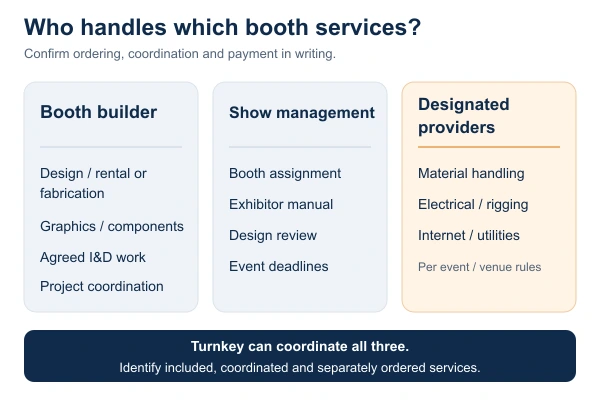
A turnkey booth service can combine design, fabrication or rental, graphics, transportation coordination, installation and dismantling under one project plan. The written proposal should identify included services, work coordinated through designated providers, and services that must be ordered and paid for separately.
Turnkey coordination does not mean the builder directly performs every official service. Use a responsibility table when comparing quotes:
| Service | May be included in the builder proposal | Confirm separately |
|---|---|---|
| Structure, graphics and furniture | Selected items and their agreed preparation or production. | Specifications, quantities, upgrades and return requirements. |
| Transportation | Carrier arrangements and agreed inbound or return freight. | Receiving method, waiting charges and material handling. |
| Installation and dismantling | Agreed crew work, supervision and packing tasks. | Permitted tasks, provider restrictions, labor schedule and changes. |
| Electrical, rigging, internet and other show services | Coordination or ordering assistance if stated. | Designated provider, order submission, payment and service limits. |
Review our Installation & Dismantling service scope and Trade Show Booth Cost Guides for related planning questions. Your event documents and itemized proposal determine the actual inclusions.
Planning Risks to Resolve Before Move-In
Review the project at each approval point rather than relying on a final check immediately before shipping.
- Unverified design assumptions: Confirm height, setbacks, structural submissions and hanging-element permissions before releasing affected components for production.
- Disconnected deadlines: Work backward from receiving, move-in and service-order deadlines. Include graphic approvals, production, packing and transit in the same schedule.
- Copied instructions: Recheck addresses, provider arrangements and labor permissions for this show. Instructions from another event or city may not apply.
- Unassigned tasks: Record who orders, coordinates, performs and pays for each service. Identify a move-in contact and a process for approving changes.
- An incomplete return plan: Confirm empty-container return, repacking, paperwork and carrier pickup before the booth arrives.
How Exhibitsmax Supports Anaheim Exhibitors From Las Vegas
Exhibitsmax offers Anaheim exhibit support through our Las Vegas-based design and fabrication operation. Our capabilities include booth design, graphics, production, pre-show preparation, transportation coordination and installation planning for U.S. trade shows.
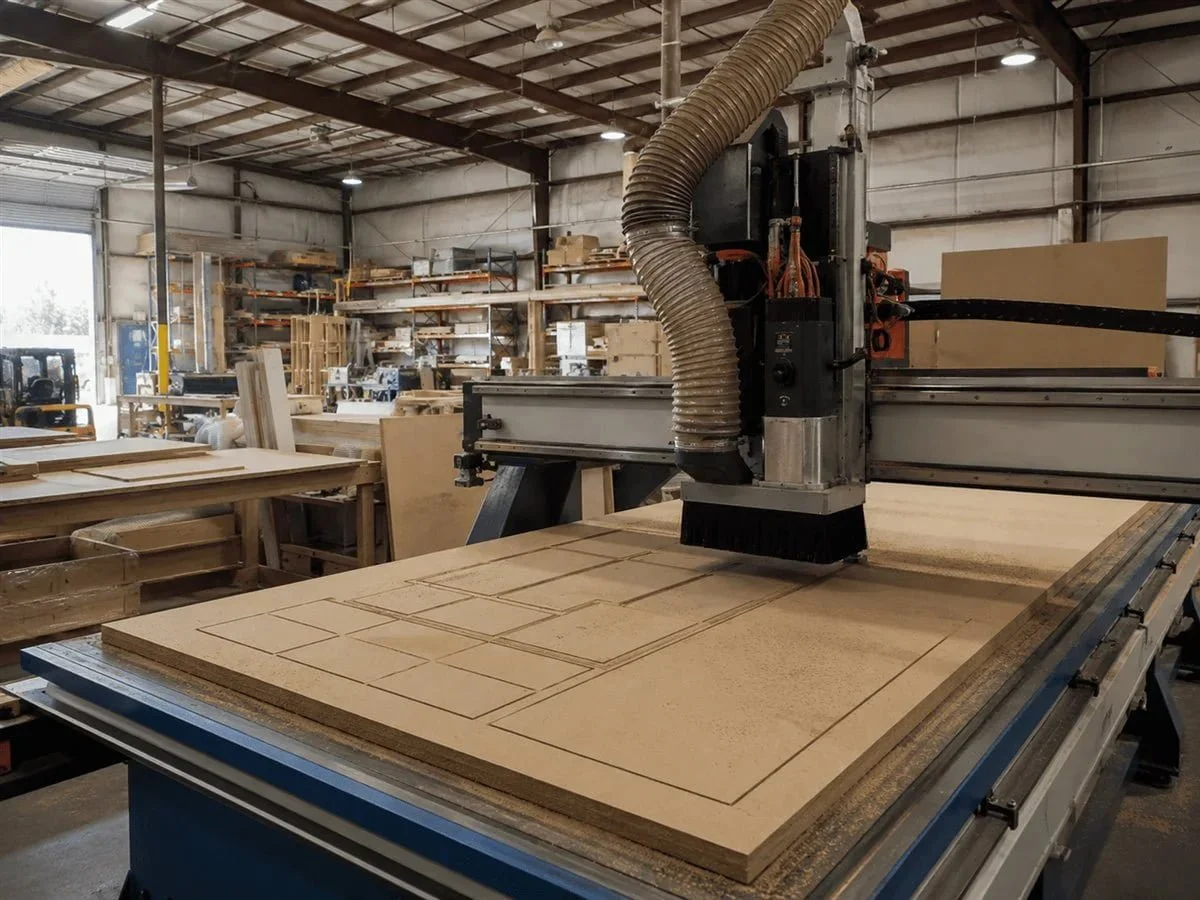
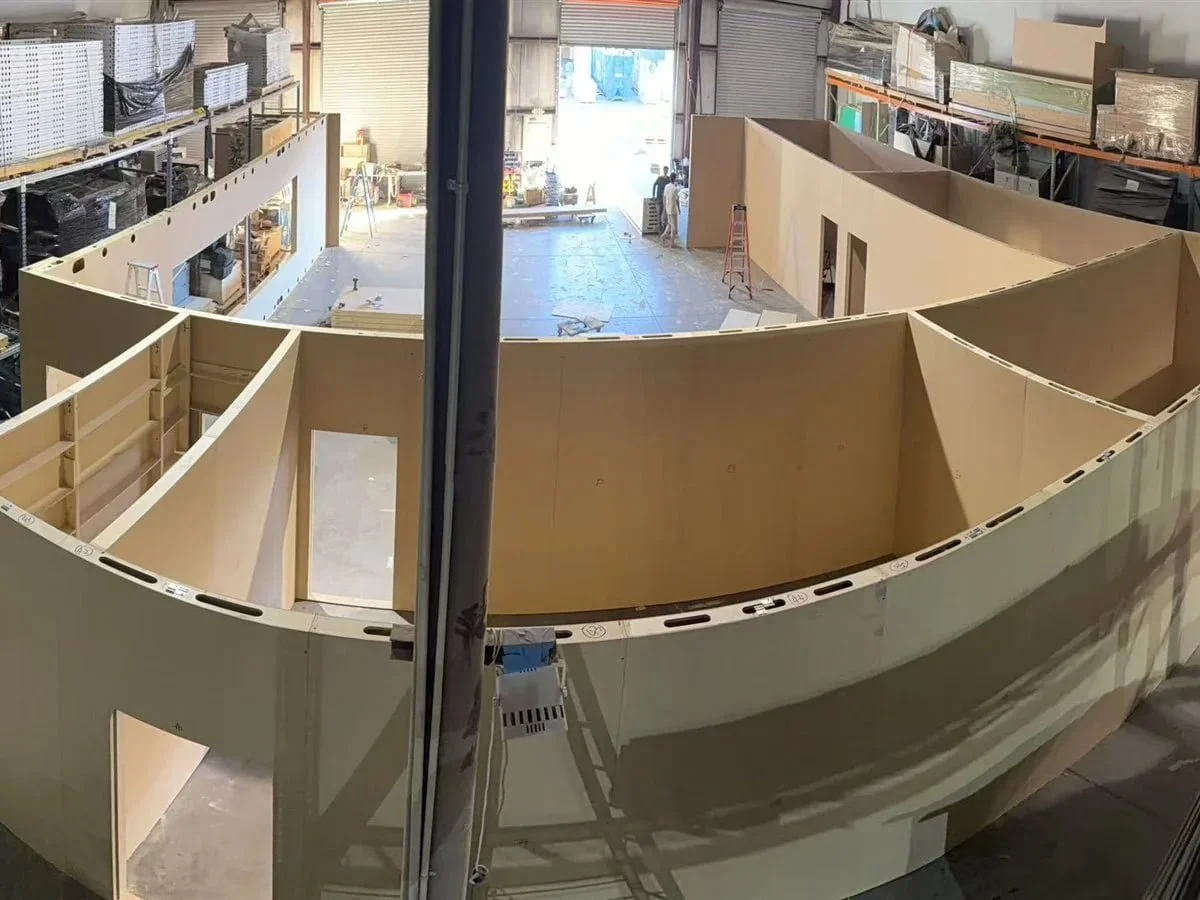
For a proposed Anaheim project, we review the assigned event requirements and coordinate the delivery and installation scope before move-in. Preparation can include component checks, graphic fit, lighting or AV checks, inventory and packing, as appropriate to the approved design and scope.
Explore our Anaheim trade show booth rental services to discuss the configuration, production requirements and service responsibilities for your event. The written proposal should connect Las Vegas preparation with the agreed receiving and installation arrangements in Anaheim.
Frequently Asked Questions
How early should I start planning a trade show booth for Anaheim Convention Center?
For many custom booth projects, starting several months before move-in provides time for design, approvals, production, freight and installation planning. Larger structures, international shipping or complex AV may require more time, while simpler rental booths may need less. Work backward from your show’s actual deadlines; this is planning guidance, not a universal ACC requirement.
Can I use my own booth builder at Anaheim Convention Center?
Check your event’s exhibitor-appointed contractor policy before appointing a builder. Outside contractors may need insurance, registration, notices or other approvals. Some tasks may be reserved for designated providers, so confirm both contractor eligibility and the work your builder may perform.
What is the difference between show management and designated service providers?
Show management organizes the event and manages exhibitor requirements and approvals. Designated providers perform particular services under the event or venue arrangements. Material handling, electrical, internet and rigging may involve different providers; check the current service kit rather than assuming one company supplies everything.
Do Anaheim Convention Center requirements differ from Las Vegas requirements?
They can. Requirements reflect the venue, applicable fire and building rules, event policies, assigned booth configuration and service arrangements. Verify the current documents even when reusing a booth that was approved for a previous Las Vegas show.
What should a written booth proposal clarify?
It should identify deliverables, exclusions, approval responsibilities, production and delivery milestones, contractor documentation, installation supervision and separate show-service expenses. Record who can authorize changes and how additional work is priced and scheduled.
Planning a Trade Show Booth at Anaheim Convention Center?
Share your show name, booth size, move-in date, display requirements and current exhibitor manual. Our team can help review the booth design, production, logistics and installation scope for your Anaheim event.