LED Display Rental
Select a display configuration around your booth, audience and visual goals. Final equipment specifications and availability are confirmed in the proposal.
EXHIBITSMAX · TRADE SHOW DISPLAY SOLUTIONS
Exhibitsmax provides LED video wall rental for trade show booths across the United States. We plan the display around viewing distance, booth layout and content, then coordinate equipment, playback, support, delivery, installation and testing. Our Las Vegas-based team connects the screen requirements with your exhibit design and show-site schedule.
Request LED Rental Quote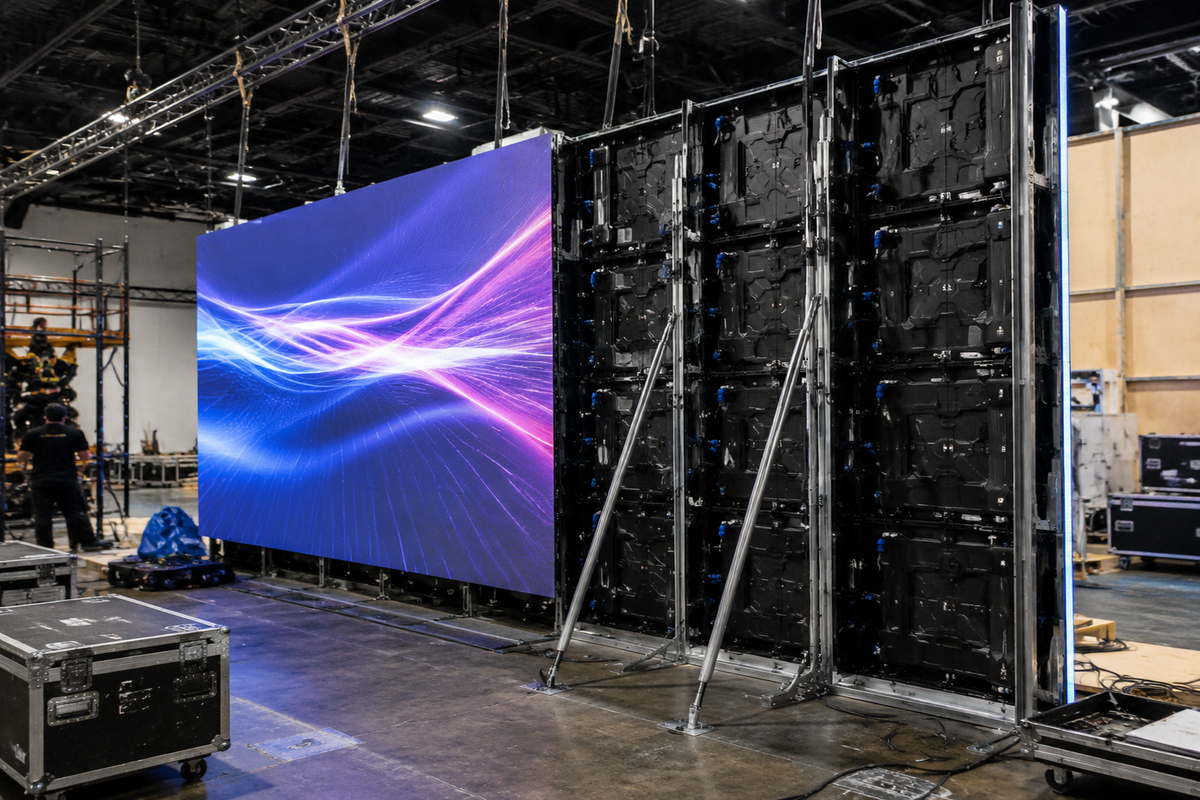
Select a display configuration around your booth, audience and visual goals. Final equipment specifications and availability are confirmed in the proposal.
Plan the processor, source devices and content mapping so approved media fits the LED canvas.
Coordinate a suitable support approach with the booth design, equipment requirements and authorized venue contractors.
Identify electrical and signal requirements, equipment locations and protected cable routes before installation.
Coordinate screen assembly, system configuration and content checks within the agreed move-in schedule.
Define show-hour assistance, troubleshooting contacts and support coverage in the project scope.
Consider both the nearest visitor and the audience across the aisle. The closest position matters when displaying fine detail.
Fit the screen to the available booth space and content format, while retaining circulation and service access.
Balance image detail, expected viewing distance and budget. Finer pitch is not automatically necessary for every display.
Product demos, presentations, live feeds and brand loops have different readability and playback needs.
Compare the floor footprint with overhead approval, structural and installation requirements.
Include equipment, service orders, labor and technical support when reviewing the complete rental plan.
Pixel pitch describes the spacing between LED pixels. Evaluate it together with viewing distance and content rather than choosing from a single specification.
For visitors standing near a demonstration wall, review text, interface details and product imagery at the expected viewing position.
For a presentation or meeting area, balance readable titles and visuals with screen dimensions and the planned audience position.
Use strong visuals and short messages that can be understood at a distance. Avoid assuming a finer pitch can compensate for undersized content.
Ask to review representative content on the proposed configuration. For background, see Planar’s explanation of LED pixel pitch.
An approved support system rests on the floor and needs space behind or around the display. Review the support footprint, stability, service access and impact on visitor circulation with the equipment and installation teams.
An overhead installation depends on approved hanging points, engineering and the show’s designated services. Confirm permitted height, submission requirements, labor and scheduling before committing to the design.
The final arrangement must follow the equipment manufacturer’s requirements, approved structural design and current show manual. Rigging and electrical services may require separate venue or official contractor orders.
Confirm the proposed equipment load and electrical service with the responsible provider. Coordinate power locations and access before the booth is assembled.
Identify playback devices, processor placement, content sources and connection requirements. Plan live feeds or presenter devices explicitly.
Plan protected routes around visitor paths, storage and work areas. Keep required equipment access available for setup and troubleshooting.
Content / Playback Source → Video Processor → LED Video Wall
Coordinate power, support and cable access alongside this signal path. This is a planning overview; the equipment team defines the final system.
Finalize the screen canvas before exporting the final media. A standard video file may need a different layout for a wide, tall or custom LED configuration.
Match the approved aspect ratio and native pixel dimensions. Confirm formats and playback compatibility with the technical team.
Use readable text, clear contrast and a short visual hierarchy. Review content from the expected visitor position.
Plan loop duration, transitions, source devices and any live switching. Include a usable fallback when a live source is part of the scope.
Integrate the display with trade show booth design so the screen supports product demonstrations and conversations.
Review the event, booth, audience, content goals and rental dates.
Define screen dimensions, pitch, support and playback needs.
Confirm proposed equipment, inclusions, exclusions and schedule.
Review media dimensions, formats and playback requirements.
Coordinate delivery and authorized installation with the move-in sequence.
Check display output, signal and approved content before handover.
Provide the technical assistance agreed for the event.
Pack the equipment and coordinate removal during move-out.
Testing connects the approved content with the selected rental system before visitors arrive. The check sequence is tailored to the equipment and project scope.
Check cabinets, processor setup, source connections and the complete signal path.
Verify mapping, playback, text readability and appropriate brightness and color settings.
Review power and cable arrangements, operating responsibilities, support contacts and agreed spare-equipment provisions.
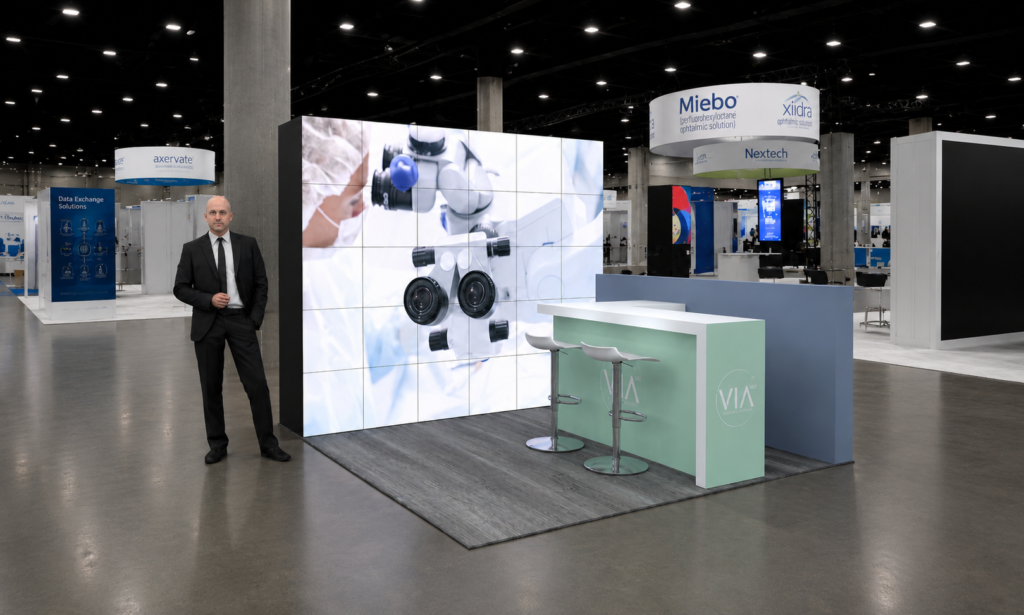
Los Angeles Convention Center · Los Angeles
A large video wall formed the focal backdrop for surgical imagery in this compact exhibit. The display creates a visual focus while preserving space for a reception counter and visitor conversations.
View Full Project →Start with the closest expected viewing distance and the detail in your content. Small text and close-up product demonstrations may need a finer pitch than large visuals viewed across an aisle. We review screen dimensions, native resolution, content and budget together before recommending an available system.
A ground-supported system may be suitable when the booth layout accommodates the approved support structure and required footprint. A rigged system requires a suitable approved overhead arrangement. The final choice depends on equipment, structural review, venue requirements and the current exhibitor service manual.
Do not assume original video production is included in the equipment rental. We review supplied files and playback requirements as part of the proposed scope. Any content creation, editing, resizing or live-production support should be identified and priced separately in the quotation.
Confirm the display concept while the booth layout is being developed. Screen dimensions, support, content, power and installation timing affect other decisions and service orders. Allow additional planning time for rigged screens, unusual configurations and busy shows; the project schedule depends on equipment availability and the event’s deadlines.
Cost depends on screen size, pixel pitch, rental duration, processing and playback, support structure, freight, installation and technical support. Venue electrical service, rigging and other contractor charges can also affect the total. Send your show details and display goals so the proposal can identify included work, assumptions and separate charges.
Send the show name, city, venue, dates, booth dimensions and open sides. Add your preferred screen size and orientation, approximate viewing distance, content format, playback source and support preference. If these are not decided, share the display’s purpose and budget so we can help define the configuration.
Coordinate the screen with your exhibit layout, branding and visitor experience. Explore Booth Design →
Connect LED setup with the wider show-site installation sequence. Explore I&D →
Coordinate equipment delivery and outbound handoff with the agreed rental schedule. Explore Transportation →
Tell us about your show and display goals. If the screen specifications are undecided, choose “Not Sure” and share what visitors need to see.