
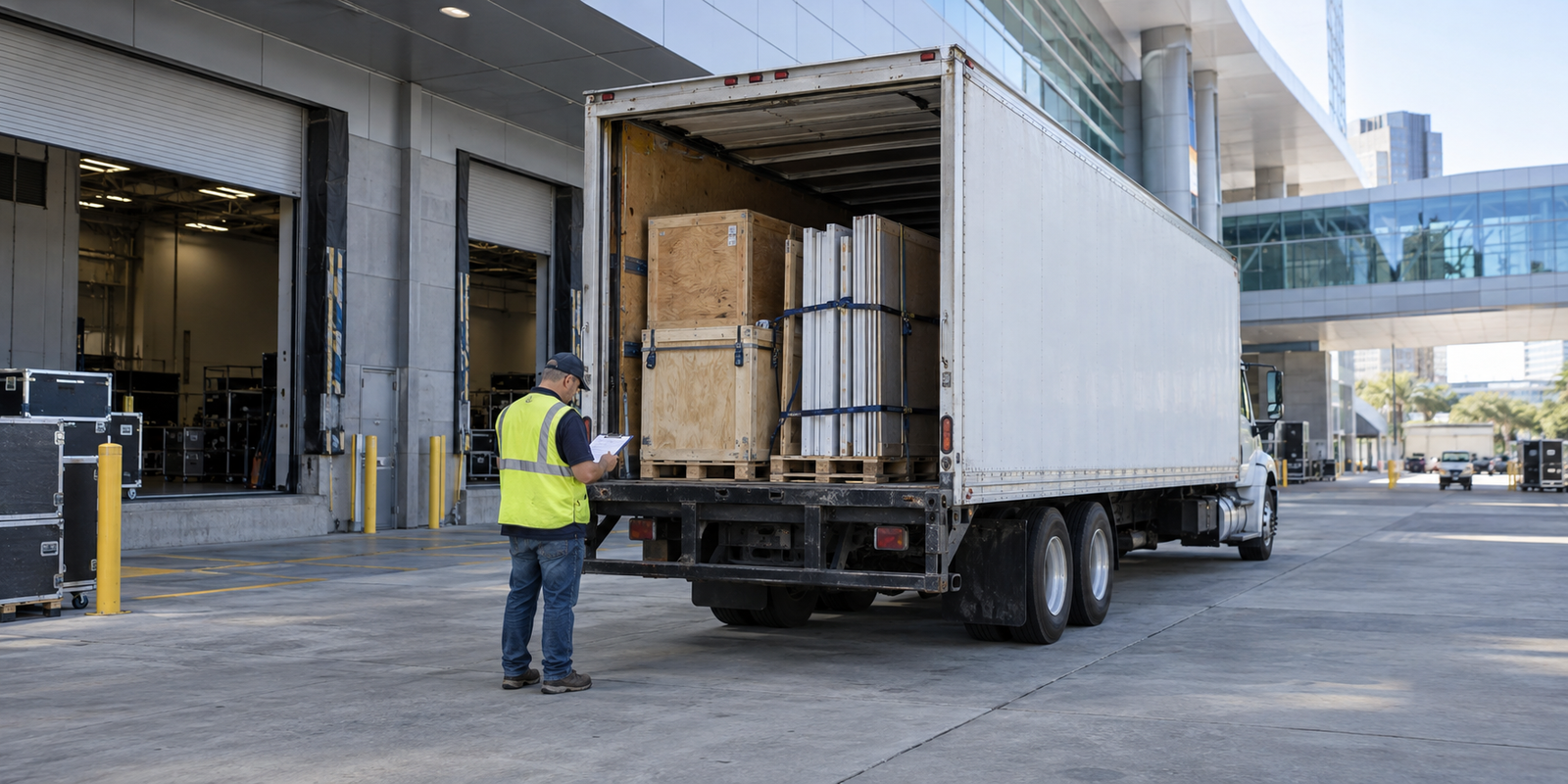
Trade show shipping cost usually starts with the carrier or freight-forwarder charge to move exhibit materials from their origin to an advance warehouse or show-site receiving point. But that freight quote is only one part of the total logistics budget. Drayage or material handling, warehouse-related charges, special handling, detention, overtime, and other show-site costs may apply separately.
For budgeting purposes, evaluate the total exhibit logistics cost, not just the carrier quote. The most reliable plan connects freight timing, packaging, the current exhibitor manual, and the installation schedule before the shipment leaves its origin.
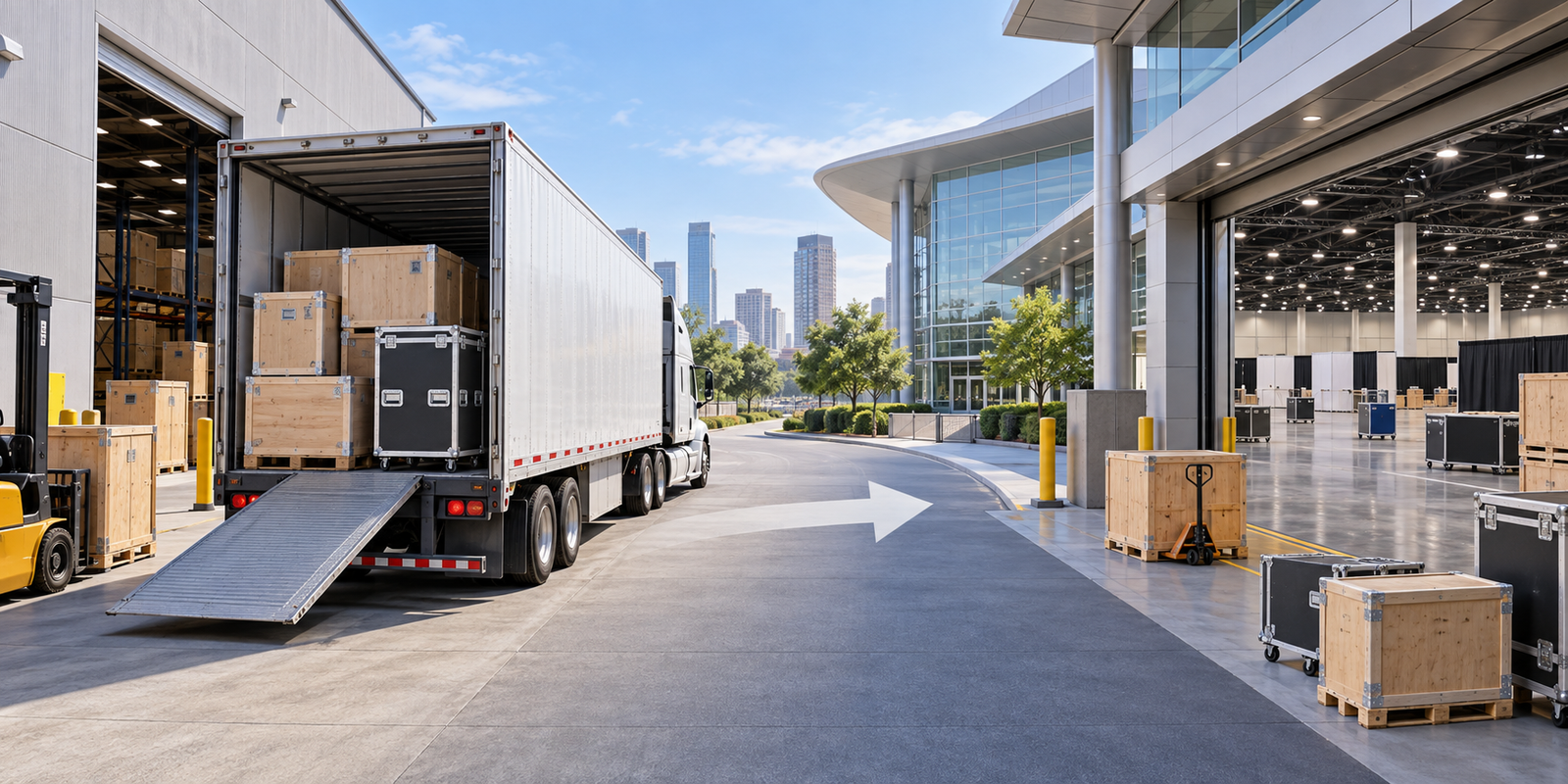
Key takeaway: Freight shipping and drayage are different services. A freight quote moves your exhibit to the receiving point; show-site material handling moves it through the official receiving process to the booth space when that service applies.
What Makes Up the Total Exhibit Logistics Cost?
Exhibit logistics is a sequence of handoffs. The freight charge is only one part of that sequence, and the responsible party can change from the carrier to the official show contractor as the shipment reaches the event.
| Cost component | Usually controlled by | What can change the cost |
|---|---|---|
| Line-haul freight | Carrier or freight forwarder | Weight, dimensions, distance, mode, pickup and delivery timing |
| Advance-warehouse receiving | Current show contractor or warehouse | Receiving window, storage period, shipment condition |
| Drayage / material handling | Current official show contractor | Current rate structure, shipment weight, handling classification, delivery route |
| Carrier waiting or detention | Carrier | Dock access, appointment timing, waiting time |
| Overtime or off-target delivery | Carrier, show contractor, or labor provider | Published move-in schedule and service terms |
| Special handling | Current show contractor | Packaging, load configuration, equipment and labor required |
A carrier quote can look reasonable on its own while the total exhibit logistics cost rises after show-site handling, timing-related charges, or special requirements are added. Ask each provider which part of the chain is included and which part must be ordered through the current show program.
How Do Freight Weight, Dimensions, and Route Affect Shipping Cost?
Freight pricing commonly reflects the shipment’s physical profile and the route it must travel. Confirm the final weights and dimensions after the booth is packed rather than relying on an early production estimate.
The main freight variables are:
- Total weight and piece count: More pieces can create more pickups, labels, and loading decisions.
- Dimensions and density: Large, lightweight crates can affect carrier pricing differently from compact, dense freight.
- Origin and destination: Distance, carrier coverage, local access, and delivery location all matter.
- Mode and service level: Standard ground, LTL, dedicated service, air freight, and expedited freight have different cost and timing tradeoffs.
- Pickup and delivery conditions: Appointments, liftgate needs, limited-access locations, and waiting time can change the carrier’s scope.
- International documentation: Customs procedures, commodity details, and document accuracy can affect release timing and the freight plan.
A useful shipping brief identifies the show, venue, booth number, origin, crate count, dimensions, weights, target receiving route, and target move-in date. It gives the carrier and booth team the information needed to plan the same shipment against the same schedule.
How Do Timing and Delivery Windows Affect Trade Show Shipping Cost?
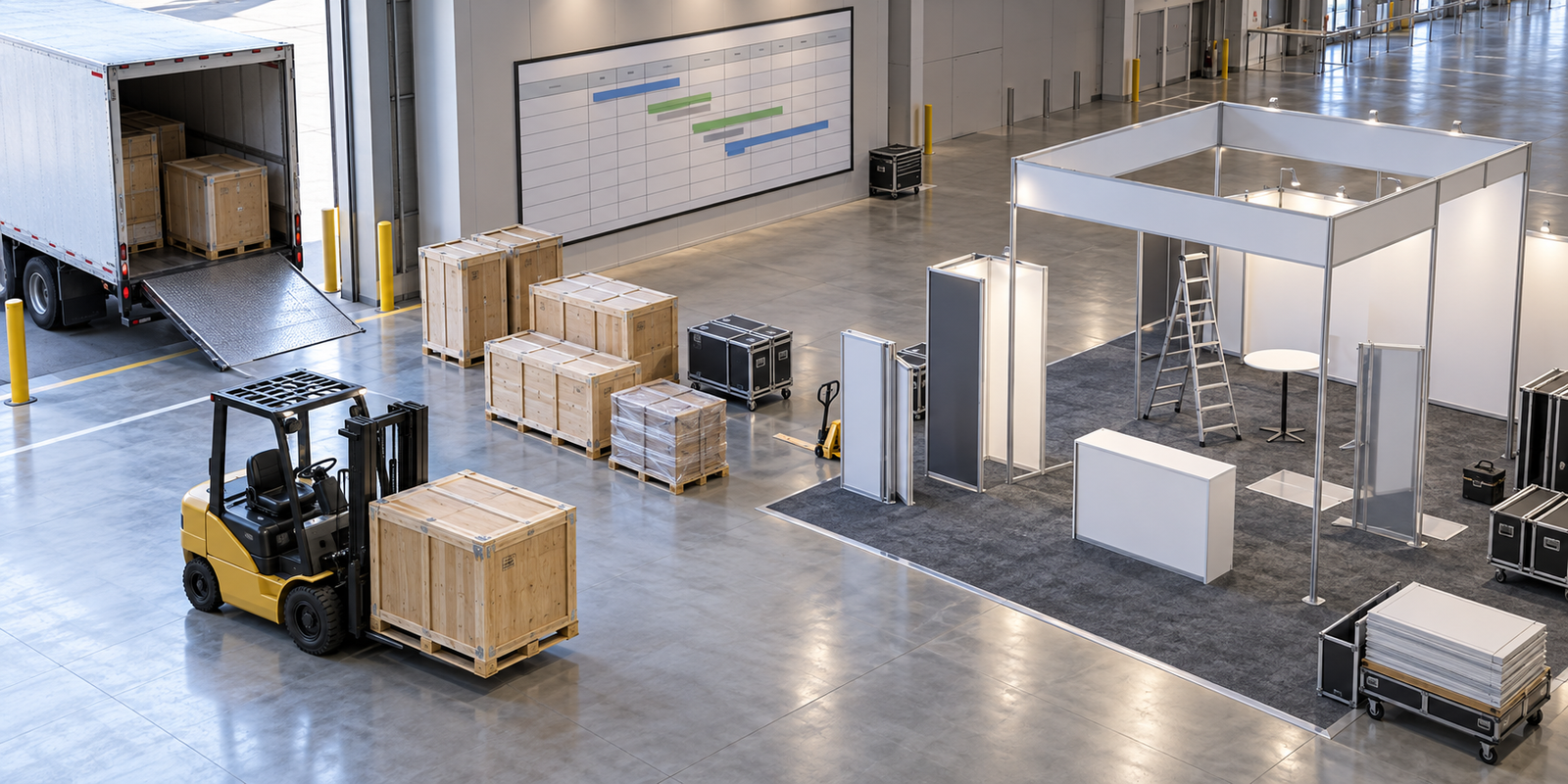
Timing is where freight planning has the greatest effect on the on-site build. The current exhibitor manual and contractor rate sheet establish the actual advance-warehouse window, direct-to-show delivery procedure, target move-in schedule, and installation deadline. Those dates vary by event.
| Timing scenario | Possible cost consequence | Installation effect |
|---|---|---|
| Freight arrives after the assigned or target move-in window | Delivery may be delayed; overtime or other charges may apply under current service terms | Less time available for installation |
| Advance-warehouse deadline is missed | Direct-to-show delivery may require more coordination or may not fit the move-in plan | Freight may not be available when the crew is scheduled |
| Customs clearance takes longer than planned | Domestic transfer may need to be rebooked or expedited | Higher risk of a compressed build window |
| Carrier waits at the dock | Carrier detention or waiting charges may apply | Adds freight cost even if delivery is completed |
| Freight is booked late | Fewer carrier options and potential expedited-service cost | More schedule risk |
Plan From the Current Show Schedule Backward
Do not use a generic number of shipping days for every event. Start with the current show’s published receiving and move-in dates, then work backward through the actual transit, pickup, customs, and packing requirements.
For international shipments, a carrier transit estimate is not the same as a confirmed customs-release timeline. Depending on the goods and import plan, temporary-entry options such as an ATA Carnet may be relevant. Confirm the appropriate procedure with an experienced freight forwarder or customs broker before committing to the shipping schedule.
How Does Packaging Affect Exhibit Freight Cost and Readiness?
Packaging affects more than damage protection. It influences how the shipment is measured and handled, whether it can move efficiently through the receiving process, and whether booth components arrive ready for installation.
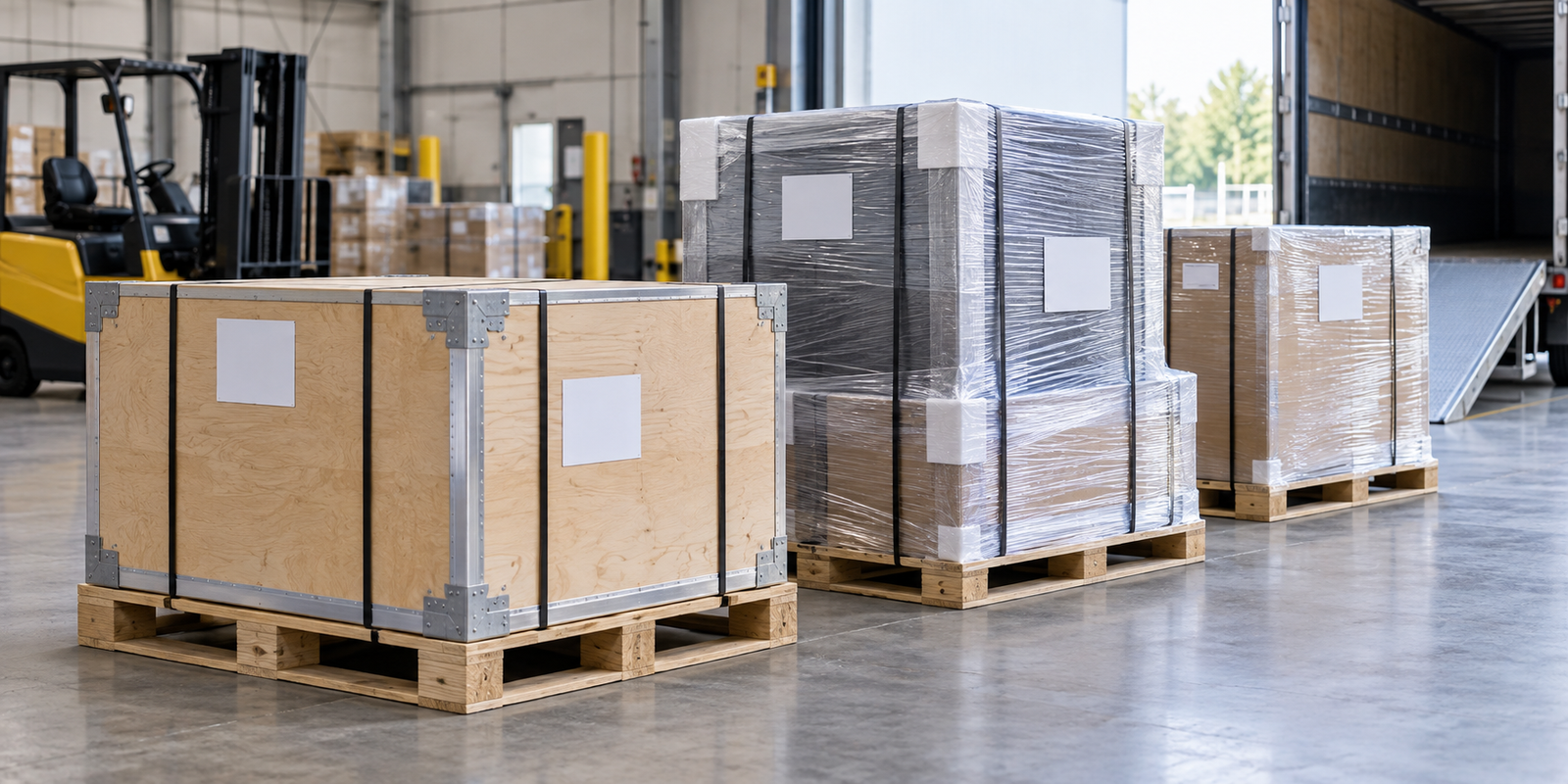
Depending on the current contractor’s published rate sheet, conditions that may trigger special-handling requirements can include uncrated freight, soft-sided or difficult-to-forklift skids, oversized pieces, unstable loads, or freight that requires special equipment or positioning. Always use the definitions in the current show’s materials-handling information rather than assuming that a prior event’s classifications apply.
Use the Official Label Format
The current exhibitor manual normally provides label templates and the required delivery address. Before shipping, confirm that every piece identifies:
- Exhibitor company name
- Show name and dates
- Booth number
- Piece count, such as
1 of 4 - Correct advance-warehouse or direct-to-show address
- Return-freight instructions when required
Correct labels and complete piece counts help the receiving team match freight to the event and booth. They are a practical part of avoiding preventable delivery delays.
Where Does Drayage Fit Into the Shipping Plan?
Freight shipping and drayage solve different parts of the logistics chain. The carrier or freight forwarder transports exhibit materials to the designated receiving point. At many convention-center trade shows, material handling is an exclusive show service for freight delivered through the official receiving process; the current official contractor then moves the shipment through the venue process to the booth space. Exhibitor hand-carry and privately owned vehicle rules vary by event.
The current show’s rate sheet determines how material handling is structured, including its definitions, minimums, delivery routes, and any handling classifications. Avoid treating a rate or rule from another show as a permanent venue standard.
For the calculation details and show-service questions that belong to that topic, read Trade Show Drayage Cost: How Material Handling Charges Work.
Pre-Shipment Planning Checklist
Before any exhibit freight leaves its origin, confirm these items with the current show documents and your project team:
- Final dimensions and weight: Weigh and measure every crate or piece after packing.
- Packaging method: Check the current show contractor’s handling and packaging requirements.
- Official labels: Use the latest address and label template from the exhibitor manual.
- Receiving route: Choose advance warehouse or direct-to-show based on the current schedule and freight plan, not a general assumption about price.
- Customs plan: For international freight, confirm documents, broker responsibilities, and time buffer.
- Installation coordination: Share the piece list and expected arrival plan with the booth-builder and I&D team.
- Show-service deadlines: Calendar the current advance-order, warehouse, freight, and move-in dates.
- Move-out plan: Confirm how empties, outbound freight, return transportation, storage, or disposal will be handled under the event’s current procedures.
The objective is not to minimize the carrier quote in isolation. It is to get the exhibit to the right place, at the right time, and in a condition that supports installation without avoidable cost or delay.
Frequently Asked Questions
Does a trade show freight quote include drayage?
Usually, a carrier or freight-forwarder quote covers transportation to the stated receiving point. Material handling or drayage may be a separate show-service charge. Confirm the scope with both the freight provider and the current exhibitor manual.
Is advance warehouse or direct-to-show better for shipping?
Neither route is always better. The decision depends on the current receiving window, assigned move-in schedule, carrier reliability, freight readiness, and the contractor’s published service terms. Compare the full logistics plan rather than one line-item charge.
How early should trade show freight be shipped?
Work backward from the current show’s receiving and move-in requirements. Include packing, pickup, transit, any customs process, and contingency time. The right schedule is event-specific.
How do weight and dimensions affect exhibit freight pricing?
They can influence carrier pricing, equipment needs, pickup and delivery conditions, and show-site handling requirements. Use the packed shipment’s final measurements when requesting freight quotes.
Need Help Planning Exhibit Freight?
Share your show, venue, booth size, freight origin, crate count, final dimensions, estimated shipment weight, and target move-in date. Exhibitsmax can help coordinate an exhibit transportation plan with the booth build, installation schedule, and current show-service requirements.