
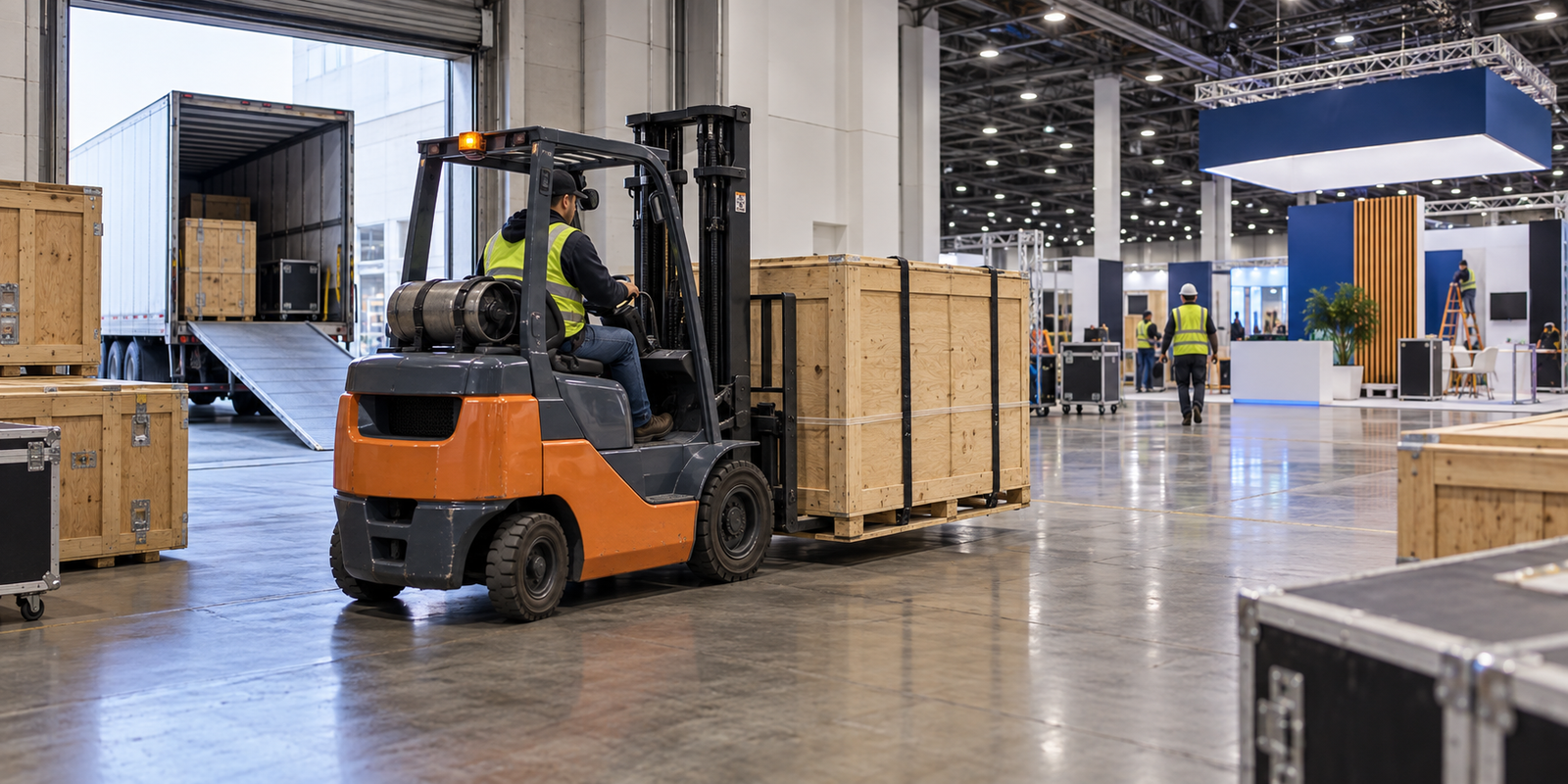
Trade show drayage cost is one of the easiest line items to miss in a U.S. exhibit budget. Your carrier delivers the booth freight to the show’s receiving location, but a separate material-handling charge may apply before the freight reaches your booth space. The result can be an unwelcome cost surprise shortly before move-in.
Trade show drayage, often called material handling, is the charge for moving exhibit freight from an advance warehouse or the convention-center dock to the assigned booth space and then processing it for outbound pickup after the event. It is separate from the carrier’s transportation charge. The current exhibitor service manual and official contractor rate sheet determine whether the service applies and how it is billed.
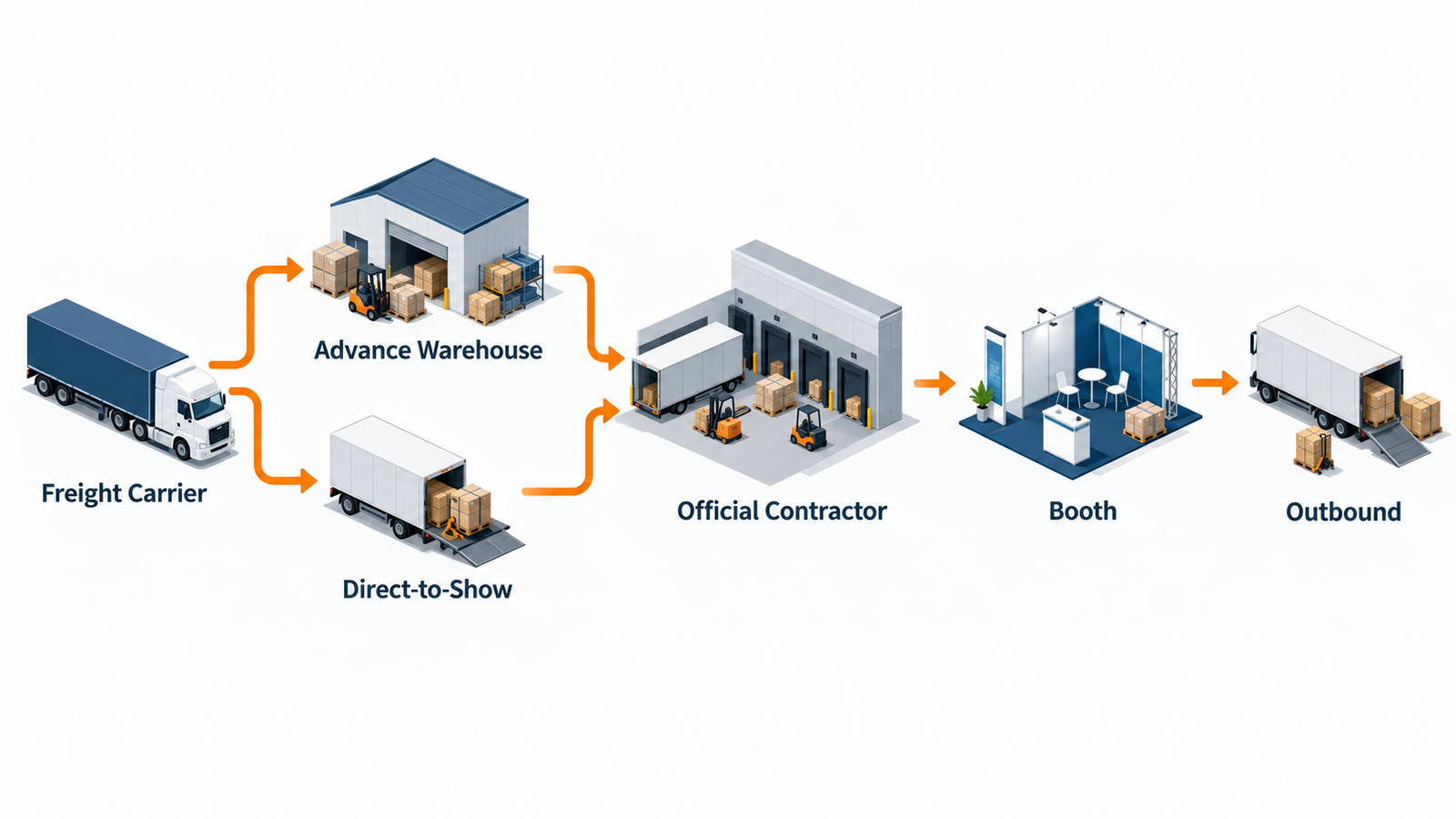
Understanding the distinction early helps exhibitors build a more complete budget, choose an appropriate delivery route, and coordinate freight with the booth schedule.
Is Drayage the Same as Freight Shipping?
No. Freight shipping transports booth materials from their origin to the show’s receiving location. Drayage or material handling covers the movement from that receiving point to the booth space, empty-container handling during the show where applicable, and outbound processing after the event.
For many U.S. trade shows, the organizer appoints an official service contractor to handle material movement inside the venue. That contractor’s current rate sheet, deadlines, and service rules control the applicable charge. A carrier quote therefore does not necessarily include material handling.
This is why a show budget should separate freight transportation from show-service costs. For a broader budget review, see Hidden Trade Show Booth Costs: 12 Fees Exhibitors Often Miss. When freight, warehouse timing, and installation need to work as one plan, Exhibit Transportation Services can support the coordination.
What Material Handling May Cover
Depending on the current show program, the material-handling scope can include:
- Receiving freight at the advance warehouse or show-site dock
- Moving freight to the assigned booth space
- Storing and returning empty containers during the show, where offered
- Moving packed freight to the outbound area after dismantle
Always review the current show documents because included services, delivery routes, and billing structures can differ by event.
How Are Trade Show Drayage Charges Calculated?
Drayage can feel opaque because it is not always a single flat delivery fee. Trade show material handling is commonly or traditionally billed on a CWT basis — per 100 pounds of freight — with rate categories that may distinguish standard handling, special handling, and overtime. Some programs use flat, package, or other event-specific pricing. Minimums, surcharges, and deadline-based charges can also apply. The current exhibitor service manual and contractor rate sheet control the actual formula.
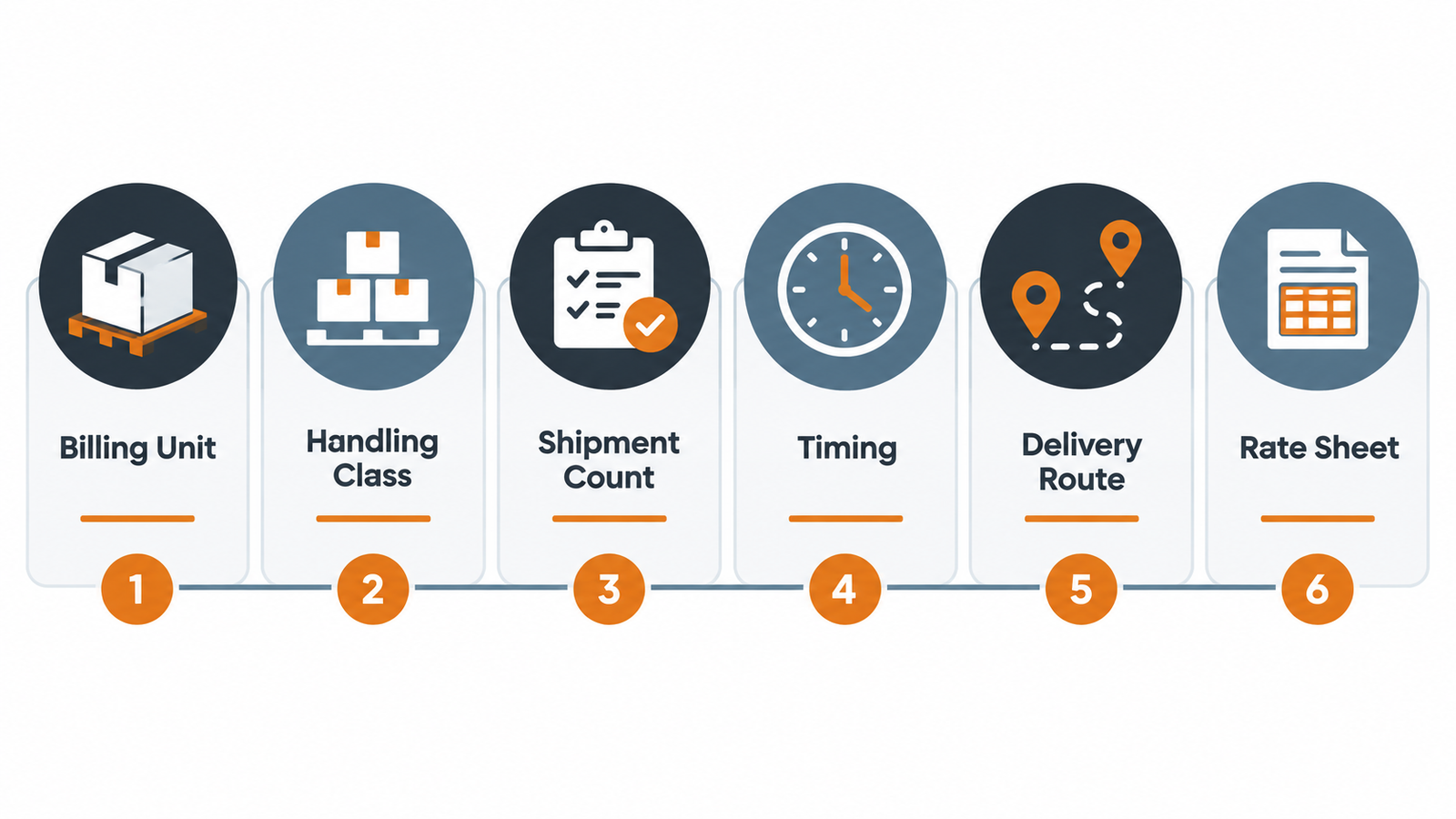
Treat online examples as illustrations, not as a quote. The authoritative source is the current manual for the specific show and its appointed contractor.
Key Billing Variables to Understand
1. Weight-Based Billing
CWT is a common rate structure, but it is not universal. When a show uses CWT billing, heavier shipments generally increase the material-handling charge. That is why weight belongs in the design, freight, and budget discussion alongside the carrier quote. For any other pricing structure, use the current show rate sheet to identify the billable unit and applicable minimums.
2. Minimum Charges and Shipment Count
Many rate structures include a minimum. Multiple small shipments can therefore create more than one minimum or handling event. When practical, a well-labeled consolidated shipment may make the receiving and budget process easier. Confirm the current rate sheet before choosing a consolidation plan.
3. Delivery Route and Timing
Advance warehouse and direct-to-show delivery are different operating routes. The current rate sheet, receiving deadlines, dock instructions, and carrier schedule all matter; neither route should be assumed to be the universal low-cost choice.
| Delivery Method | Timing | Planning Trade-Off |
|---|---|---|
| Advance Warehouse | Freight arrives before show move-in at a contractor-managed warehouse | Gives the contractor more time to receive and stage freight; compare the current warehouse rate and deadline terms. |
| Direct to Show Site | Freight arrives during official move-in at the convention center dock | Can fit a controlled domestic delivery and confirmed appointment; compare the current direct rate, target window, and dock terms. |
The advance warehouse can reduce move-in-day timing risk because freight is received before the show starts. Its cost and included storage period are event-specific, and late arrivals can trigger published late terms.
Direct-to-show may fit when the carrier can meet the current target window. It is not automatically cheaper: compare the current rate sheet, delivery appointment requirements, timing risk, and any applicable overtime or re-delivery terms before selecting a route.
4. Special Handling
Freight that needs extra equipment, labor, or care can fall into a different handling category. Common factors to confirm in the current show documents include:
- Loose or uncrated items
- Carpet rolls, oversized pieces, or irregular freight
- Mixed shipments for more than one booth
- Freight that does not follow published handling or packaging requirements — confirm the current show’s requirements before shipping
5. Overtime and Late Terms
A show’s rate sheet may set different terms for work outside standard service windows, late freight, or changes after a deadline. The precise rules vary by program. Early coordination can materially reduce exposure to late rates, overtime, and last-minute changes.
6. Outbound Handling
Material handling does not stop at move-in. Outbound handling is typically part of the material-handling scope, but whether it appears as a separate charge, is embedded in a published rate, or follows another event-specific structure varies by show and contractor. Confirm the current rate sheet and outbound instructions before budgeting.
What Is the Advance Warehouse, and Does It Change Your Cost?
The advance warehouse is a contractor-managed receiving facility that accepts exhibitor freight before official show move-in. It can give the show contractor more time to receive and stage freight before the convention-center dock becomes active.
It is useful when overseas arrival timing is uncertain, the booth has multiple components, or a carrier cannot reliably meet a narrow move-in window. It is not automatically the less expensive route. Compare the current warehouse and direct-delivery rate structures, included storage terms, published deadlines, and the practical risk of each route.
When Advance Warehouse May Fit
- International freight with less predictable arrival timing
- Complex booths that depend on multiple crates or components
- Large shows with constrained show-site receiving windows
- Projects that need freight confirmed before the installation schedule begins
When Direct-to-Show May Fit
- Domestic freight with a reliable carrier and confirmed target window
- A controlled, straightforward shipment
- A show whose current direct-delivery instructions align with the carrier schedule
For either route, use the exact address, label format, dates, and instructions in the current exhibitor kit. A previous edition’s rules may no longer apply.
How Does Booth Design Affect Drayage Cost?
Drayage is connected to booth planning through weight, volume, packing method, and shipment count. It is not a reason to make a booth generic or under-built; it is a reason to understand the downstream effect of design and logistics choices.
Heavier materials, oversized components, loose packing, and multiple separate shipments can affect the material-handling exposure. Thoughtful material choices and clearly labeled, consolidated packaging can make the freight plan easier to manage. For a full build-budget framework, read How Much Does It Cost to Produce a Trade Show Booth?.
Design and Packing Considerations
Material Weight
When CWT applies, weight directly influences the handling calculation. Flooring, counters, product displays, and shipping crates should be considered in both the build plan and the logistics estimate.
Crating and Packaging
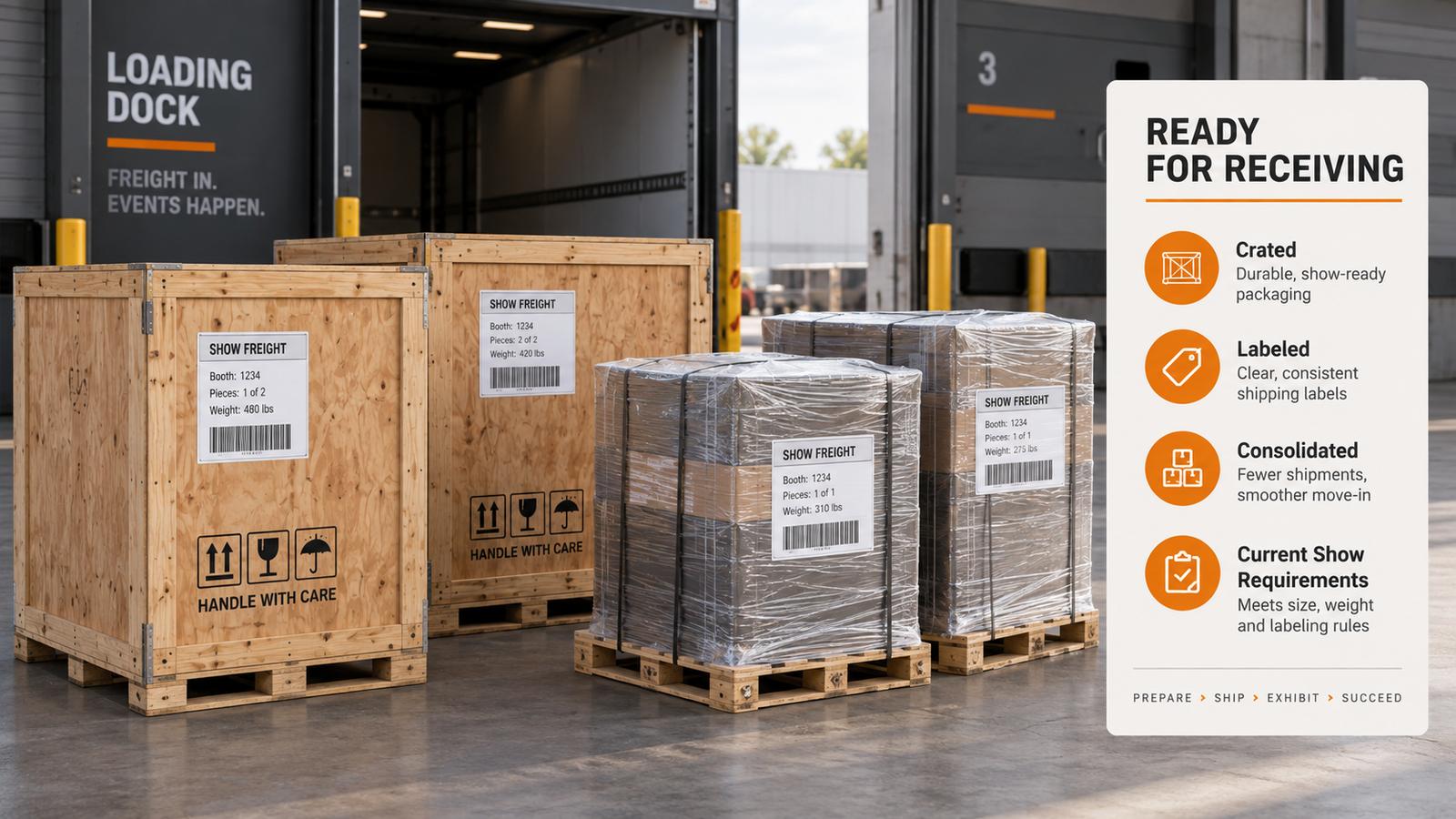
Proper crates and cases protect components and help the freight arrive in an organized condition. Before shipping:
- Crate or case display components where practical
- Follow the show’s published handling and packaging requirements; confirm whether pallet specifications affect handling classification or service terms
- Label each piece with the company name, booth number, and show name
- Consolidate freight when the project and current rate structure support it
Local Rental and Show-Supplied Items
Furniture, monitors, carpet, or certain display items may be rented locally or ordered through a show program. Those items do not need to travel in the exhibitor’s freight shipment, though their rental and show-service terms should be reviewed separately.
Who Controls Drayage, and What Can a Booth Builder Do?
The official show contractor controls the current material-handling procedures and rates. A booth builder cannot waive those published charges or represent the contractor’s rate sheet as its own.
A project team can still add meaningful value by reviewing the current manual, coordinating the booth packing plan with the freight route, flagging deadlines, and connecting freight timing to the installation schedule. Trade Show Project Management and Installation & Dismantling Services should be planned with the freight process rather than after delivery is already arranged.
Before the show, locate these items in the exhibitor kit:
- Material-handling rate sheet and any minimums
- Advance warehouse address and receiving deadline
- Direct-to-show dates, target windows, and dock instructions
- Definitions for handling categories or special handling
- Outbound labels, carrier pickup procedure, and outbound deadline
Trade Show Drayage Planning Checklist
Use this short checklist before you ship:
- Confirm the show, venue, booth number, and current exhibitor service manual.
- Separate freight transportation from material handling in the budget.
- Identify the billable unit, minimums, and handling categories in the current rate sheet.
- Compare advance warehouse and direct-to-show using current terms and realistic carrier timing.
- Confirm weights, crate count, labels, and packaging requirements.
- Coordinate freight arrival with the booth planning timeline, electrical, rigging, and I&D plan where relevant.
- Review outbound instructions before move-in, not after the show closes.
Frequently Asked Questions
Is drayage charged by the pound or by the shipment?
CWT billing is common in U.S. trade shows, often with a minimum charge, but it is not the only structure. Some programs use flat, package, or other event-specific pricing. The current exhibitor service manual and contractor rate sheet determine the billable unit, minimums, delivery-route terms, and handling category for your show.
Can I avoid drayage by carrying booth materials in myself?
Some shows permit limited hand-carry items, while larger cases, boxes, graphics, or equipment may be subject to material-handling rules. The current show manual or show management should confirm the definition and procedure before you rely on that option.
What happens if my freight misses the advance warehouse deadline?
Late freight may be accepted under the current show’s published late terms, directed to a different receiving route, or require coordination with the official contractor. The outcome depends on the current exhibitor service manual, receiving capacity, and show schedule. Contact the contractor and your carrier promptly, then confirm the revised address, timing, label, and rate treatment before delivery.
Is advance warehouse always the better choice?
No. It can be useful when schedule certainty is low or move-in congestion is a concern, but the appropriate route depends on the current rate sheet, delivery appointment, freight origin, and the carrier’s ability to meet the direct-to-show target. Compare the current terms rather than applying a general cost rule.
Is outbound handling always a separate charge?
Not necessarily. Outbound handling is commonly part of the overall material-handling scope, but the current show’s contractor may display it as a separate line, embed it in another rate, or use a different structure. Review the current outbound instructions and rate sheet before you budget.
Need Help Planning Freight and Drayage for Your U.S. Trade Show?
Share your show, venue, booth size, freight origin, crate count, and estimated shipment weight. Exhibitsmax can help coordinate your booth transportation plan and identify material-handling requirements that should be confirmed with the official show contractor.