I&D Tips for First-Time Foreign Exhibitors at Las Vegas Shows?
I&D tips matter before your booth ever reaches the dock in Las Vegas. Many first-time foreign exhibitors treat installation and dismantle as a final labor booking, then discover that design choices, freight timing, venue access, show rules, and return logistics all affect the booth build. The solution is to manage I&D as a full project risk from the start.
For first-time foreign exhibitors at Las Vegas shows, I&D should be planned before booth design, production, shipping, move-in, installation, dismantle, and return freight. The best approach is to confirm the exhibitor manual, review booth drawings for installability, understand labor and venue limits, protect the schedule, and plan packing, storage, and outbound logistics early.
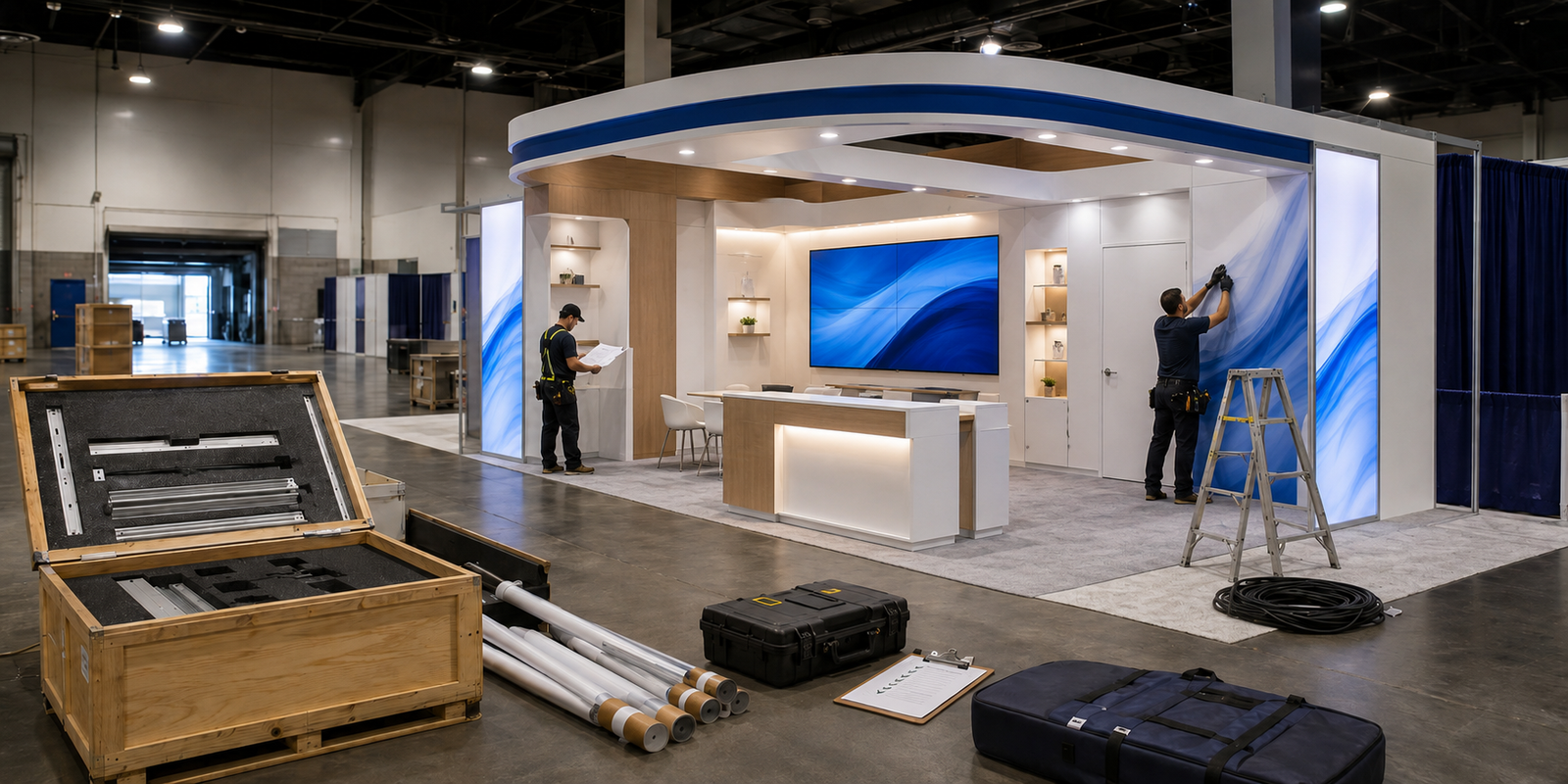
I work with international exhibitors who arrive in Las Vegas with strong products, beautiful booth concepts, and serious business goals. The problems usually appear in the gaps between design, shipping, labor, and show rules. That is where practical I&D planning protects both budget and brand presentation.
Why Should I&D Tips Start Before Booth Design Is Finalized?
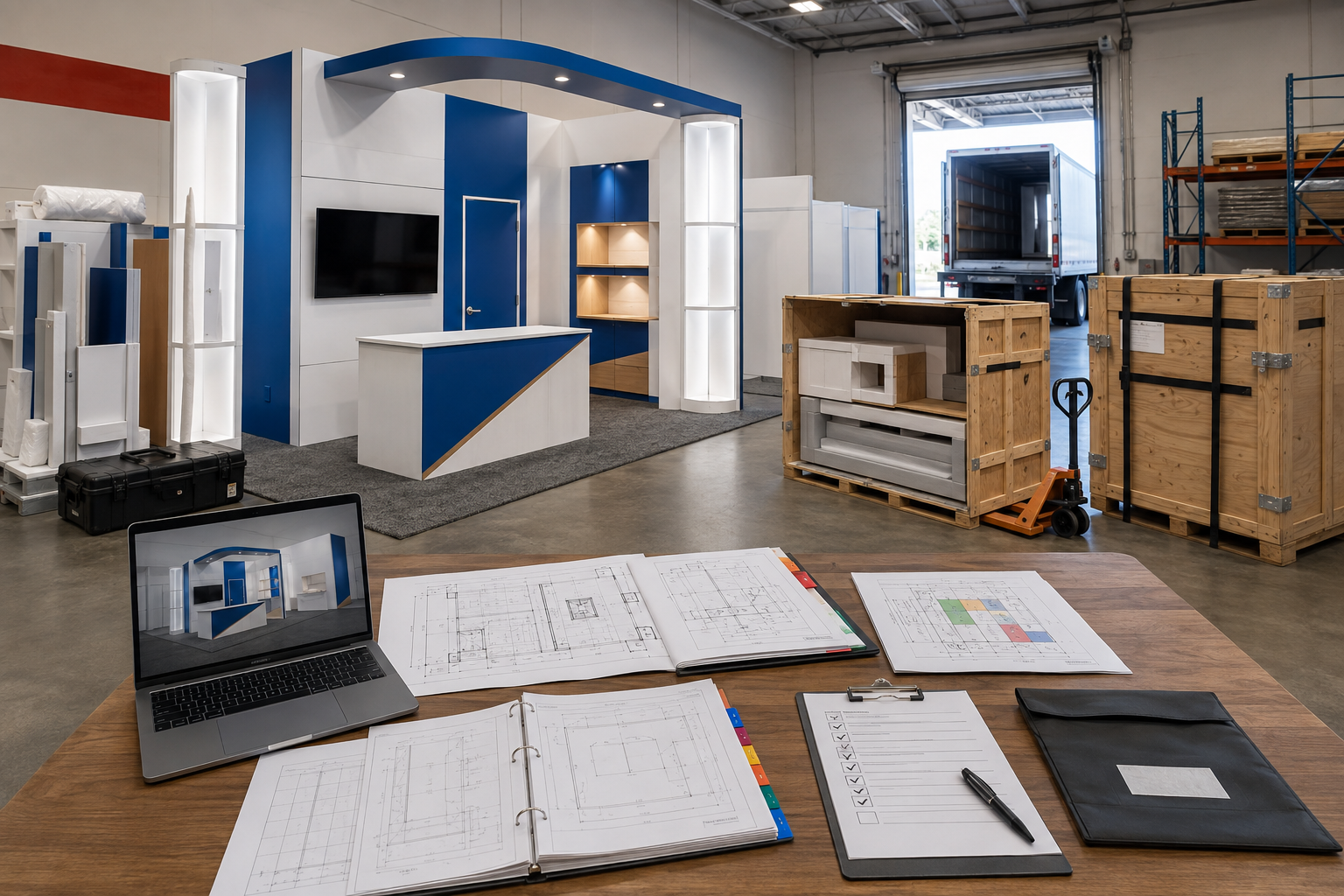
A booth design can look excellent in a 3D rendering but still become difficult to install on the show floor. Foreign exhibitors often feel safe once the design is approved, then later face assembly delays, missing hardware, crate confusion, or rule conflicts. The better path is to review installation logic before production begins.
I&D tips should start before booth design is finalized because every design decision affects labor hours, freight handling, crate loading, installation sequence, dismantle speed, and return shipping.1 A local Las Vegas I&D review can identify risks in structure, graphics, lighting, flooring, AV, and packing before the booth is manufactured or shipped.
Design Is Only One Part of the Exhibit Delivery Chain
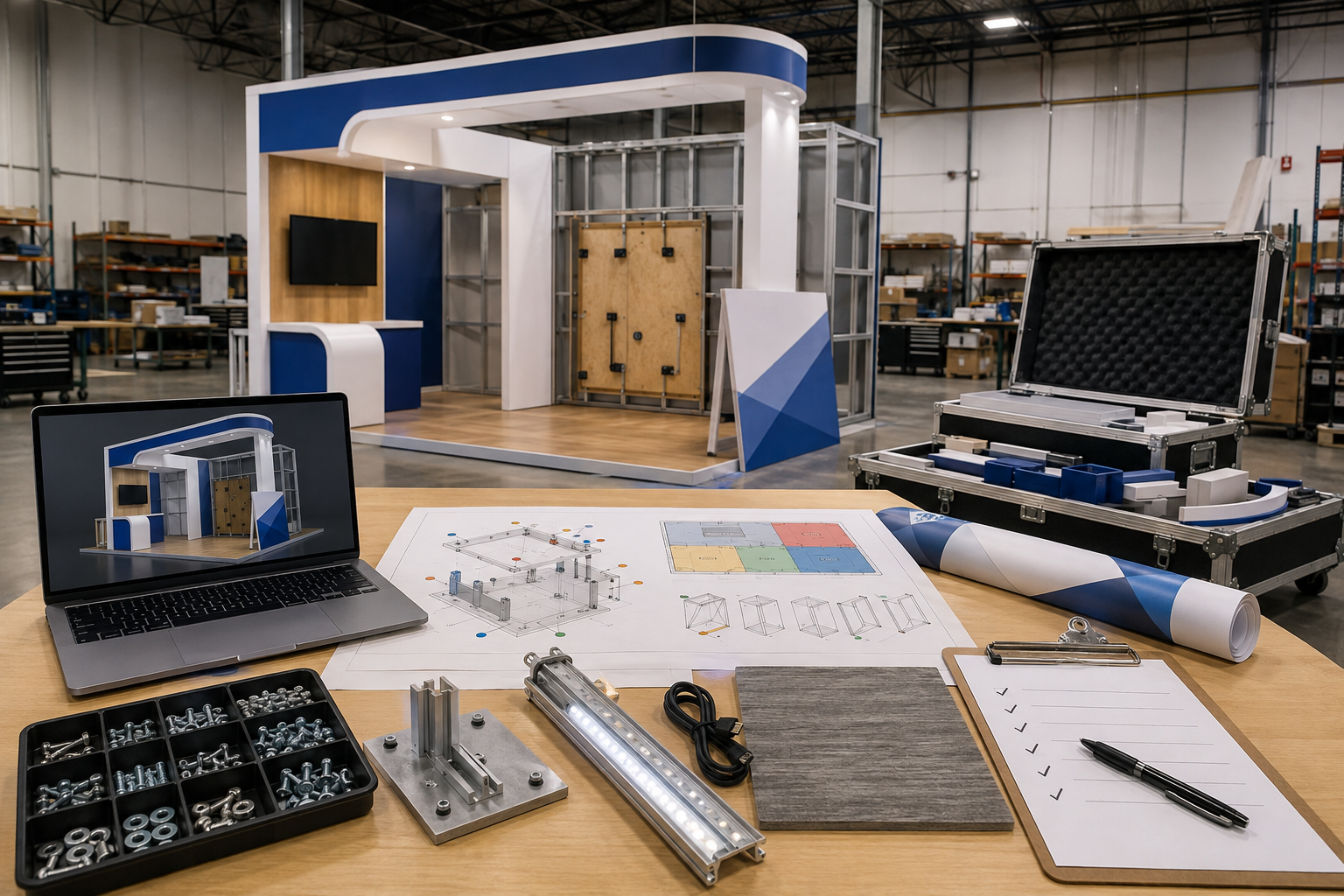
I often tell clients that I&D is not one task. It is the middle of a chain. If one link is weak, the on-site team pays for it in time, labor, and stress.
A typical Las Vegas exhibit delivery chain looks like this:
- Design confirmation
- Technical drawings
- Fabrication
- Trial assembly or quality check
- Packing and crate labeling
- International or domestic freight
- Advance warehouse or direct-to-show delivery
- Material handling
- Move-in access
- Installation
- Show days
- Dismantle
- Repacking
- Storage, return freight, or next-show transfer
When foreign exhibitors think only about the installation date, they miss how earlier choices affect the labor crew. For example, a wall system may look simple in renderings. But if the panels are not numbered, packed in installation order, or matched with the right hardware, the crew may spend billable time searching and sorting instead of building.
Common Installability Issues I See
In my local I&D work, I have seen first-time exhibitors run into problems such as:
- Oversized booth components that are difficult to maneuver through show aisles.
- Unclear drawings that show final appearance but not assembly sequence.
- Mixed hardware packed without labels or spare parts.
- Graphics shipped separately without a clear placement map.
- Lighting and LED components arriving without confirmed power or rigging details.
- Crates packed for factory convenience, not for show-floor installation speed.
These issues do not always make the booth impossible to install. But they can create waiting time, rework, rush labor, or visual compromises. In a Las Vegas trade show environment, small delays become expensive because move-in windows are limited.2
A Simple Pre-Production I&D Review
Before fabrication starts, I recommend reviewing the booth using a practical table like this:
| Item to Review | Why It Matters for I&D | Risk if Ignored |
|---|---|---|
| Booth drawings | Shows assembly logic | Crew must guess on-site |
| Component sizes | Affects handling and access | Extra labor or rework |
| Crate plan | Controls unpacking speed | Lost time sorting parts |
| Graphic layout | Prevents wrong placement | Reprints or visual errors |
| Electrical plan | Affects lighting and AV | Delays or service conflicts |
| Dismantle plan | Protects outbound freight | Damage or missed carrier pickup |
A beautiful booth should also be a buildable booth. That is the point many first-time foreign exhibitors miss.
What Las Vegas Show Rules Should Foreign Exhibitors Verify?
Foreign exhibitors may have strong exhibition experience in Europe, Asia, or the Middle East, but Las Vegas shows operate through specific exhibitor manuals, venue procedures, contractor systems, and labor boundaries.3 The problem is not lack of experience. The problem is applying the wrong assumptions to a new market.
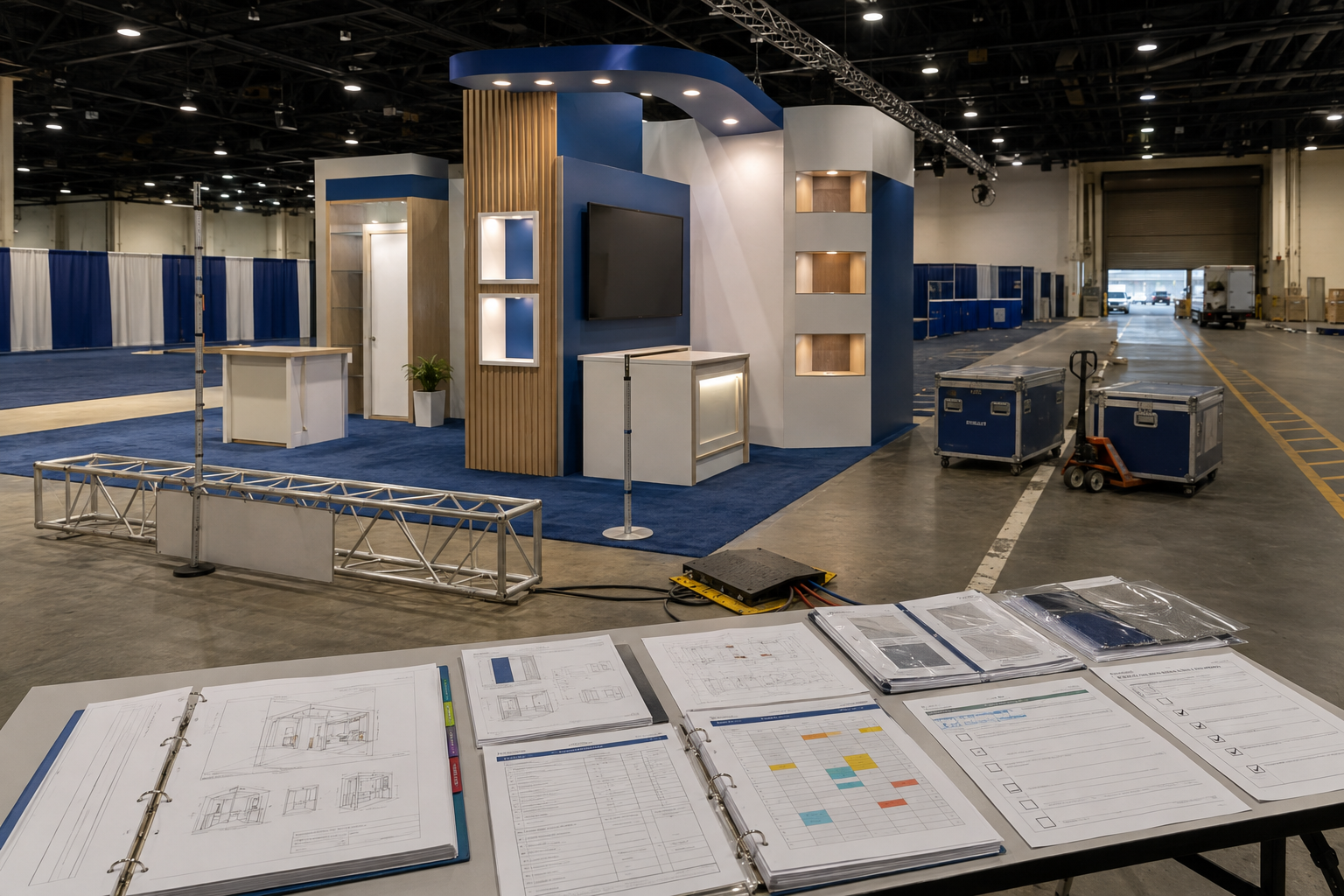
Foreign exhibitors should verify show rules in the official exhibitor manual and with the show organizer before shipping. Key areas include move-in schedule, target dates, material handling, labor jurisdiction, exhibitor-appointed contractor requirements, insurance documents, electrical ordering, booth height limits, hanging signs, vehicle access, marshaling yard procedures, and dismantle deadlines.4
Rules Are Show-Specific, Not Universal
I want to be careful here. I am not a legal authority, union representative, or official venue source. Las Vegas show rules can change by show, venue, hall, organizer, general contractor, and booth type. Exhibitors should always confirm details in the official exhibitor manual and with the show organizer.
However, from an I&D planning perspective, I do see patterns. Foreign exhibitors often underestimate how detailed U.S. show procedures can be. They may assume that if the booth arrives at the venue, their team can freely unload, assemble, wire, adjust, and dismantle everything. That assumption can create trouble.
Areas That Need Verification
Before booking labor or freight, I suggest reviewing these items:
-
Move-in dates and target times
Some shows assign target delivery dates. Missing them can affect material handling, overtime labor, or booth readiness.5 -
Advance warehouse vs. direct-to-show delivery
Advance warehouse delivery may offer more predictable receiving. Direct-to-show delivery may depend on tight dock schedules. -
Exhibitor-appointed contractor requirements
Many shows require forms, insurance certificates, and deadlines for outside I&D providers.6 -
Labor boundaries
Some tasks may have restrictions or specific labor requirements. Exhibitors should confirm what their own staff may and may not do. -
Electrical and AV services
Power drops, internet, rigging, and certain AV services may need to be ordered through official providers.7 -
Badges and access rules
Installers, supervisors, and exhibitor staff may need proper credentials during move-in and dismantle. -
Freight and material handling procedures
Drayage, crate storage, empty labels, and outbound bills of lading can surprise exhibitors who are new to U.S. shows.
What I Look For in an Exhibitor Manual
When I review a Las Vegas exhibitor manual, I am not just looking at general rules. I am checking for practical I&D triggers.
| Manual Section | What I Check | Why It Matters |
|---|---|---|
| Move-in schedule | Target dates and hall access | Prevents missed installation windows |
| Contractor forms | EAC deadlines and insurance | Avoids access problems |
| Booth rules | Height, setback, sightline limits | Reduces redesign risk |
| Electrical | Order deadlines and floor plans | Prevents lighting delays |
| Freight | Shipping labels and receiving dates | Controls delivery timing |
| Dismantle | Move-out deadline and carrier check-in | Avoids forced freight or storage issues |
One client once told me, “We already exhibited in three countries this year, so Las Vegas should be easy.” The product was ready, and the booth looked good. But their manual deadlines were different from what they expected. The lesson was simple: international experience helps, but it does not replace show-specific verification.
Which I&D Tips Help Avoid Hidden Cost Risks?
A cheap I&D quote can look attractive when a foreign exhibitor is already paying for booth production, international shipping, travel, and show services. The risk is that the lowest quote may not include the conditions that actually happen on-site.8 Then the final bill grows through waiting, rework, overtime, and dismantle problems.
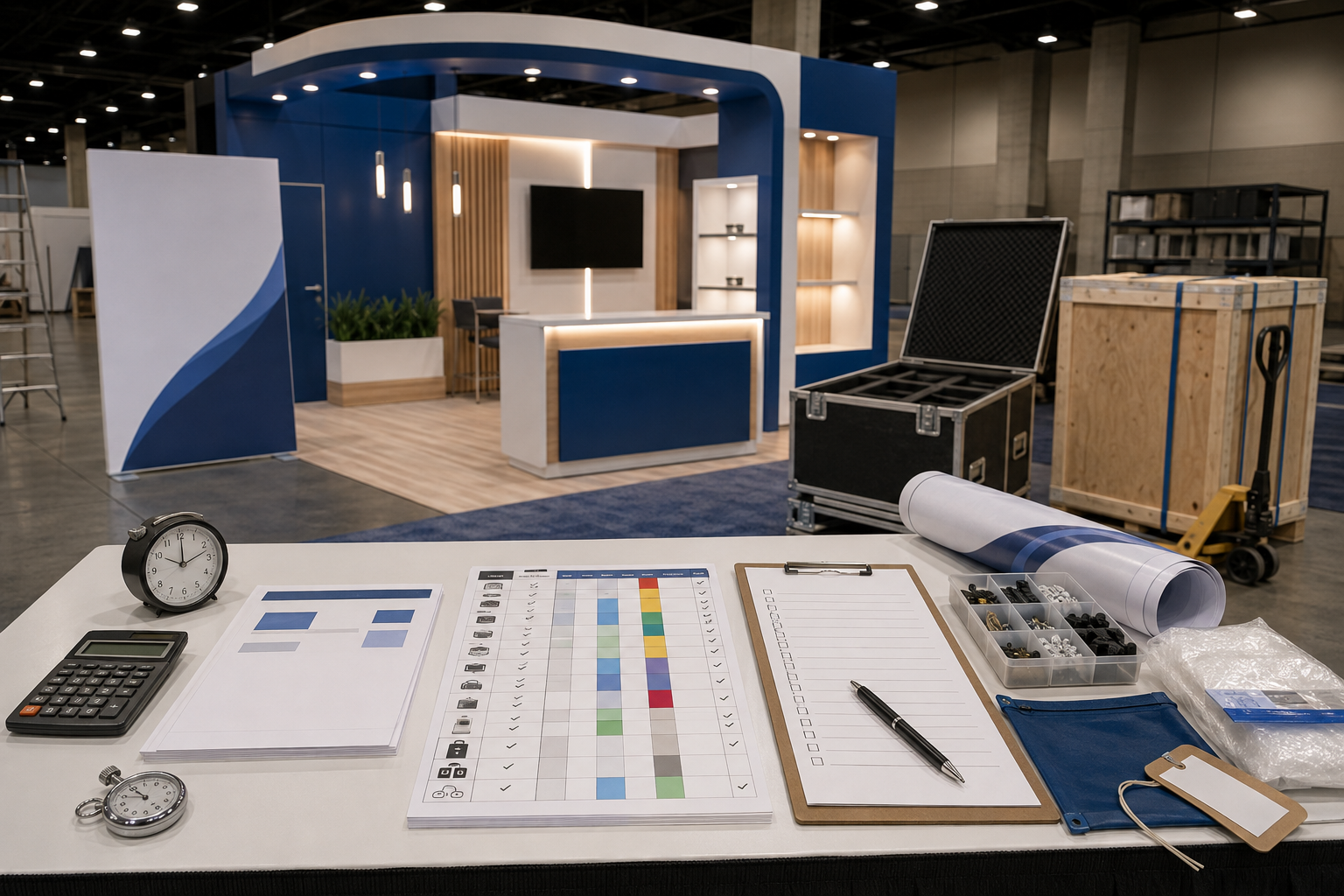
The most useful I&D tips for cost control are to compare quote scope, not just hourly rates. Exhibitors should check whether the quote covers supervision, straight-time and overtime labor, waiting time, tool needs, rework, graphic installation, dismantle, repacking, crate management, storage, and outbound shipping support.
The Lowest Quote Is Not Always the Lowest Cost
I understand why international exhibitors ask for the lowest possible installation quote. Trade shows are expensive. But I have also seen “cheap” I&D become costly when the scope was too narrow.
A quote may look low because it assumes:
- All freight arrives on time.
- All crates are accessible immediately.
- All parts are labeled correctly.
- No show rule conflicts appear.
- No overtime is needed.
- No graphics need adjustment.
- No dismantle support is included.
- No outbound freight coordination is required.
Those assumptions may not match the real show floor. If freight is late, the crew may wait. If drawings are unclear, the crew may spend time interpreting. If the booth was not designed for fast assembly, more labor may be needed. If dismantle is ignored, the outbound freight process can become chaotic.
Hidden Cost Categories to Watch
Here are cost areas that first-time foreign exhibitors often miss:
| Cost Risk | How It Happens | How to Reduce It |
|---|---|---|
| Waiting time | Freight, badges, or hall access is delayed | Confirm schedules and delivery status |
| Rework | Parts do not fit or drawings are unclear | Review drawings before production |
| Rush labor | Booth arrives late or build takes longer | Build schedule buffer where possible |
| Overtime | Work happens outside straight-time hours | Check labor windows in the manual |
| Material handling | Freight is received and moved by show services | Understand drayage rates and weights |
| Graphic fixes | Panels are mislabeled or damaged | Pack graphics with maps and spares |
| Dismantle labor | Not included in the original quote | Quote install and dismantle together |
| Storage | Empty crates or post-show freight need handling | Plan crate labels and storage early |
| Return freight | Carrier misses pickup or documents are incomplete | Prepare outbound paperwork before show close |
Scope Questions I Ask Before Quoting I&D
When I review a project, I prefer to ask detailed questions before sending a number. That protects the exhibitor and the I&D team.
Useful questions include:
- How many crates or pallets will arrive?
- What are the crate dimensions and weights?
- Will freight go to the advance warehouse or direct to show?
- Are drawings assembly-ready or only visual renderings?
- Will graphics arrive pre-installed or separate?
- Does the booth include lighting, monitors, LED walls, or hanging signs?
- Who ordered electrical and internet services?
- Who handles empty crate labels during the show?
- Who repacks the booth after dismantle?
- Where does the booth go after the show?
A serious I&D estimate should make assumptions visible. If a quote does not mention dismantle, repacking, overtime, waiting time, or outbound support, the exhibitor should ask before signing.
How Can Foreign Exhibitors Plan Installation and Dismantle Together?
Many exhibitors focus on opening day. They ask, “Can the booth be ready before the show starts?” That question is important, but it is incomplete. If the booth cannot be dismantled, repacked, stored, or shipped out properly, the project is still at risk after the show ends.
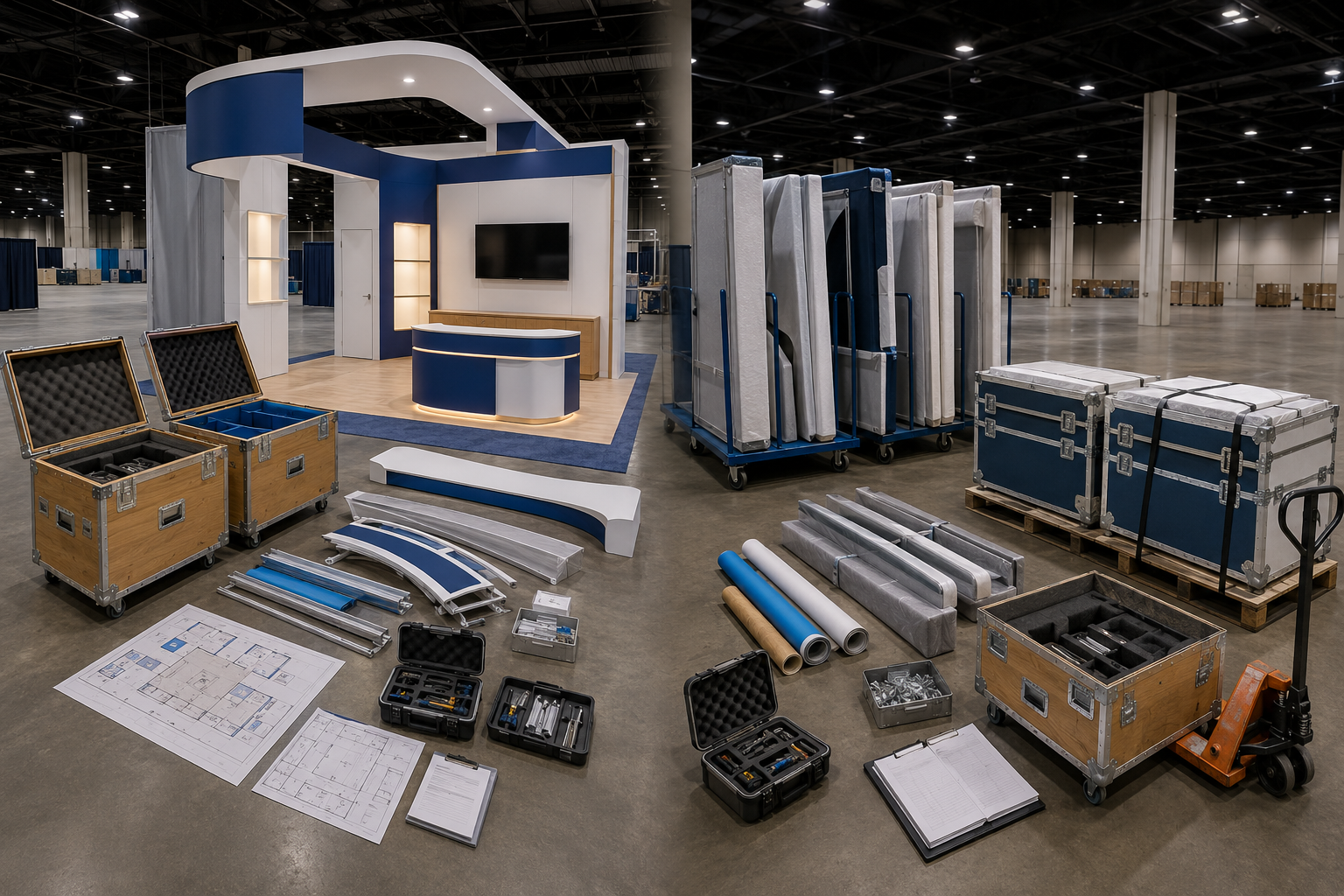
Foreign exhibitors should plan installation and dismantle together because the same booth components, crates, labels, tools, and labor assumptions affect both phases. A good I&D plan defines how the booth will be built, how empty crates will be managed, how materials will be repacked, and how freight will leave Las Vegas after the show.
Dismantle Is Not an Afterthought
I have seen exhibitors celebrate a successful opening day, then become stressed during move-out because no one planned the return path. Dismantle is faster and more compressed than installation.9 Everyone is trying to leave. Aisles become crowded. Crates return from storage. Carriers have check-in procedures. Deadlines are strict.
A booth that was carefully packed at the factory may not be easy to repack on the show floor. After three days of product demos, storage, lead retrieval, and staff activity, components may be mixed. Graphics may be fragile. LED panels may need protective cases. Hardware may be scattered.
What a Dismantle Plan Should Include
A practical dismantle plan should answer these questions:
- Who leads the dismantle crew?
- Where are empty crates stored during the show?
- Are crates clearly labeled with booth name and booth number?
- Which items must be packed first?
- Which items need protective wrapping?
- Are small hardware bags labeled for reuse?
- Who prepares outbound labels and bills of lading?
- Which carrier picks up the freight?
- What happens if the carrier misses the deadline?
- Will the booth go to storage, another U.S. show, or back overseas?
Packing for Reuse vs. Packing for Disposal
Foreign exhibitors should also decide whether the booth is a one-time build or a reusable asset. This changes how the I&D team handles dismantle.
| Booth Future | Dismantle Priority | Packing Requirement |
|---|---|---|
| One-time use | Safe removal and disposal | Clear disposal plan |
| Reuse in the U.S. | Protect components for storage | Strong labels and inventory |
| Return overseas | Export-ready packing | Documentation and protective crates |
| Next U.S. show | Fast transfer and access | Organized repacking by install sequence |
If the booth will be reused, I recommend creating a photo record during dismantle. Photos of crate contents, hardware bags, electrical parts, and panel order can save hours at the next show. This is a simple step, but it helps a lot.
Return Shipping Needs Early Decisions
Outbound freight is not just a shipping task. It depends on show move-out deadlines, carrier check-in, crate readiness, paperwork, and destination. If a carrier does not arrive on time, freight may be forced through show procedures or moved to storage.10 That can add cost and delay.
This is why I prefer to discuss dismantle before the booth even ships to Las Vegas. When the exit plan is clear, the installation plan becomes better too.
What I&D Tips Make a Booth Easier to Install On-Site?
A booth can be visually impressive and still be slow to assemble. First-time foreign exhibitors sometimes send structures, graphics, lighting, and AV components that were planned for a factory environment, not a time-limited Las Vegas move-in. This creates stress when the crew must build fast, safely, and within show procedures.
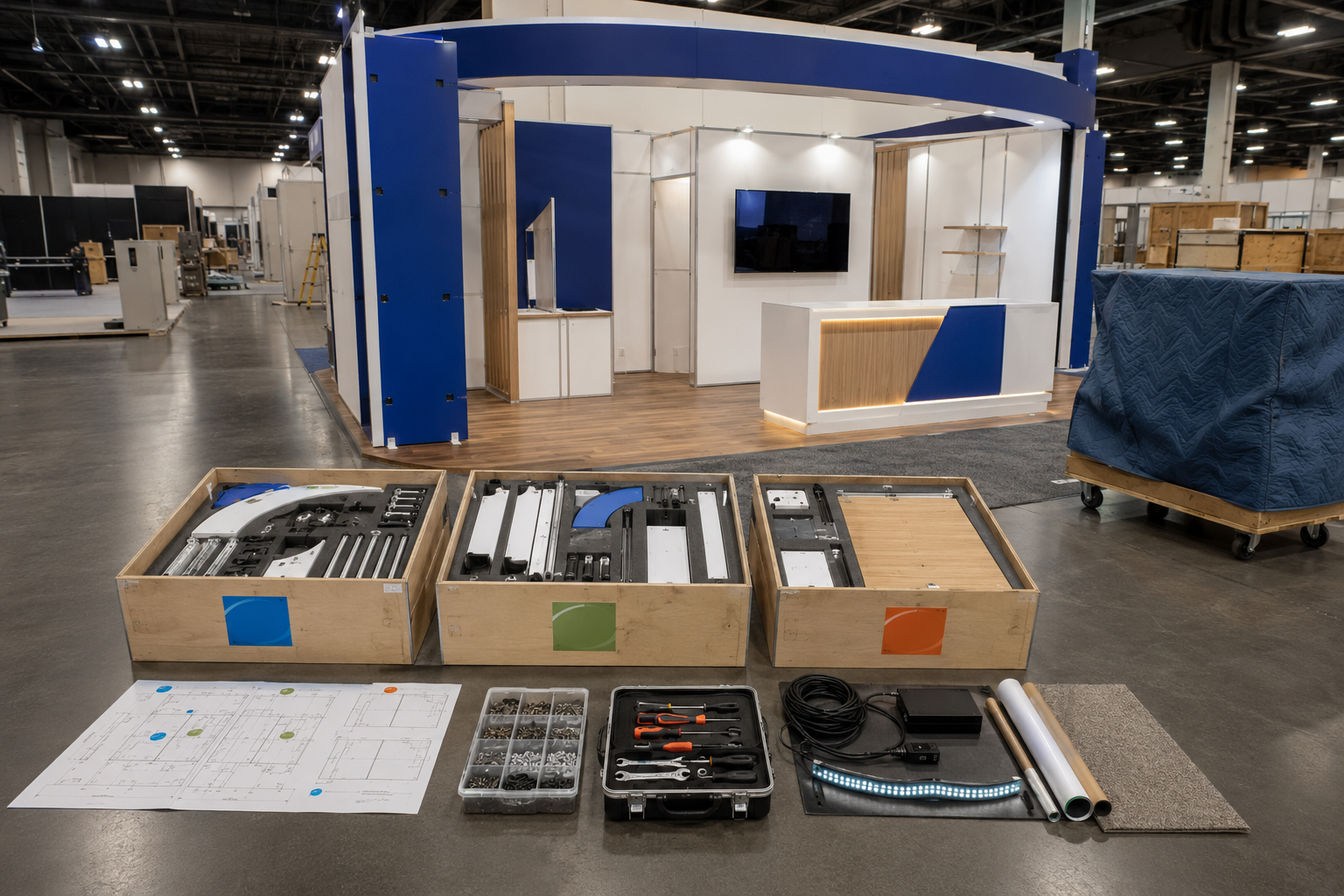
The best I&D tips for easier on-site installation are to simplify connections, label every component, pack crates in build order, provide assembly drawings, pre-test lighting and LED systems, include spare hardware, confirm electrical needs, and design booth elements around realistic labor time, aisle access, and dismantle requirements.
Installability Is a Design Feature
Installability should be treated like a design feature, not a labor problem. If the booth is hard to build, the I&D crew can work hard and still lose time. If the booth is designed for fast assembly, the crew can protect schedule, appearance, and budget.
I usually look at five areas:
- Structure
- Materials
- Crates
- Graphics
- Lighting, AV, and LED components
Each area can either support smooth installation or create problems.
Structure and Materials
Heavy custom elements may create a premium look, but they need practical handling plans. The exhibitor should confirm whether the parts can be moved through show aisles and assembled with available labor and tools. Materials should also tolerate shipping, handling, and repeated setup if the booth will be reused.
Good structural planning includes:
- Clear connection points.
- Numbered panels.
- Pre-drilled holes where appropriate.
- Stable base components.
- Documented hardware lists.
- Replacement hardware in separate labeled bags.
Crates and Labels
Crates should be packed for the installation sequence, not only for shipping density.11 If the first pieces needed for the build are buried under late-stage components, the crew loses time.
A simple labeling system can help:
| Label Type | Example | Purpose |
|---|---|---|
| Crate number | Crate 1 of 5 | Confirms full shipment arrived |
| Area label | Reception counter | Speeds sorting |
| Build order | Open first | Supports installation sequence |
| Hardware label | Wall A bolts | Prevents missing parts |
| Graphic label | Back wall graphic left | Avoids wrong placement |
Graphics, Lighting, and LED Components
Graphics create the final impression, but they are easy to damage. They should be packed with protection and placement maps. If graphics are silicone edge fabric, rigid panels, vinyl, or backlit materials, the crew needs to know how each piece should be handled.
Lighting and LED components require even more care. Exhibitors should confirm:
- Power requirements.
- Cable routing.
- Mounting points.
- Controller locations.
- Spare cables.
- Test results before shipping.
- Service orders required by the show.
I do not recommend guessing on electrical, structural, or rigging-related matters. Exhibitors should use qualified professionals and confirm requirements with the show’s official providers when needed.
When Should Foreign Exhibitors Bring in a Las Vegas Local I&D Team?
Some foreign exhibitors contact an I&D provider only after the booth has shipped. At that point, the local team can still help, but many important decisions are already locked. The best time to involve a Las Vegas team is when drawings, shipping plans, and the exhibitor manual can still be adjusted.
Foreign exhibitors should bring in a Las Vegas local I&D team before final design approval and before freight is sent. A local review can identify show-specific requirements, installability issues, missing service orders, labor assumptions, packing risks, dismantle needs, and return-shipping gaps while changes are still possible.
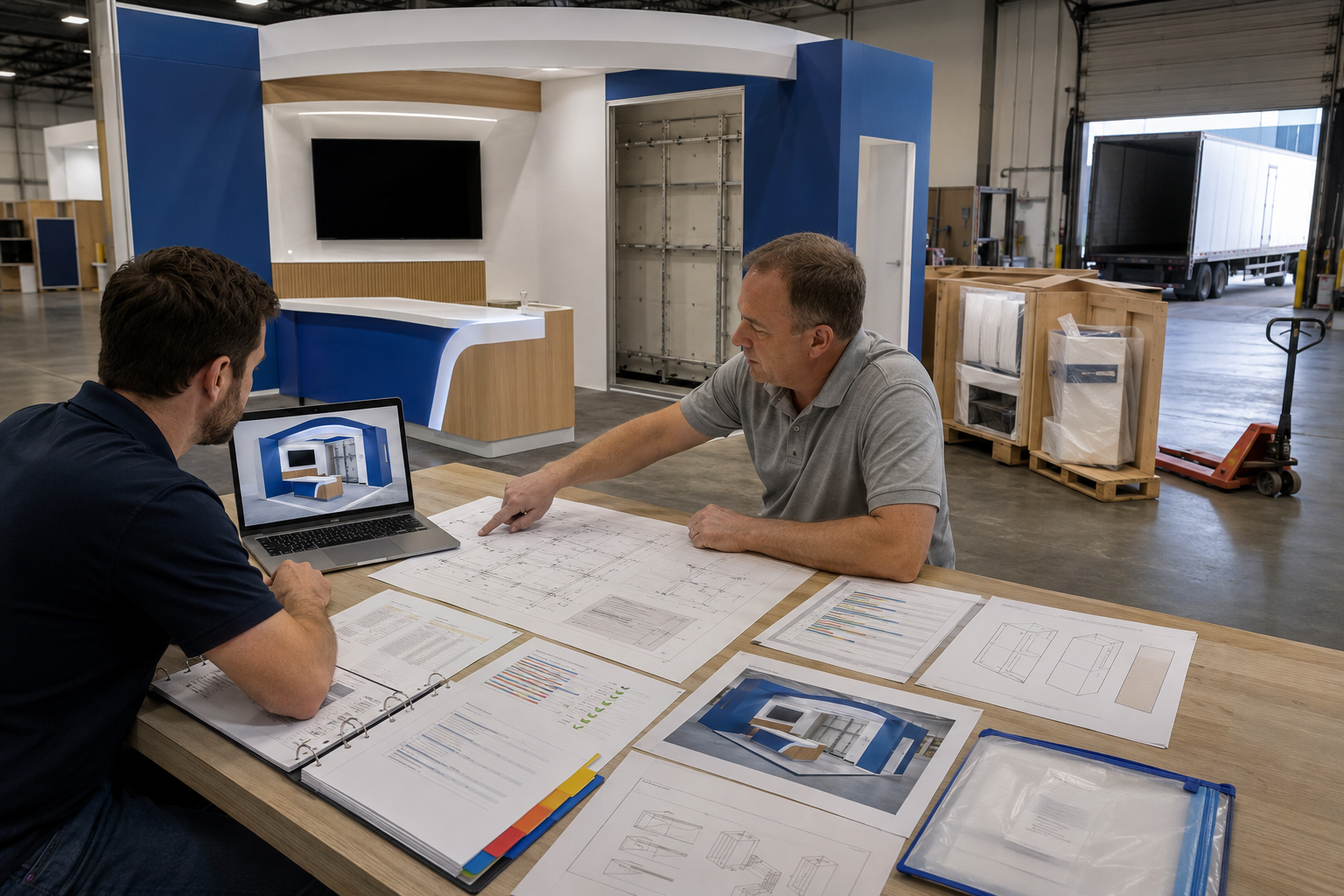
Local Experience Helps Translate the Show Environment
As a Las Vegas-based booth builder and I&D service provider, I have seen foreign exhibitors ask about installation too late. I have also seen exhibitors apply non-U.S. assumptions to local shows, overlook access boundaries, or forget that dismantle and return logistics require planning.
A local team cannot replace the official exhibitor manual. A local team also should not claim authority over venue rules. But a local I&D provider can help exhibitors interpret the practical impact of those documents on booth delivery.
What a Local I&D Review Should Cover
A useful local review should examine more than labor hours. I recommend reviewing four documents together:
- Booth drawings
- Packing and crate list
- Shipping timeline
- Official exhibitor manual
The review should answer:
- Can the booth be installed within the move-in window?
- Are the drawings detailed enough for the crew?
- Do the crates support fast unpacking?
- Are there possible rule conflicts to verify?
- Are electrical, internet, rigging, or AV services ordered correctly?
- Is dismantle included in the labor plan?
- Is outbound freight ready before show close?
- Does the exhibitor need storage after the show?
What Local I&D Can and Cannot Do
| Local I&D Team Can Help With | Exhibitor Must Still Verify |
|---|---|
| Installation planning | Official show rules |
| Dismantle labor planning | Manual deadlines |
| Drawing review | Venue-specific requirements |
| Packing advice | Legal, customs, and import rules |
| On-site supervision | Engineering or rigging approvals |
| Storage and logistics coordination | Official service provider orders |
This balance matters. The best results come when the exhibitor, booth fabricator, freight forwarder, show organizer, official contractors, and local I&D team work from the same information.
Frequently Asked Questions
What does I&D mean for trade shows?
I&D means installation and dismantle.12 In trade shows, it refers to the labor and coordination needed to build a booth before the event and take it down afterward. For foreign exhibitors, I&D also affects packing, freight, show access, storage, and return shipping.
When should I book I&D for a Las Vegas trade show?
You should start I&D planning before booth design is finalized and before freight is shipped. The actual booking date depends on the show schedule, but early review helps catch problems in drawings, packing, labor scope, exhibitor manual requirements, and dismantle planning.
Can foreign exhibitors install their own booth in Las Vegas?
It depends on the show, venue, booth size, and task. Exhibitors should not assume their staff can perform all work. They should verify labor rules, access limits, and contractor requirements in the official exhibitor manual and with the show organizer.
Why is dismantle planning important if the booth is already installed?
Dismantle affects crate return, repacking, outbound freight, storage, and reuse. If dismantle is not planned, exhibitors may face damaged components, missing hardware, missed carrier pickups, extra storage fees, or forced freight. A strong I&D plan includes both move-in and move-out.
What documents should I send to a Las Vegas I&D provider?
You should send booth drawings, renderings, crate lists, freight details, show dates, booth number, exhibitor manual, electrical plans, graphic layouts, and outbound shipping instructions. These documents help the I&D team review installability, schedule risk, labor scope, and dismantle needs.
Conclusion
The most important I&D tips for first-time foreign exhibitors are simple but often missed: treat I&D as part of the full exhibit delivery chain, verify Las Vegas show requirements early, review booth installability before production, compare quote scope carefully, and plan dismantle before opening day. If you are preparing for your first Las Vegas show, I recommend having a local I&D team review your timeline, booth drawings, packing plan, shipping route, and exhibitor manual before design is finalized or freight is sent.
"Mandalay Bay Trade Show Booth Setup Guide: What Should ...", https://exhibitsmax.com/mandalay-bay-trade-show-booth-setup-guide-what-should-international-exhibitors-know/. Industry guidance on exhibition operations treats exhibit design, freight handling, installation, dismantling, and outbound logistics as connected planning elements, supporting the claim that design choices can affect downstream labor and shipping requirements; the support is contextual because the magnitude of the effect depends on the booth and show rules. Evidence role: general_support; source type: institution. Supports: A trade-show association or event-management source should explain that exhibit design, freight, installation, dismantle, and logistics are interdependent parts of event execution.. Scope note: The source would support the relationship generally, not quantify the impact of each design decision. ↩
"LVCVA Early Move In / Late Move Out request form", https://partners.lvcva.com/EarlyMoveIn. Official exhibitor-service materials for Las Vegas convention events publish defined move-in dates, target times, and hall-access periods, supporting the statement that move-in windows are limited; the exact window is event-specific rather than universal. Evidence role: general_support; source type: institution. Supports: Official exhibitor manuals or venue exhibitor-service pages should show that trade shows publish defined move-in periods and access schedules.. Scope note: The source would document limited access for particular events or venues, not for every Las Vegas trade show. ↩
"LVCC North / South / West Hall Rules Every Exhibitor Must ...", https://exhibitsmax.com/lvcc-north-south-west-hall-rules-every-exhibitor-must-know-lvcc/. Official exhibitor manuals for Las Vegas convention events commonly set out venue procedures, contractor requirements, service-order systems, and labor-related provisions, supporting the article’s characterization of show operations; the evidence is contextual because rules differ by event, venue, and contractor. Evidence role: general_support; source type: institution. Supports: Official event or venue materials should show that exhibitors must follow manuals, venue procedures, contractor requirements, and labor-related rules.. Scope note: The source would not prove that the same procedures apply identically across all Las Vegas shows. ↩
"Mandalay Bay Convention Center: Installation & Drayage Guide", https://exhibitsmax.com/mandalay-bay-convention-center-installation-drayage-guide/. Official exhibitor manuals commonly include requirements for move-in schedules, target dates, material handling, EAC paperwork, insurance, electrical services, booth construction limits, hanging signs, vehicle access, marshaling procedures, and move-out deadlines, supporting the need to verify these items before shipping; coverage varies by show and manual. Evidence role: general_support; source type: institution. Supports: Official exhibitor manuals should contain sections on schedules, material handling, EAC requirements, insurance, electrical services, booth construction limits, rigging, vehicle access, marshaling, and move-out deadlines.. Scope note: The source would show that these topics appear in manuals generally or in selected events, not that every listed item applies to every exhibitor. ↩
"[PDF] Helpful Resources", https://agr.mt.gov/_docs/marketing-docs/tradeshows/TradeShowTrainingGuide_Resources.pdf. Exhibitor service manuals often assign target move-in dates and describe material-handling and labor procedures tied to those schedules, supporting the claim that missed targets can affect handling, labor timing, and booth readiness; the exact consequences depend on the event’s published service rules. Evidence role: general_support; source type: institution. Supports: An official exhibitor manual or service kit should explain target move-in dates and consequences such as handling procedures, rate changes, or schedule impacts.. Scope note: The source would support the procedural risk but may not document every possible consequence listed. ↩
"Mandalay Bay Convention Center: Installation & Drayage Guide", https://exhibitsmax.com/mandalay-bay-convention-center-installation-drayage-guide/. Official exhibitor-appointed contractor instructions typically require advance authorization forms, certificates of insurance, and deadline compliance for outside installation-and-dismantle providers, supporting the article’s warning about EAC paperwork; requirements remain event-specific. Evidence role: general_support; source type: institution. Supports: Official EAC instructions should state that outside contractors must submit authorization forms, certificates of insurance, and paperwork by stated deadlines.. Scope note: The source would support common EAC documentation practices but not establish a uniform requirement for all shows. ↩
"Las Vegas Trade Show Booth Rentals: What Should You ...", https://exhibitsmax.com/las-vegas-trade-show-booth-rentals-what-should-you-really-expect/. Venue and exhibitor-service materials for convention events identify official service channels for utilities such as electrical, internet, rigging, and related technical services, supporting the claim that these items may need to be ordered through designated providers; the specific provider and scope of exclusivity vary by event and venue. Evidence role: general_support; source type: institution. Supports: Venue or show service documents should identify official providers for electrical, internet, rigging, and related services.. Scope note: The source would support the general need to use official channels, not prove that every AV task is restricted. ↩
"How Much Does Union Labor Cost for Booth Installation in ...", https://exhibitsmax.com/how-much-does-union-labor-cost-for-booth-installation-in-las-vegas/. Project-management literature identifies incomplete scope definition, untested assumptions, and unmanaged execution conditions as common contributors to cost growth, supporting the article’s claim that a low quote can become more expensive when on-site conditions fall outside the quoted scope; this is contextual rather than specific to I&D pricing. Evidence role: general_support; source type: research. Supports: A project-management or event-management source should explain that incomplete scope definition, assumptions, and exclusions can lead to cost growth during execution.. Scope note: The source would support the cost-risk mechanism generally, not provide trade-show-specific pricing data. ↩
"Mandalay Bay Trade Show Booth Setup Guide: What Should ...", https://exhibitsmax.com/mandalay-bay-trade-show-booth-setup-guide-what-should-international-exhibitors-know/. Published exhibitor schedules commonly provide detailed move-in windows and strict move-out deadlines, supporting the observation that dismantle can be compressed and deadline-driven; the comparison is contextual because move-in and move-out durations differ by event. Evidence role: general_support; source type: institution. Supports: Official event schedules should show defined move-in and move-out periods, often with strict dismantle and carrier deadlines.. Scope note: The source would demonstrate schedule constraints but may not explicitly state that dismantle is always faster. ↩
"Helpful Resources", https://agr.mt.gov/_docs/marketing-docs/tradeshows/TradeShowTrainingGuide_Resources.pdf. Official exhibitor manuals often state that freight remaining after carrier check-in or move-out deadlines may be rerouted through show-designated freight procedures or placed in storage, supporting the article’s warning about late carrier pickup; policies and charges are event-specific. Evidence role: general_support; source type: institution. Supports: Official exhibitor manuals should describe forced freight, carrier check-in deadlines, and storage or rerouting procedures for freight left after move-out.. Scope note: The source would support the consequence in official procedures but not predict whether it will occur in a particular case. ↩
"Reorganization of inventory to improve kitting efficiency ...", https://www.sciencedirect.com/science/article/pii/S221384632300189X. Research on assembly kitting and materials-flow sequencing shows that organizing components according to the work sequence can reduce searching and handling during assembly, supporting the rationale for packing crates in installation order; the evidence is indirect because it comes from assembly and logistics studies rather than trade-show booth crates specifically. Evidence role: mechanism; source type: paper. Supports: Research on kitting, sequencing, or assembly logistics should show that organizing parts according to assembly needs can reduce searching, handling, or assembly time.. Scope note: The source would support the workflow mechanism, not provide direct evidence from Las Vegas I&D projects. ↩
"How Much Does Union Labor Cost for Booth Installation in ...", https://exhibitsmax.com/how-much-does-union-labor-cost-for-booth-installation-in-las-vegas/. An exhibition-industry glossary defines I&D as installation and dismantle, the work associated with setting up and taking down an exhibit; the definition supports the terminology used here, although specific labor responsibilities vary by show and venue. Evidence role: definition; source type: institution. Supports: An exhibition-industry glossary or association source should define I&D as installation and dismantle in the context of trade shows.. Scope note: The source would define the term but would not establish the rules for any particular Las Vegas event. ↩