Last reviewed: October 7, 2026
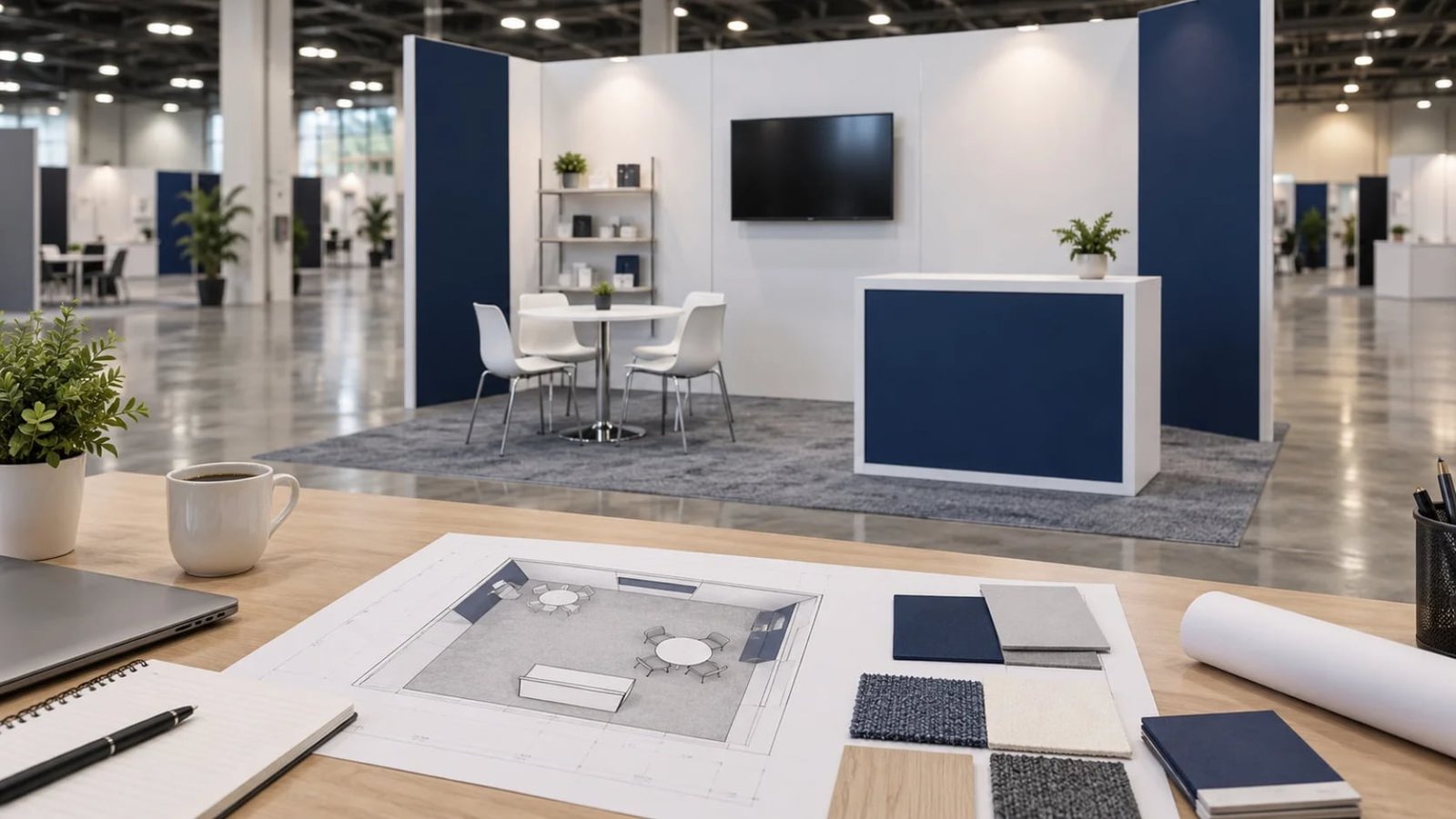
Planning a booth at the Orange County Convention Center (OCCC) starts with your exhibit goals, assigned floor plan and current exhibitor manual. Align the layout, production, freight, service orders and installation around those documents, and identify costs and responsibilities before approving the project.
Start With the Venue Resources and Your Show Manual
Use the OCCC Event Planning Guide and exhibitor-appointed contractor conditions alongside your event’s current exhibitor manual. Venue information establishes facility requirements; the event documents specify your booth assignment, access schedule and service arrangements.
Confirm the building, hall and booth number before booking freight or labor. Check whether your event assigns receiving times and which drawings, contractor documents or service orders need approval.
OCCC’s Exhibitor Services ordering guide identifies venue-provided services, including electrical and rigging. Do not assume one show contractor supplies every service. Establish who accepts each order, performs the work and pays the invoice.
Labor rules and exhibitor work allowances depend on the event, designated providers and applicable venue arrangements. Confirm permitted tasks and contractor eligibility rather than applying a blanket union-labor rule to every OCCC show.
Booth Planning Has Dependencies, Even When Tasks Overlap
Design, freight planning and service coordination can proceed together. Some decisions still need to be settled before others can be finalized:
- Layout and equipment: outlet positions, loads and connectivity depend on the planned displays and demonstrations.
- Production and freight: carrier arrangements depend on the ship-ready date, packed dimensions, weights and receiving options.
- Structure and installation: the build sequence depends on component complexity, crew scope, equipment and permitted access.
- Approvals and orders: overhead elements or specialized exhibits may need documentation before related work can proceed.
Late design approval can compress fabrication, graphics, freight, service ordering and installation planning into the same limited window. Keep a shared schedule with a named owner, actual deadline and approval status for each task.
Example OCCC Booth Planning Sequence
For custom production, several months can be a useful planning window. Larger exhibits, international freight, structural approvals, integrated AV or specialized product handling may need more preparation. Simpler rental projects may require less time, subject to availability and actual event deadlines.
Build the schedule backward from move-in instead of treating a fixed month count as an OCCC requirement.
| Phase | Main decisions | Information needed |
|---|---|---|
| Brief & manual review | Prioritize displays, demonstrations, meetings and budget | Assigned footprint, open sides and current show documents |
| Design & scope | Select rental, custom or hybrid components | Product dimensions, graphics, AV and staff needs |
| Approvals & service orders | Submit required plans and assign ordering responsibilities | Actual deadlines, service conditions and approval contacts |
| Production & preparation | Prepare components, approve artwork and review assembly | Final drawings, proofs and agreed scope |
| Freight & installation planning | Confirm receiving method, packing and crew sequence | Shipment details, access instructions and service dependencies |
| Move-in & move-out | Coordinate delivery, installation, dismantling and return | On-site contacts, release documents and carrier arrangements |
Activities can overlap. This is an example planning sequence, not an official timetable or a delivery commitment.
International Freight and Approval Cycles
International shipments require planning for transit, customs clearance, port or airport handling and final delivery. Obtain a route-specific schedule from your freight forwarder and work backward from the event’s permitted receiving dates.
Have a customs broker review the documentation and entry requirements for booth components and product samples. Do not assume a standard shipping allowance or import method.
Time-zone differences can lengthen approval cycles. Assign decision-makers, file-version ownership and response deadlines before design and production begin.
Budget for Builder Work and Show-Site Services
Compare proposals using the same scope. A booth quote may include selected logistics or installation work, but it should not be assumed to include every venue service.
| Budget category | What to review |
|---|---|
| Design, rental or fabrication | Structure, finishes, graphics, flooring, furniture and revision allowances |
| Freight | Packing, inbound delivery, outbound transport and destination |
| Material handling | Designated provider, included tasks, rate basis, minimums and special handling |
| Installation & dismantling | Crew scope, equipment, work windows, overtime conditions and sample positioning |
| Electrical, internet and rigging | Provider, order specifications, approval requirements and payer |
| Changes and unresolved items | Change-order terms, estimated charges and project-specific contingency |
Where advance-order pricing is available, record the qualifying deadline and the information needed for a complete order. Flooring, furniture or AV may already be in the builder’s proposal; avoid budgeting the same item twice.
Set a contingency allowance after reviewing unresolved decisions, supplier terms and current service rates. There is no single percentage appropriate for every exhibit. Our trade show booth cost guides explain the main budget categories.
Coordinate Freight, Material Handling and Installation
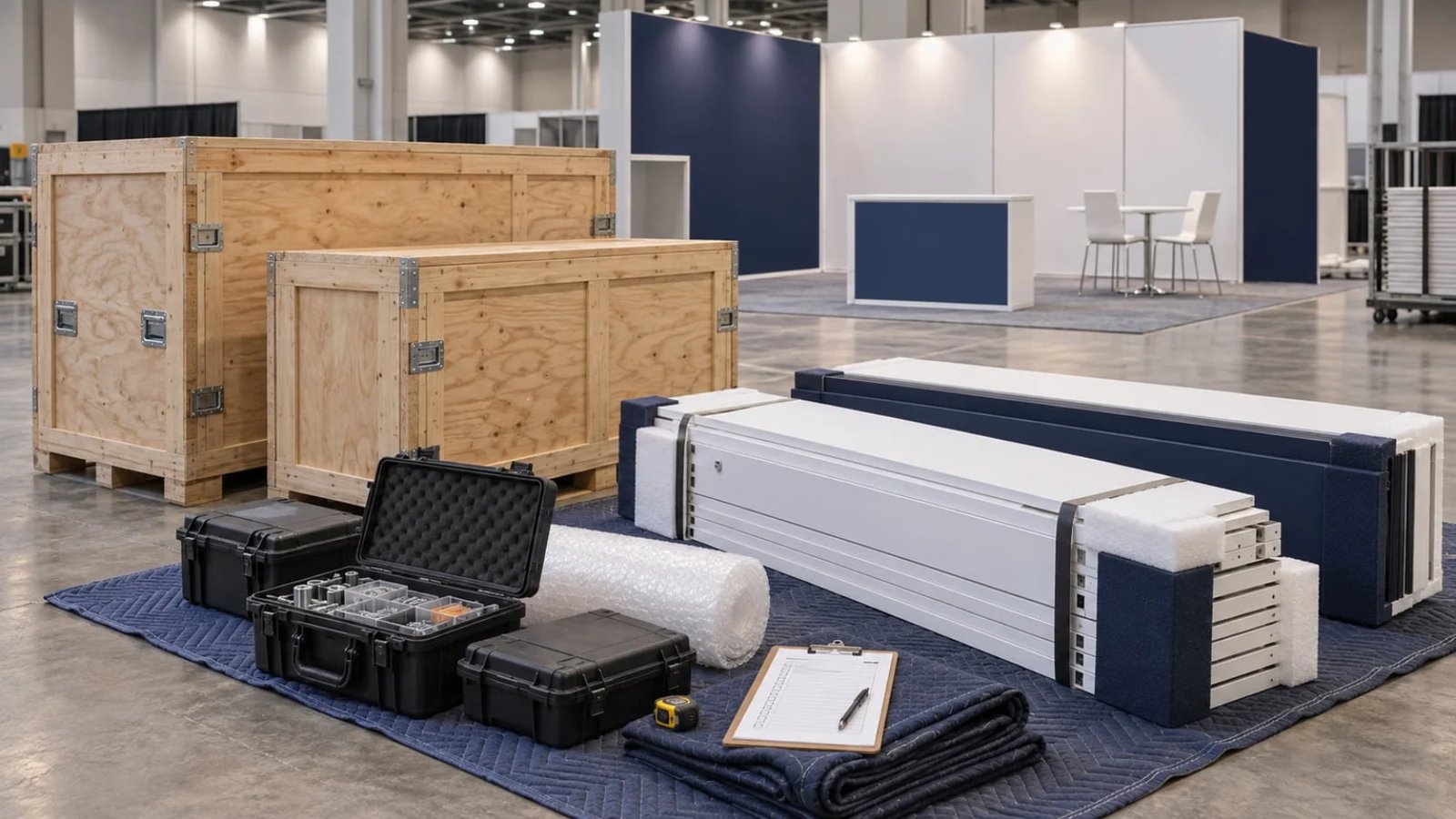
Transportation moves freight between locations. Material handling, often called drayage, concerns the event’s receiving and movement arrangements. They may be supplied and priced separately.
Review the material-handling form for the designated provider, included tasks, rate basis, minimums, billing increments and special-handling conditions. Check whether hand-carry, personally owned vehicle or cartload options are available and suitable for your shipment. Do not assume all shipments use one weight-based rate.
The OCCC contractor conditions direct exhibitors to the event manual or show management for delivery instructions. Sending packages to a general venue address does not establish an accepted receiving arrangement.
Advance Warehouse or Direct-to-Show?
Compare the permitted receiving dates, shipment restrictions, charges and installation dependencies. Advance delivery can separate carrier arrival from venue move-in; direct-to-show delivery must fit the event’s receiving window. Neither is automatically cheaper or suitable for every shipment.
Before dispatch, confirm labels, delivery address, packed dimensions, weights, crate counts and the contact responsible for exceptions. Plan empty-container handling, outbound documents, carrier pickup and the return destination before move-in.
For further planning, review our drayage guide and exhibit transportation service.
Design Around Function and Buildability
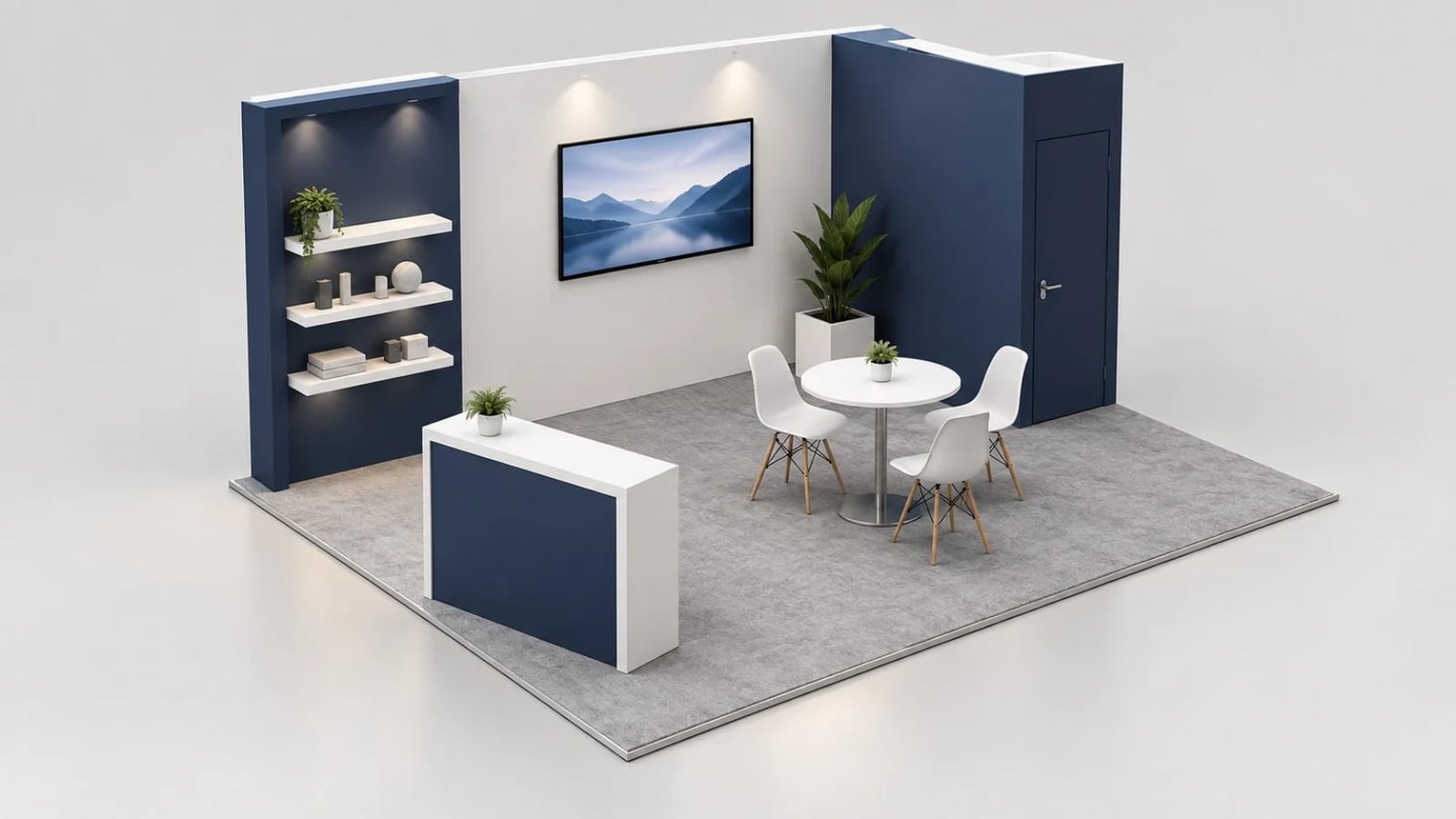
Prioritize the interactions the booth must support. Product inspection, software demonstrations, quick introductions and scheduled meetings need different space arrangements.
- Visitor flow: keep approaches clear and separate reception queues from demonstrations and meetings.
- Product requirements: confirm dimensions, weights, support methods, moving parts and utility needs before approving display positions.
- Staff workflow: provide appropriate storage, replenishment access and working space.
- Graphics and screens: plan readable content around viewing distances and actual display dimensions.
- Transport and assembly: design components for packing, handling and the agreed installation sequence.
Confirm the assigned booth configuration and current height, sightline and structure rules. Hanging signs or overhead elements may need engineering documentation and advance approval. OCCC’s rigging conditions identify the venue’s rigging role; verify applicable submission dates and arrangements before incorporating a suspended feature.
Covered or multilevel designs need additional review under the venue’s conditions. Flag them early rather than treating them as ordinary display additions.
A design is not practical if its required installation sequence exceeds the event’s permitted access window. Review crew responsibilities, equipment and utility handoffs with your builder. Our installation and dismantling service explains the work to define in the proposal.
Real Orlando Example: STEER at NPE 2024
Exhibitsmax’s STEER 30×30 exhibit at NPE 2024 in Orlando provides an industrial-project reference. The exhibit combined technical and application information, multimedia presentation, reception and meeting areas within a larger footprint.
The planning lesson is to allocate space for both explaining the technology and discussing its applications. Product information, viewing positions and conversations should work together without obstructing circulation.
This completed project illustrates one layout approach. It does not establish rules or approval requirements for future OCCC events. Explore 30×30 booth rental and design options for related footprint planning, or review our trade show booth rental service when comparing project approaches.
Need booth design and installation support for your event? Explore our Orlando trade show booth rental services for rental configurations, the completed STEER exhibit and a clear breakdown of builder scope and services to confirm separately.
Frequently Asked Questions
How early should I contact a builder for an OCCC show?
Contact a builder once the event and likely footprint are known. Share the move-in date, manual, product requirements and decision deadline. Preparation needs vary with production scope, approvals, shipping and availability; there is no universal six-to-nine-month requirement.
Do I need a separate installation contractor?
Check the builder’s proposal and current event rules. Installation may be part of the agreed scope or arranged separately. Confirm EAC eligibility, required documents and permitted tasks before scheduling labor.
Is material handling included in booth shipping?
Only if expressly stated. Freight and show-site handling are different services. Identify the receiving provider, charges and payer in the written scope, and review the event’s handling form.
Can international exhibitors ship directly to an OCCC show?
Potentially, when the event permits the receiving method and the shipment meets customs and delivery requirements. Confirm the event-specific address, acceptance dates and labels with the receiving provider, and coordinate clearance and final delivery with your forwarder.
What should I do if freight may miss the receiving window?
Contact the carrier, receiving provider and installation lead before redirecting it. Confirm permitted alternatives, costs and the effect on the build sequence. Do not assume late acceptance, automatic rerouting or extra installation access.
Planning a Booth at Orange County Convention Center?
Share your show, booth size, move-in dates, product or display requirements and current exhibitor manual. Our team can review the design and execution scope around your event.
Request an Orlando Booth Planning Review
Explore Orlando Trade Show Booth Rental
Official resources checked October 7, 2026. Confirm current venue requirements and your event’s exhibitor manual before finalizing the plan.