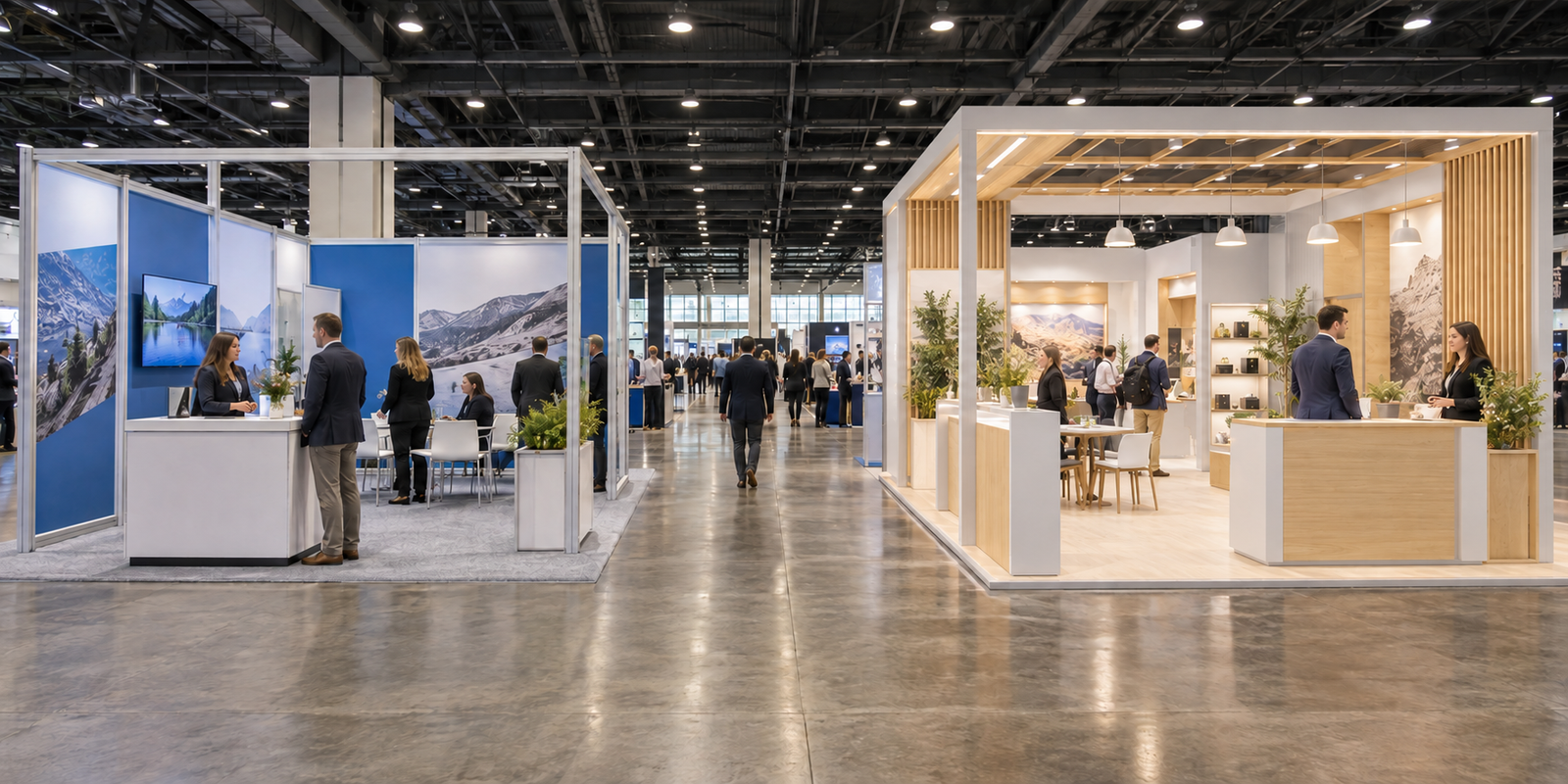
A rental booth and a custom booth distribute cost differently. Rental usually concentrates more cost into each scheduled show. Custom shifts more investment to design, fabrication, graphics, crating, and asset preparation before the program begins, then adds recurring operating costs for each reuse.
Neither option is automatically less expensive. The useful question is: Which approach produces the lower and more predictable total cost for your actual show calendar?
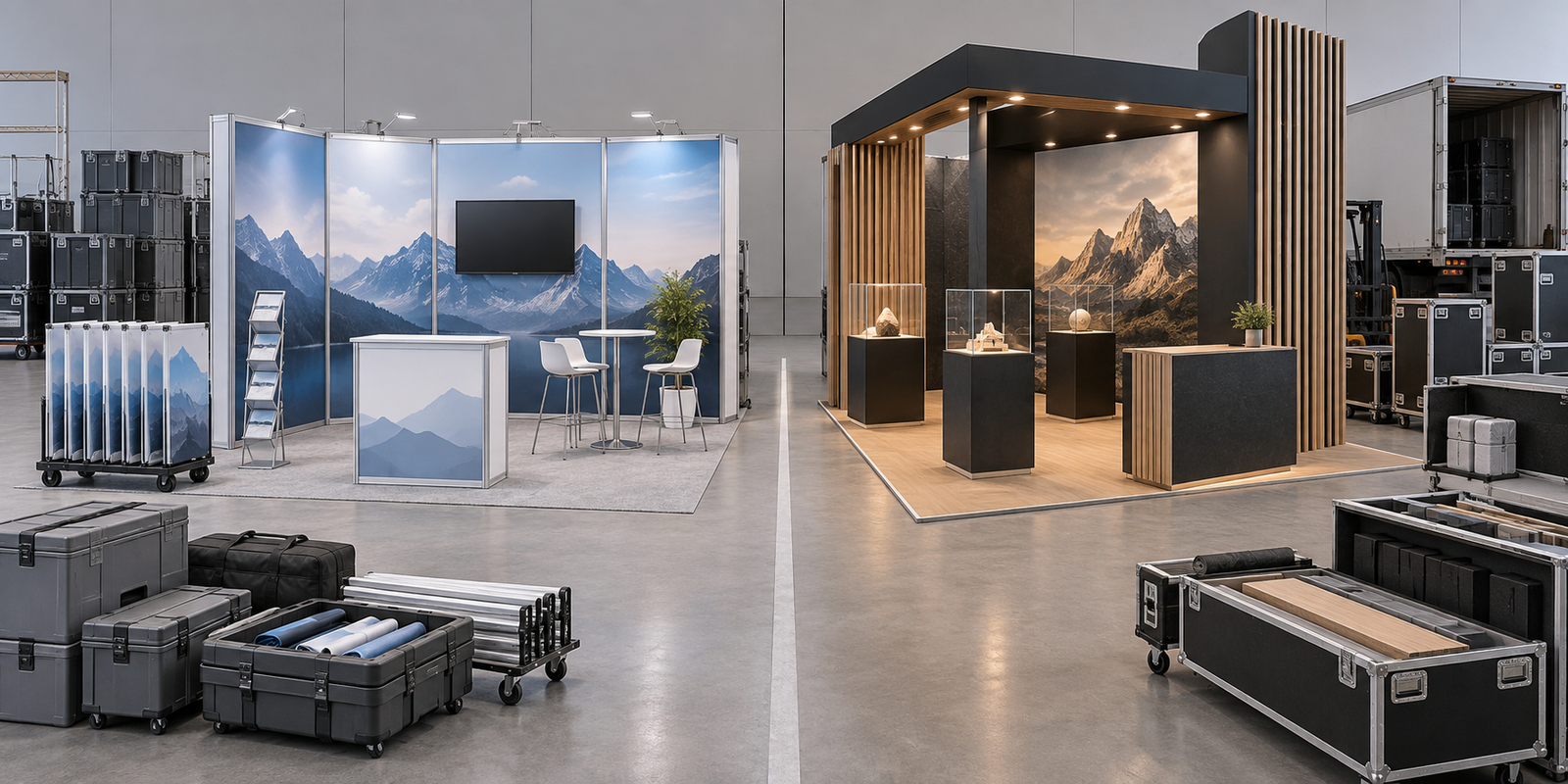
Custom Booth vs. Rental Booth Cost at a Glance
| Cost layer | Rental booth program | Custom booth program |
|---|---|---|
| Initial asset commitment | Usually lower because the exhibitor is not buying a long-term structure | Usually higher because design, fabrication, graphics, and packing are created up front |
| Cost at each show | Rental scope, show-specific graphics or adjustments, local delivery, and defined installation scope | Reuse preparation, freight, installation, graphics refreshes, repairs, and defined installation scope |
| Storage between shows | Often lighter because the rental provider manages the core structure | Usually requires a plan for crating, storage, condition checks, and maintenance |
| Changes to size or message | Scope can be adjusted for the scheduled event | Reconfiguration may be efficient when modularity was designed in; major changes can require new components |
| End-of-program responsibility | The rental asset returns to the provider | The owner must store, sell, reuse, refurbish, or dispose of the asset |
Show services such as electrical, internet, rigging, cleaning, and current event rules are separate planning items. They may apply to either path and should be included in a complete program budget rather than assumed to be part of the booth price.
What Does Total Cost of Ownership Mean for a Trade Show Booth?
Total cost of ownership, or TCO, is the full cost of creating and operating a booth across the planned show program. It prevents an unfair comparison between a one-show rental quote and only the fabrication portion of a custom build.
For a rental program, the comparison normally includes each event’s approved rental scope, graphics or layout changes, delivery or freight coordination, installation and dismantling, and any agreed project support.
For a custom program, the comparison normally includes the initial design and fabrication scope, graphics, crates or packing, each show’s freight and installation scope, storage, maintenance, refurbishment, and changes needed to keep the asset useful.
The goal is not to force every cost into the booth-builder proposal. It is to make every cost visible, identify who controls it, and compare the same show calendar under both scenarios.
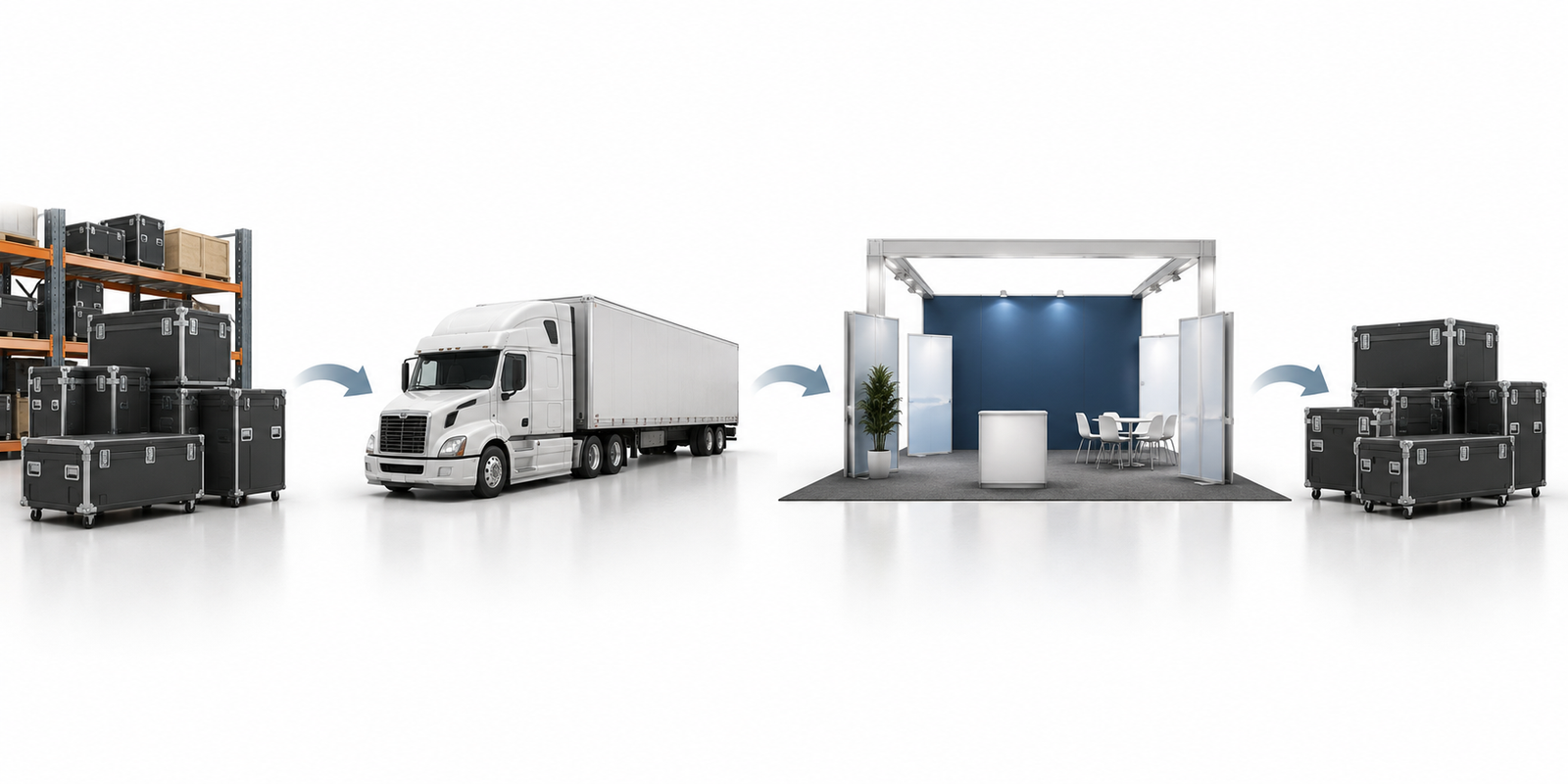
Which Costs Recur at Every Show?
Some costs repeat even when an exhibitor owns the booth. The magnitude and responsibility can change, but ownership does not remove event-level execution costs.
| Recurring cost area | What to confirm for the actual program |
|---|---|
| Freight and delivery | Origin, destination, packed size and weight, route, receiving plan, and carrier scope |
| Material handling | Current show contractor, published rate structure, shipment condition, and delivery route |
| Installation and dismantling | Drawings, labor window, equipment, packing scope, and move-out plan |
| Show services | Electrical, internet, rigging, cleaning, and other services ordered under the current event program |
| Graphics and messaging | Whether graphics can be reused, refreshed, resized, or replaced for the next show |
| Project management | Who coordinates show documents, deadlines, vendors, freight, and on-site interfaces |
For the event-level cost categories that frequently sit outside a booth quote, see Hidden Trade Show Booth Costs: 12 Fees Exhibitors Often Miss. For freight planning, read Trade Show Shipping Cost: What Affects Exhibit Freight Pricing?.
How Do Storage, Refurbishment, and Graphic Refreshes Change Custom Booth Cost?
A custom booth becomes an operating asset after the first event. Its future value depends on whether it can be packed safely, moved economically, stored in suitable conditions, and refreshed without rebuilding the entire environment.
The items to compare include:
- Crating and packing: Can components be protected, identified, and reused without excessive handling risk?
- Storage: Where will the asset be held, and how will inventory and condition be checked between shows?
- Refurbishment: Which surfaces, lighting, hardware, or structural pieces may need repair before reuse?
- Graphic refreshes: Can message changes be made through replaceable graphics, or do they require larger construction changes?
- Modularity: Can the design adapt to future booth sizes with existing components?
These items do not make custom ownership a poor choice. They determine whether the original investment can keep producing value over the intended program.
How Do Rental Costs Behave Across Multiple Shows?
Rental usually avoids the long-term ownership responsibilities of a custom asset, but each show still needs an approved scope. The rental price can change when booth size, city, layout, graphics, furniture, AV, delivery, installation requirements, or the event schedule changes.
A multi-show rental comparison should therefore use the actual upcoming calendar rather than one event multiplied by an assumed number of shows. Separate which elements are reused within the rental program from which elements are newly produced or adapted at each event.
For a line-by-line explanation of what a rental proposal may include and what often remains separate, see Trade Show Booth Rental Cost: What Is Usually Included?.
How Do You Estimate the Rental Booth Break-Even Point?
There is no universal third-show or fourth-show break-even point. The result depends on the actual program and the value of the custom asset after each reuse.
Use the same planning period for all scenarios, such as the confirmed 12–24 month show calendar:
| Scenario | Planning model |
|---|---|
| Rental | Sum the approved rental and event-execution scope for each planned show, then add any recurring program costs not included in that scope |
| Custom | Add the initial design, fabrication, graphics, packing, and asset-preparation scope to the recurring cost of each planned show, storage, refurbishment, and required changes |
| Hybrid | Compare an owned or branded core with rented structure, furniture, AV, or show-specific additions where that lowers the total program cost or operational burden |
A custom option begins to make economic sense when the retained value, repeat use, and operating plan justify the initial investment across the actual schedule. A rental option remains efficient when the calendar, footprint, message, or operating responsibilities are likely to change.
Do not treat a general calculation as a commitment. Use final booth dimensions, expected number of shows, packing list, freight route, current show-service requirements, storage plan, and required refreshes before making the comparison.
What Information Is Needed for a TCO Comparison?
A useful comparison begins with a complete brief:
- Confirmed and probable show calendar for the next 12–24 months
- Booth sizes, floor plans, and booth types for each event
- Product displays, meeting areas, storage, AV, and visitor-flow requirements
- Brand or graphic elements expected to change between shows
- Freight origin, likely delivery routes, and storage location
- Installation and dismantling responsibilities
- Current show documents and known event-service requirements
- Target budget and the decision date
This information supports a realistic cost model without pretending that one generic price or one break-even number fits every exhibit program.
Frequently Asked Questions
Is a rental booth always cheaper than a custom booth?
No. Rental can reduce the initial asset commitment, while custom ownership can create more value when the booth is reused consistently and its storage, maintenance, freight, and refresh plan are practical. Compare the full program rather than one show invoice.
Do freight and drayage apply to both rental and custom booths?
They can apply to either program. The responsible party, shipment origin, weight, route, and current event procedures determine the scope. Confirm freight and material-handling responsibilities separately from the booth structure quote.
How many shows are needed for a custom booth to break even?
There is no fixed show count. Compare the actual calendar, booth-size consistency, asset reuse plan, freight, storage, refurbishment, graphic changes, and event-execution scope.
Does a custom booth require storage and maintenance?
Usually, yes. A reusable asset needs a defined plan for packing, storage, inventory, condition checks, repairs, and preparation for the next event.
Need a Rental vs. Custom TCO Comparison?
Send Exhibitsmax your show calendar, booth sizes, target budget, current floor plans, and expected brand or product-display requirements. We can compare rental, custom, and hybrid cost scenarios across the program scope you are actually planning.
Request a Booth Cost Comparison →
Still deciding which exhibit model fits your program? Read Trade Show Booth Rental vs Custom Booth: Which Is Better?.