
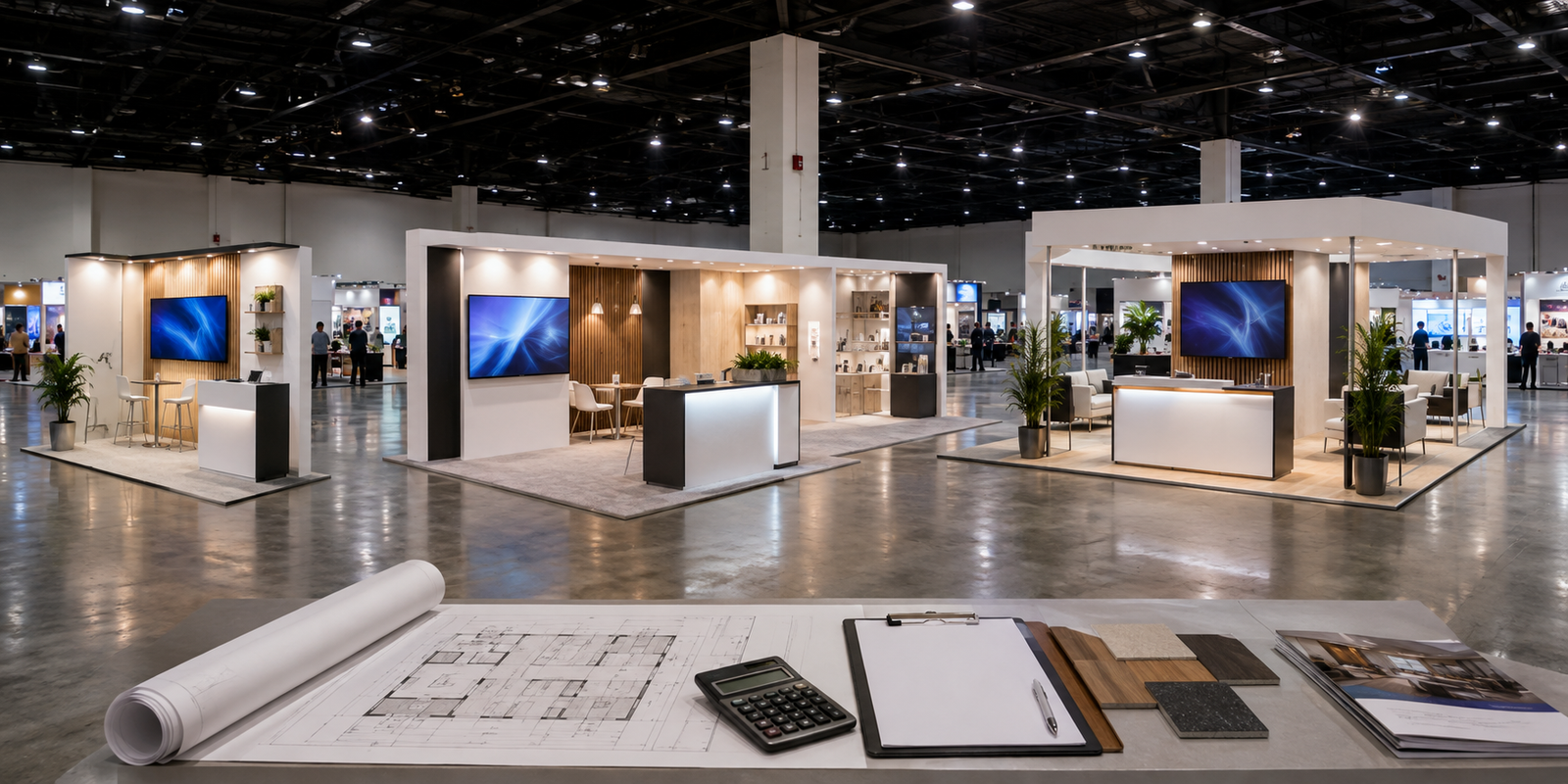
A 10×20, 10×30, or 20×20 LVCC booth does not have one universal price. The reliable way to budget is to separate the work you buy from your booth builder from the event and venue services ordered through the current show’s designated providers.
That two-bucket approach makes the full cost visible before fabrication, freight, service orders, and move-in decisions are finalized.
LVCC Booth Cost at a Glance: The Two-Bucket Budget
| Bucket | Typical scope | Why it must be budgeted separately |
|---|---|---|
| Bucket A — Builder Scope | Design, structure, flooring, graphics, lighting, furniture, AV, project management, and builder-side I&D | This is the exhibit solution and the builder-managed work. |
| Bucket B — Show and Venue Services | Material handling, electrical, rigging, internet, cleaning, labor supplied by designated providers, and show-specific fees | These requirements and rates are set by the current event, venue, contractor, and service forms. |
A clear proposal should identify both buckets, their inclusions, exclusions, assumptions, and the items that still depend on current show documents. Comparing only Bucket A can make a lower booth quote look more complete than it is.
What Changes a 10×20, 10×30, or 20×20 Booth Cost at LVCC?
Booth footprint influences the design and service scope, but size alone does not determine the final cost. Two booths with the same dimensions can have very different budgets because their product display, structure, freight, power, rigging, and installation plans differ.
| Booth size | Typical planning questions | Common cost drivers |
|---|---|---|
| 10×20 | Is the goal product display, lead capture, or short buyer meetings? | Graphic coverage, product displays, storage, freight, electrical, and installation sequence. |
| 10×30 | Does the added length create separate display, demo, and meeting zones? | Larger structure and graphics, more freight, multiple functional zones, AV, and higher service scope. |
| 20×20 | Is the booth island-style, product-heavy, or using a hanging element? | Custom architecture, flooring, lighting, AV, rigging when required, power, freight, and I&D complexity. |
The design tier is also useful when it describes scope rather than a generic price promise:
| Planning tier | What it usually means | What can change the budget |
|---|---|---|
| Essential | Efficient structure, clear branding, core product display, and practical visitor access | Custom display details, freight weight, electrical, and service deadlines. |
| Enhanced | More immersive graphics, storage, display zones, controlled lighting, or modest AV | Increased fabrication, graphics, power, AV, and installation scope. |
| High-impact | Custom architecture, large-format visuals, advanced product demos, LED or AV, raised elements, or hanging features | Engineering, rigging, power, AV, freight, material handling, and additional labor. |
Use this structure to compare proposals. Do not assume that a tier from one show will produce the same cost at another show, or even at another LVCC event.
Bucket A: What Should a Builder Scope Include?
Builder scope commonly includes the elements that create the exhibit itself:
- Design, 3D visualization, and production coordination.
- Rental, modular, or custom booth structure.
- Flooring, graphics, lightboxes, exhibit lighting, furniture, and product displays.
- AV or LED equipment when included in the proposal.
- Project management, packing, transportation scope, storage coordination, and builder-side installation and dismantling.
Ask the builder to state exactly what is included and excluded. For example, exhibit lighting may be in Bucket A while the electrical service that powers it is ordered in Bucket B. A complete scope protects the budget from gaps between a rendering, a fabrication proposal, and the current show-service order form.
For a broader build-budget framework, read How Much Does It Cost to Produce a Trade Show Booth?.
Bucket B: What Do Show and Venue Services Add?
Bucket B is where many LVCC budgets change after the booth design is approved. It may include material handling, electrical, internet, rigging, cleaning, venue labor, and other show-specific services.
| Service category | What determines the cost | What to verify |
|---|---|---|
| Material handling / drayage | Shipment weight, pieces, freight type, receiving route, minimums, timing, and special handling | Current show material-handling rate sheet and receiving instructions. |
| Electrical | Equipment load, service type, locations, distribution, and current order deadlines | Current electrical order form and approved provider. |
| Rigging | Points, motors, engineering, crew, approval, equipment, and schedule | Current rigging rules, plot process, and provider requirements. |
| Internet and technology | Required connection type, bandwidth, location, and event provider | Current telecom or technology order form. |
| Cleaning and show services | Ordered frequency, booth activity, waste, and event requirements | Current service guide and exhibitor kit. |
| Venue labor | Scope, city, venue, show, contractor, and the current labor agreement | Current labor order form and exhibitor manual. |
The current Exhibitor Services Kit governs these costs. An LVCC show does not have one permanent material-handling, electrical, labor, or rigging price list.
For a full checklist of commonly missed categories, read Hidden Trade Show Booth Costs Exhibitors Should Know.
Drayage Is a Major Bucket B Swing Factor
Material handling is the service that receives freight and delivers it to the booth, then removes it after the show. The cost can change with shipment weight, number of pieces, packing method, freight classification, receiving route, timing, and any special-handling requirement.
A lighter exhibit is not automatically less expensive, and an advance-warehouse route is not automatically the best choice. The current rate sheet, shipment readiness, carrier schedule, and delivery method determine the right plan.
Before shipping, confirm:
- Final packed weight and dimensions for each crate, skid, or pallet.
- The number of pieces and whether the freight can be consolidated safely.
- Advance-warehouse or direct-to-show instructions for the current event.
- Labels, bill of lading, target arrival window, and outbound plan.
- Any product, machinery, or unusual handling requirement.
Keep the detailed explanation in What Is Drayage?. This LVCC guide should use drayage to inform the total budget, not replace the dedicated drayage resource.
Electrical and AV: Confirm the Actual Load and Layout
Electrical costs are based on the current show’s service form, the actual equipment load, required service type, service locations, and the execution plan. A screen, product demo, lightbox, charging station, or LED display may each affect the electrical layout differently.
Map the equipment and locations before ordering. Confirm the current electrical provider, order deadline, floor-plan requirements, and any labor needed to place or adjust services. Do not use a rate sheet from another Edlen location, another venue, or an earlier show as the LVCC price.
For practical lighting and display planning, read LED Lighting for Trade Show Booths: A Practical Planning Guide.
Rigging Can Change a 20×20 Budget
A 20×20 booth does not always need rigging. A hanging sign, truss, overhead element, or other suspended component can introduce a separate coordination path.
Rigging cost and process are affected by the current show’s points, motors, engineering, crew, approval procedure, equipment, and schedule. Confirm whether a suspended element improves the buyer experience enough to justify its full scope before releasing the booth design.
Read Trade Show Labor and Rigging Costs for the detailed planning framework. The current show’s rigging instructions and rate sheet control the final project requirements.
LVCC Cost Planning Timeline Framework
Use the current show’s exhibitor kit to assign actual dates. The following is a planning framework, not a permanent LVCC deadline schedule.
| Stage | Main cost-control decision |
|---|---|
| Early planning | Select the booth tier, design strategy, freight approach, and preliminary two-bucket budget. |
| Design lock | Confirm product displays, power, AV, rigging, graphics, and storage before production release. |
| Advance service deadline | Submit current electrical, internet, rigging, labor, and other service orders before the event’s deadline. |
| Pre-ship | Confirm final packed weight, labels, delivery route, bill of lading, and outbound instructions. |
| Move-in | Coordinate freight handoff, services, I&D, inspection, and final exhibitor handover. |
Early planning can materially reduce exposure to late rates, overtime, rework, and last-minute changes. Use How Early Should You Start Planning a Trade Show Booth? to match the schedule to the project’s actual dependencies.
What to Send for an LVCC Two-Bucket Budget
A useful working estimate starts with the right project inputs. Send:
- Show name, dates, assigned hall, booth number, booth size, booth type, and floor plan.
- Current exhibitor manual and available service order forms.
- Product dimensions, weights, display and demo needs, and any special equipment.
- Existing booth drawings, renderings, brand assets, or reference images.
- Required functions: product display, lead capture, meeting area, storage, hospitality, AV, or LED.
- Shipping origin, reuse plan, target delivery method, and post-show storage or return needs.
- Target budget and internal decision deadline.
This gives the builder a basis for separating controlled builder scope from show and venue services that still need current rate-sheet confirmation.
To compare local booth configurations and completed projects, explore our Las Vegas trade show booth rental services. Use the city page’s quote-scope table alongside this two-bucket framework so builder work and separately ordered show services remain clear.
Frequently Asked Questions
Are electrical and drayage included in a booth builder quote?
Not necessarily. Electrical, material handling, rigging, internet, cleaning, and other show services are often ordered through the event’s designated providers. Confirm the written inclusions and exclusions in both budget buckets.
Does a 20×20 booth always need rigging?
No. Rigging is only required when the design includes a hanging sign, suspended element, or another feature subject to the current show’s rigging process.
Is the advance warehouse always less expensive than direct-to-show delivery?
No. The better route depends on the current event rate sheet, shipment readiness, delivery schedule, freight type, and potential handling requirements. Compare the current instructions before booking the route.
Why can two 20×20 booths have different total costs?
Design, product display, materials, freight, AV, electrical, rigging, labor, material handling, storage, and current show services can all change the full project scope.
When should I start the LVCC budget process?
Start when the show, booth assignment, and preliminary program are known. Begin earlier for custom fabrication, heavy products, international freight, advanced AV, rigging, or complex approvals.
Need a Clear LVCC Booth Budget?
Send us your show name, hall, booth size, floor plan, product requirements, freight origin, current exhibitor documents, and target budget. Our Las Vegas team can separate the builder scope from current show and venue services before fabrication, freight, and service orders are finalized.