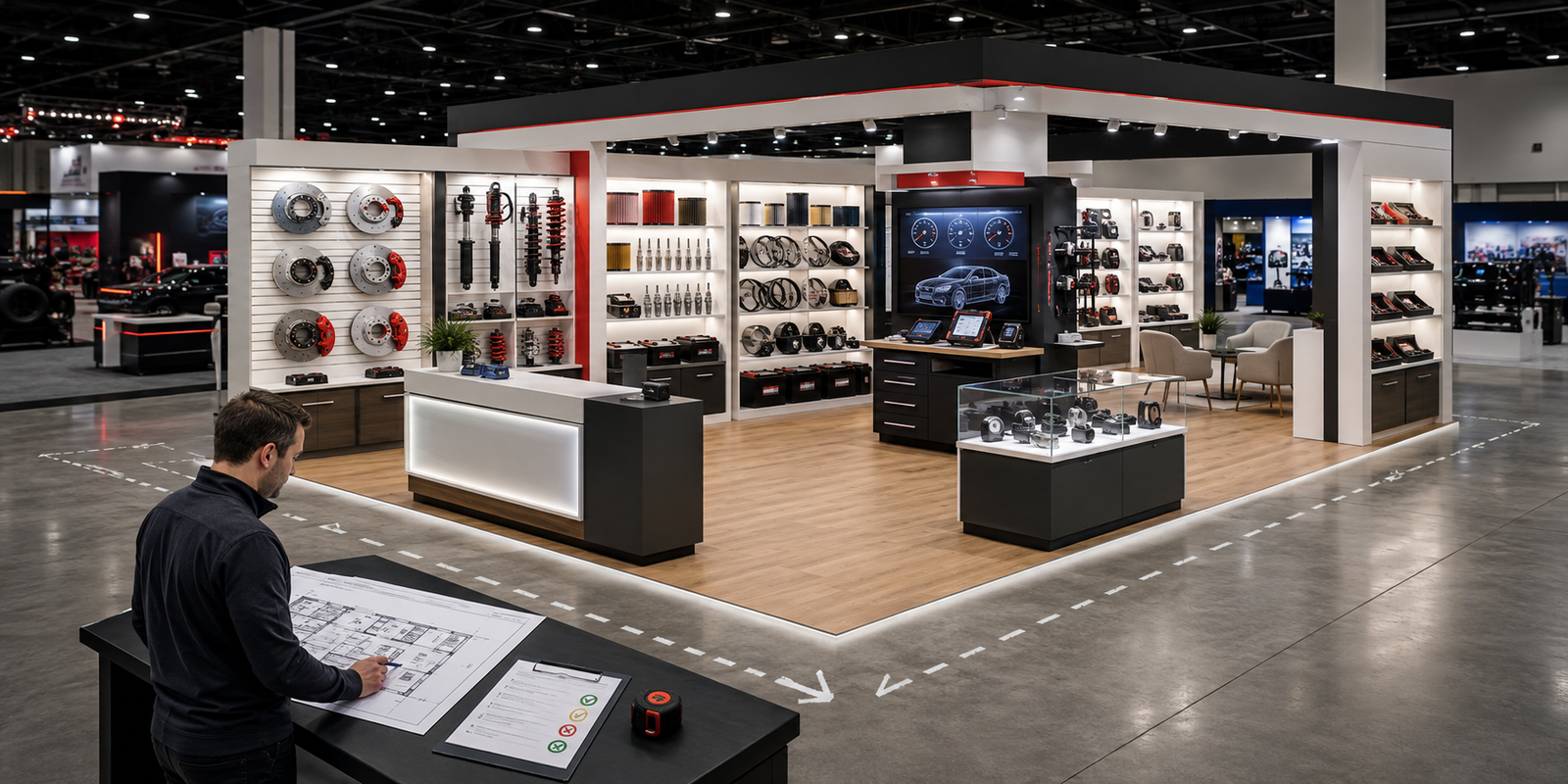
Preparing for AAPEX Las Vegas can feel like a monumental task, especially when you consider the intricate details of your exhibit. The challenge often lies in harmonizing your vision for an AAPEX Las Vegas booth guide with the practicalities of design, strict show regulations, and seamless execution. Many exhibitors, particularly those new to the event or from overseas, find themselves overwhelmed by these complex requirements, often leading to avoidable stress and expense.1
A successful AAPEX Las Vegas booth guide begins with an integrated strategy, prioritizing product display needs, buyer interaction goals, official show rules, venue constraints, and onsite execution capabilities from the very beginning, rather than merely focusing on an appealing aesthetic design.2
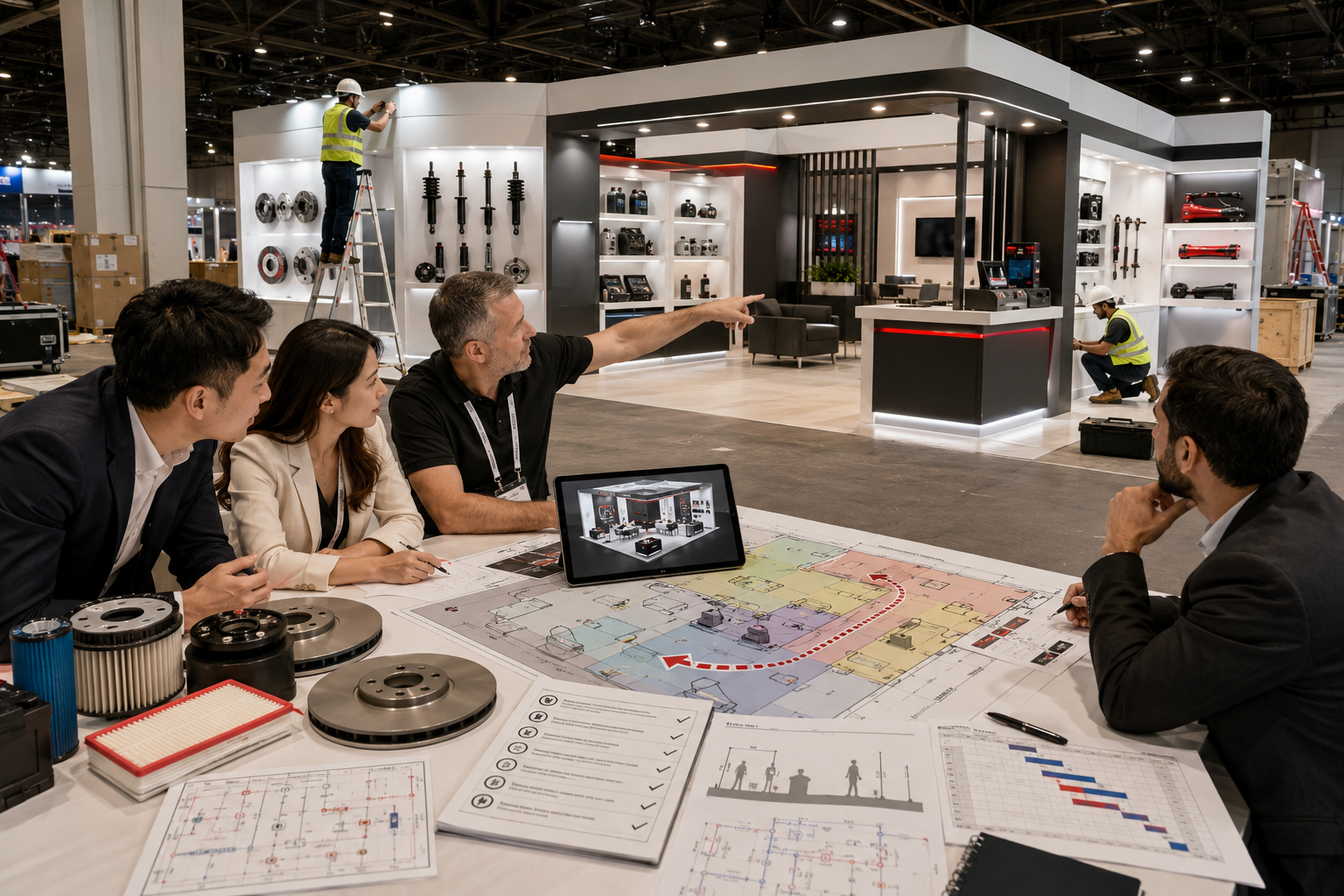
Understanding this holistic approach is key to transforming your exhibit space from a simple footprint into a powerful, functional extension of your brand at AAPEX. Let's delve into how you can effectively plan and execute your booth, ensuring it meets both your marketing objectives and all necessary compliance requirements.
How Should You Approach Your AAPEX Booth Layout Strategy?
For many exhibitors, the initial thought process for an AAPEX booth layout often begins with browsing attractive designs or considering general booth sizes. However, this common starting point frequently overlooks the fundamental purpose of your presence at AAPEX: to connect with buyers and showcase your products effectively. A purely aesthetic approach can lead to a beautiful but ultimately underperforming space.3
Your AAPEX booth layout should primarily function as a strategic sales and operations tool, meticulously planned around your specific product displays, desired buyer interactions, and the roles of your onsite staff, rather than just an attractive floor plan template.
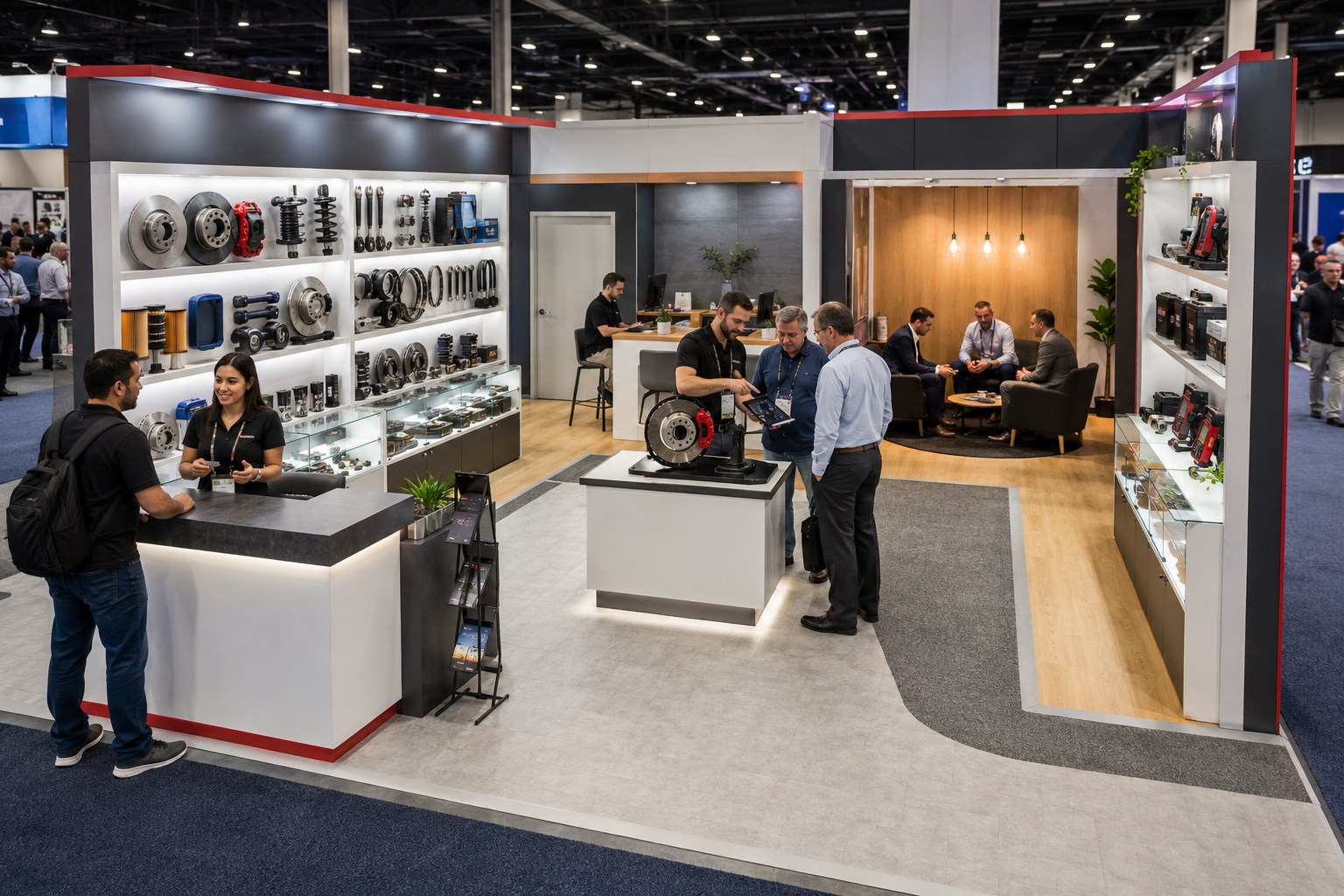
Dive Deeper: Layout as a Sales and Operations Decision
In our experience designing and building exhibits in Las Vegas, including for shows comparable to AAPEX, we've observed that exhibitors often start with booth size before clarifying crucial operational details like product dimensions, demo needs, or staff roles. This can lead to a disconnect where the design looks great on paper but doesn't facilitate effective sales conversations or product demonstrations.
When we discuss AAPEX Las Vegas booth guide planning with clients, we always reframe the layout as a sales and operations decision. It's not just about what looks good, but what enables your team to achieve its goals.
- Product Focus:
- What are you showing? Are these small parts, large equipment, or digital interfaces? Their size, weight, and presentation needs dictate space.
- Do products require demonstrations? Demos need dedicated space, power, perhaps water, and clear sightlines for attendees.
- How do buyers interact with products? Do they touch, test, or simply observe? This informs accessibility and protective barriers.
- Buyer Journey Considerations:
- How do you want to stop visitors? An open, inviting front might be best for attracting casual traffic.
- Where do initial conversations happen? Is there a quick Q&A zone, or do you want to move them to a more private meeting area?
- Do you offer product trials or hands-on experiences? These require specific stations and often more floor space per visitor.
- What about closing discussions? Dedicated meeting rooms or semi-private lounges can be crucial for serious buyers.
- Staffing & Operations:
- How many staff members will be present? Overcrowding can deter visitors and make your team less effective.
- What are their roles? Greeters, demonstrators, sales closers, technical support—each needs appropriate space and tools.
- Where will staff take breaks or store personal items? Small, enclosed storage spaces are vital for keeping the booth tidy and staff refreshed.
Choosing the right layout type goes beyond aesthetics; it's about matching your operational needs with the physical space. Booth size alone is never enough to choose a layout. Consider these factors:
- Traffic Flow: How do visitors enter, move through, and exit your space? Clear pathways are essential.
- Aisle Exposure: Do you have one open side, two, or an island configuration? This dramatically influences entry points and visibility.
- Demo Zones: If you're demonstrating products, you'll need specific areas that can accommodate equipment, power, and an audience.
- Meeting Areas: For more in-depth conversations, semi-private or fully enclosed meeting rooms are crucial.
- Storage: Where will marketing materials, product samples, staff belongings, and excess inventory be stored? Integrated storage ensures a clean, professional look.
Here's a simplified look at how different layout strategies align with specific exhibiting goals:
| Layout Type | Primary Goal(s) | Best Suited For | Key Features |
|---|---|---|---|
| Open Concept | Maximize visibility, attract broad traffic | New product launches, brand awareness, high-traffic areas | Minimal walls, open counters, clear sightlines, easy access. |
| Semi-Open | Combine visibility with dedicated interaction | Product showcases with brief demos, lead qualification | Partial walls, defined zones for demos/discussions, some privacy. |
| Meeting-Focused | Facilitate in-depth discussions, private sales | B2B sales, high-value products, distributor meetings | Enclosed or semi-enclosed meeting rooms, comfortable seating, limited product display. |
| Demo-Focused | Highlight product functionality, interactive displays | Technical products, machinery, software, hands-on experiences | Large demo stations, ample space for audience, robust power/utility access. |
| Hybrid | Blend multiple objectives for diverse engagement | Exhibitors with varied products or complex sales processes | Combination of open areas, demo stations, and private meeting zones. |
By approaching your AAPEX Las Vegas booth guide with these operational considerations at the forefront, you ensure that your layout is not just visually appealing but also a highly functional tool for achieving your trade show objectives.
What AAPEX Rules and Regulations Must You Consider for Your Booth?
Many exhibitors, when planning their exhibit in Las Vegas, can get swept up in the excitement of design, sometimes overlooking the crucial regulatory framework governing trade shows. The AAPEX exhibitor manual contains a comprehensive set of rules designed to ensure safety, fairness, and a consistent experience for all participants. Ignoring these rules, even inadvertently, can lead to costly fines, mandatory adjustments, or even delays in your booth setup.4
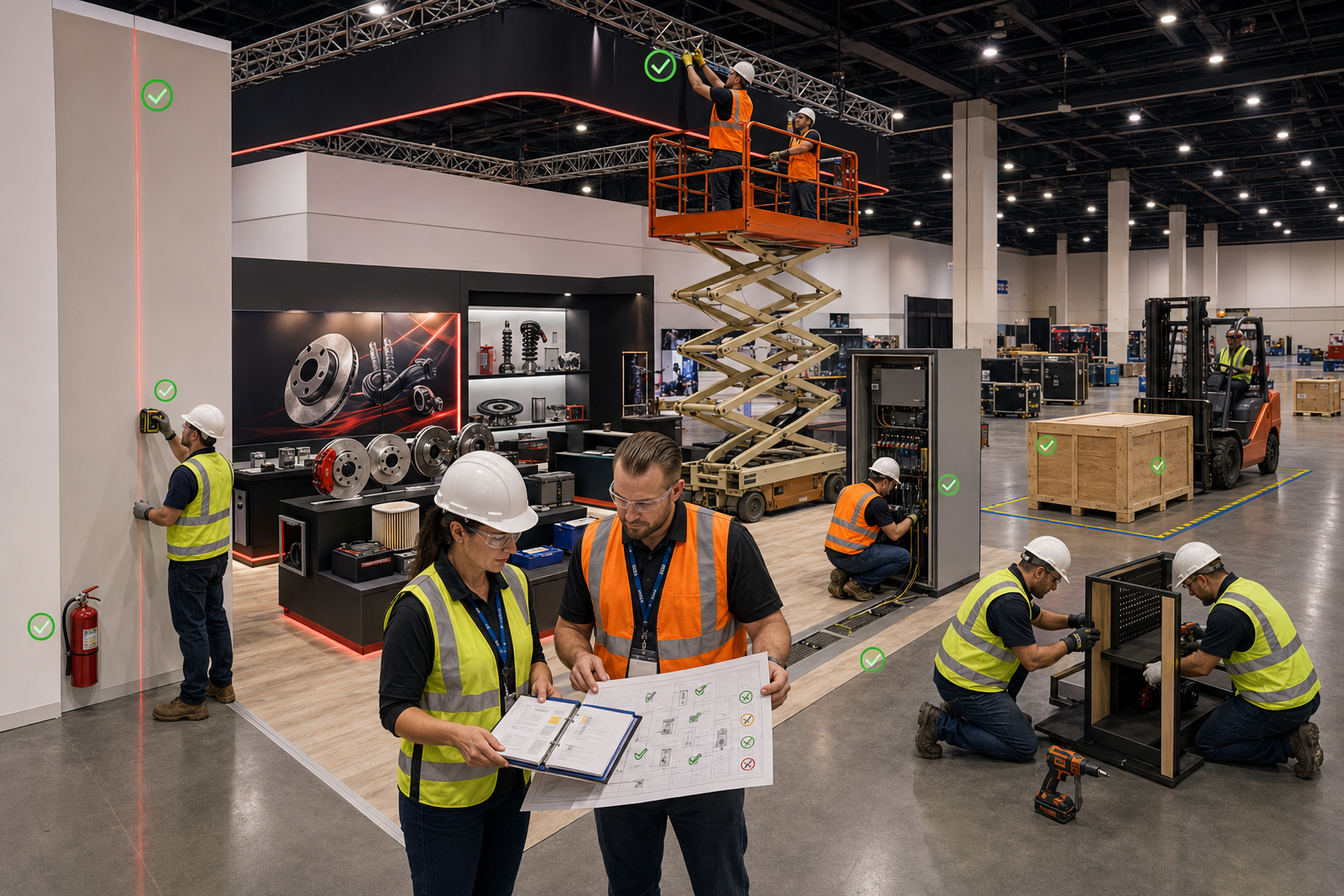
When planning your AAPEX Las Vegas booth guide, you must treat the official show rules and regulations as fundamental design constraints from the very beginning, systematically verifying details in the exhibitor manual related to height limits, hanging signs, electrical, rigging, fire safety, labor, and material handling, among others.
Dive Deeper: Integrating Rules into Your Design Process
For Las Vegas projects, especially those for large events like AAPEX, we typically recommend reviewing the exhibitor manual, venue limitations, contractor requirements, and submission deadlines before finalizing build details. This proactive approach helps prevent costly redesigns or last-minute adjustments.5 It’s important to remember that while we provide practical guidance based on our experience, the official AAPEX exhibitor manual is the definitive source of all rules. It is not something to glance at quickly; it requires thorough review.
Here are the critical categories of rules that can directly impact your AAPEX Las Vegas booth guide design and execution:
- Exhibitor Manual (The Bible): This document is your primary source of truth. It details everything from general show policies to specific move-in/move-out schedules. You and your exhibit partner must read it carefully and continuously refer to it.
- Booth Height Limits: Every booth type (inline, peninsula, island) has specific height restrictions. Going over these limits can result in costly modifications or even removal of elements. Consider how your design impacts sightlines for neighboring exhibitors as well.
- Hanging Signs and Structures: If you plan on having a hanging sign above your booth, there are strict rules regarding its size, weight, placement, and the approval process. These usually involve specific rigging services and significant lead times for submission.
- Electrical Requirements: Power needs must be calculated precisely. From lighting to product demos and charging stations, every electrical drop needs to be ordered in advance through the official vendor. Underestimating power can leave key elements of your booth non-functional.
- Rigging and Structural Integrity: Any complex structures, elevated platforms, or heavy elements will be subject to engineering review and safety checks. Ensure your design can be safely installed and certified.
- Fire and Safety Regulations: Materials used in your booth (carpeting, fabrics, construction materials) often need to be fire-rated. Exit pathways, clear aisles, and access to fire extinguishers are also mandatory. These are often enforced by the local fire marshal.
- Labor Laws and Regulations: Las Vegas is a unionized city, and specific tasks like installation, dismantling, and material handling often fall under union jurisdiction.6 Understanding "jurisdiction lines" for what your staff can do versus what union labor must do is crucial to avoiding delays and unexpected costs.
- Material Handling (Drayage): How your exhibit materials get from the loading dock to your booth space is handled by the official drayage contractor. There are specific procedures, deadlines, and costs associated with this service based on weight and type of freight.
- Graphics Production and Installation: While creative, graphic dimensions and mounting methods must adhere to structural guidelines and overall booth height.
- Service Orders and Deadlines: Utilities (electrical, internet, plumbing), cleaning, security, and furnishings must be ordered through official vendors by specific deadlines. Missing these deadlines often means higher "late order" fees.
- General Contractor Requirements: The official general contractor (e.g., Freeman, GES) manages the show floor and provides many essential services. Understanding their rules for freight delivery, onsite coordination, and even waste disposal is paramount.
We never advise exhibitors to bypass the official manual. Instead, we see our role as a local exhibit builder in Las Vegas as helping you navigate these complex requirements, ensuring your design is compliant from the outset and that your execution plan considers all necessary approvals and services. It's about building smart, not just building.
Why is Timeline and Execution Critical for Your AAPEX Las Vegas Booth?
The excitement of AAPEX can sometimes overshadow the immense logistical challenge of bringing an exhibit to life on the show floor. Many teams focus intensely on the design phase, assuming that once the layout is approved, the rest will simply fall into place. However, underestimating the intricate timeline for approvals, logistics, installation, and onsite support can turn a brilliant design into a stressful, budget-straining ordeal.
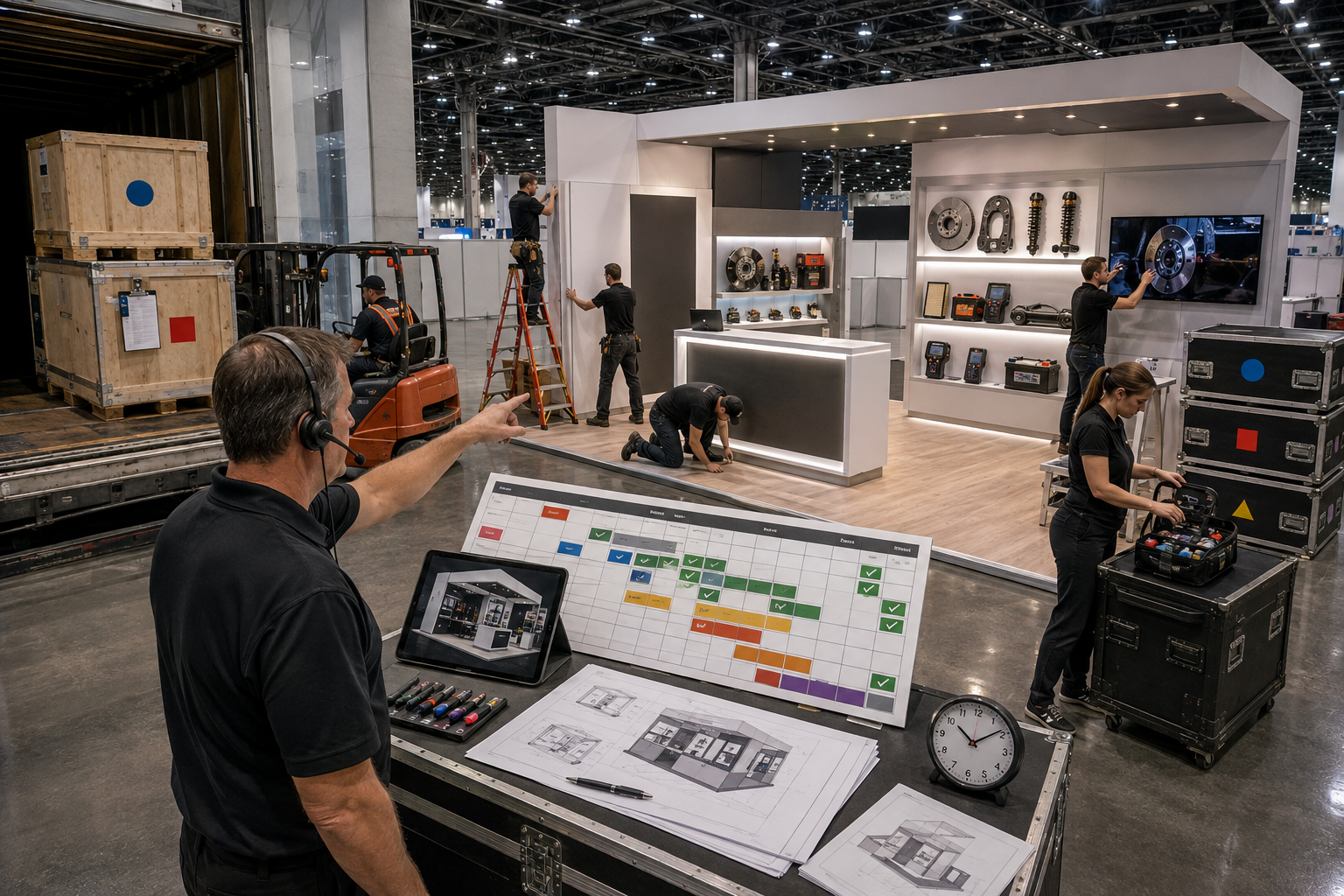
Effective execution for your AAPEX Las Vegas booth guide hinges on recognizing and mitigating timeline risks, understanding that a well-designed layout is only valuable if it can be approved, fabricated, shipped, installed, supported, and dismantled efficiently and on schedule, aligning with all show and venue deadlines.
Dive Deeper: The Unseen Timelines and Risks of Booth Execution
Many problems arise when exhibitors approve a design before confirming the feasibility of rules, logistics, install/dismantle windows, service orders, and the availability of onsite contacts. For us, a significant part of delivering a successful project in Las Vegas is about meticulous project management and risk mitigation, not just creative design.
When planning your AAPEX Las Vegas booth guide, consider these critical timeline and execution factors:
- Design and Approval Loop:
- Initial Design Concepts: This phase can take weeks, depending on complexity and revisions.
- Detailed Engineering and Blueprints: Crucial for custom builds, these ensure structural integrity and compliance.
- Show Management Approval: Your final design often needs to be submitted to AAPEX management for approval, especially for custom builds, hanging signs, and structures. This process can involve several rounds of review and changes, and missing submission deadlines can lead to significant penalties or even rejection of your design.
- Fabrication and Graphics Production:
- Lead Times: Custom fabrication requires substantial lead time, often 8-12 weeks or more.7 Graphics production also has its own lead times, which can be extended for large format or specialized materials. Delays here ripple through the entire schedule.
- Quality Control: During fabrication, continuous quality checks are essential to ensure everything fits, functions, and meets design specifications before it even leaves the shop. We conduct pre-builds in our facility for larger custom projects.
- Logistics and Shipping:
- Freight Planning: Coordinating freight to Las Vegas requires careful planning. You need to decide whether to ship directly to the advanced warehouse or to the show site, understanding the associated deadlines and costs.
- International Shipping: For our international clients, this adds layers of customs, duties, and longer transit times, requiring even earlier planning. Any documentation errors can cause significant delays at the border.8
- Material Handling (Drayage) Windows: There are specific windows for freight delivery and pickup. Miss these, and you could face significant surcharges or delays in getting your materials to your booth.
- Installation & Dismantle (I&D) Schedule:
- Move-in/Move-out Schedule: AAPEX provides strict move-in and move-out schedules. Your I&D team must work efficiently within these allotted hours. Overtime charges for working outside normal hours can quickly inflate your budget.9
- Labor Coordination: Coordinating union labor for I&D, electrical, rigging, and other services requires precise scheduling. Delays in one area can hold up others.
- Onsite Management: Having experienced project managers onsite is invaluable. They troubleshoot issues, coordinate with contractors, and ensure your booth is ready on time.
- Service Orders and Utilities:
- Ordering Deadlines: Electrical, internet, cleaning, and other services have strict ordering deadlines. Late orders incur higher costs, sometimes double or triple the standard rate.10
- Onsite Verification: Once installed, utilities need to be verified. Is the power working? Is the internet connection stable? Proactive checks can prevent show-day frustrations.
- Onsite Support and Emergency Planning:
- Pre-Show Briefing: A thorough briefing with your staff and any onsite support team ensures everyone understands their roles and the booth's functionality.
- Contingency Planning: What happens if a light burns out? A monitor fails? Having a plan and local support for quick fixes can save the day. For our clients, we provide onsite support and often have a local team available for immediate assistance.
A good layout for your AAPEX Las Vegas booth guide is only useful if it can be approved, built, delivered, installed, supported, and dismantled on time and within budget. This emphasis on execution is why many exhibitors partner with experienced exhibit builders like Exhibitsmax. Our local presence in Las Vegas means we are intimately familiar with the venues, union regulations, and logistical challenges, allowing us to proactively manage these risks and ensure your exhibit comes to life smoothly.
Frequently Asked Questions
What are the most common mistakes exhibitors make with their AAPEX Las Vegas booth?
Exhibitors often make the mistake of underestimating the time and budget required for non-design elements, such as shipping, drayage, labor, and electrical services.11 Another common pitfall is failing to thoroughly review the AAPEX exhibitor manual, leading to compliance issues or last-minute, costly changes.
How early should I start planning my AAPEX Las Vegas booth guide?
For custom or larger booths, we recommend starting your AAPEX Las Vegas booth guide planning 6-9 months before the show. This allows ample time for design, approvals, fabrication, graphics production, logistics coordination, and ordering all necessary services without incurring late fees.
Can I install my own AAPEX booth to save on labor costs?
For most booth sizes and configurations at AAPEX Las Vegas, union labor is required for installation and dismantling. While your own staff might be permitted for certain tasks like placing small products or applying minor graphics, major structural work often falls under union jurisdiction. Always consult the exhibitor manual for specific rules.
How do I ensure my booth is compliant with AAPEX safety regulations?
To ensure compliance, work with an experienced exhibit builder who understands AAPEX and local Las Vegas regulations. They will ensure materials are fire-rated, structures are safe, and the design adheres to aisle clearance and other safety guidelines as specified in the exhibitor manual and by local fire marshal requirements.
What should I do if my AAPEX booth design gets rejected by show management?
If your design is rejected, immediately consult with your exhibit designer and builder. The rejection notice usually outlines the specific reasons for non-compliance. You'll need to promptly revise the design to address these points and resubmit it within the given timeframe, which often involves expedited efforts to meet deadlines.
Conclusion
Successfully navigating AAPEX Las Vegas with an impactful booth requires far more than just a visually appealing design. It demands a strategic approach that integrates your sales and operational goals with a meticulous understanding of show rules, venue constraints, and a robust execution timeline. By treating your AAPEX Las Vegas booth guide as a holistic project—from initial concept to final dismantling—you can transform potential challenges into opportunities for seamless engagement and significant returns.
We understand the complexities involved in exhibiting at major events in Las Vegas. As a local exhibit builder, Exhibitsmax has over 15 years of experience in designing, fabricating, and managing exhibits, ensuring that every detail, from compliance to logistics, is expertly handled. If you're planning your next AAPEX exhibit, let's discuss how our expertise can ensure your booth not only looks great but performs flawlessly.
"3 biggest problems facing trade show organizers (and how to beat them)", https://www.swapcard.com/blog/3-biggest-problems-facing-trade-show-organizers-and-how-to-beat-them. Research or industry surveys often highlight that new and international exhibitors frequently encounter significant challenges with complex trade show requirements, which can lead to increased stress and unexpected expenses. Evidence role: general_support; source type: research. Supports: the common challenges and resulting stress and expense faced by new and international exhibitors at trade shows.. ↩
"Insights into Building a Successful Trade Show Booth Strategy ...", https://engagestar.com/insights/insights-into-building-a-successful-trade-show-booth-strategy-for-2025/. Industry experts and research on trade show effectiveness consistently emphasize that successful exhibit planning integrates product display, buyer interaction, and logistical constraints from the outset, rather than focusing primarily on aesthetic design. Evidence role: expert_consensus; source type: research. Supports: the importance of an integrated, strategic approach to trade show booth planning that prioritizes functional and operational goals over solely aesthetic considerations.. ↩
"Your Guide to Measuring Trade Show ROI", https://metroexhibits.com/metro-blog/trade-show-roi-measuring-your-return-on-investment/. Studies and expert analyses in the trade show industry often indicate that exhibits prioritizing aesthetics over strategic functionality can fail to generate desired leads or engagement, leading to an underperforming space. Evidence role: expert_consensus; source type: research. Supports: the idea that a trade show booth designed purely for aesthetics, without considering functional and strategic objectives, may ultimately underperform in achieving exhibitor goals.. ↩
"Notices of Penalty Offenses", https://www.ftc.gov/enforcement/penalty-offenses. Trade show organizers' exhibitor manuals and industry guidelines frequently outline penalties, including fines and required modifications, for non-adherence to established rules, which can also lead to significant setup delays. Evidence role: general_support; source type: institution. Supports: the potential for exhibitors to incur costly fines, mandatory adjustments, or experience delays in booth setup due to non-compliance with trade show rules and regulations.. ↩
"The Hidden Benefits of Trade Shows: Why They Don't Cost, They Pay", https://www.thetradeshownetwork.com/trade-show-blog/the-hidden-benefits-of-trade-shows-why-they-dont-cost-they-pay. Trade show project management best practices and industry analyses frequently highlight that proactive planning, such as thorough review of show regulations and deadlines, is crucial for avoiding expensive design changes and last-minute logistical issues. Evidence role: expert_consensus; source type: research. Supports: the effectiveness of a proactive planning approach, including early review of exhibitor manuals and deadlines, in mitigating the need for costly redesigns and last-minute adjustments in trade show exhibits.. ↩
"Union Work Rules:Jurisdictions", https://eaca.com/wp-content/uploads/2024/07/24-Union-Work-RulesJurisdictions.pdf. Official labor regulations and trade show exhibitor guidelines for Las Vegas confirm that many on-site tasks, such as exhibit installation, dismantling, and material handling, fall under the jurisdiction of local labor unions. Evidence role: mechanism; source type: government. Supports: the fact that Las Vegas operates as a unionized city, where specific trade show tasks, including installation, dismantling, and material handling, are typically governed by union jurisdiction.. ↩
"Contact - Custom Trade Show Booth Builder in Las Vegas ...", https://exhibitsmax.com/contact/. Industry benchmarks and exhibit manufacturing guidelines commonly state that custom fabrication for trade show booths necessitates a lead time of at least 8-12 weeks, often extending longer depending on complexity. Evidence role: general_support; source type: research. Supports: the typical lead time required for custom exhibit fabrication in the trade show industry.. ↩
"Customs Documentation Mistakes to Avoid in International ...", https://www.sekologistics.com/en/resource-hub/knowledge-hub/customs-documentation-mistakes-to-avoid-in-international-freight/. Customs authorities and international trade organizations consistently report that incorrect or incomplete shipping documentation is a primary cause of delays and complications in cross-border freight movement. Evidence role: mechanism; source type: government. Supports: the fact that inaccuracies or omissions in shipping documentation for international freight can lead to significant delays during customs clearance processes at national borders.. ↩
"[PDF] Labor and Employment Code Article 102.8 - Trade Show and Special ...", https://www.sf.gov/sites/default/files/2024-12/102.8%20Trade%20Show%20Wage%20Rates.pdf. Trade show budgeting guides and industry analyses frequently highlight that overtime labor rates, often mandated for work outside regular hours, are a significant factor in unexpected budget inflation for exhibit installation and dismantling. Evidence role: general_support; source type: research. Supports: the claim that overtime charges for labor, particularly for work performed outside standard hours during trade show installation and dismantling, can substantially increase an exhibitor's budget.. ↩
"NCUC: Executive Order 124 and 142", https://www.ncuc.gov/execorder124.html. Exhibitor manuals and service order forms from major trade show organizers consistently stipulate that late orders for services such as electrical, internet, and cleaning are subject to substantial surcharges, frequently reaching two to three times the standard rate. Evidence role: general_support; source type: institution. Supports: the common practice in the trade show industry where orders for services placed after specified deadlines incur significantly higher costs, often at double or triple the standard rate.. ↩
"Trade Show Mistakes That Can Cost You Money - Metro Exhibits", https://metroexhibits.com/metro-blog/10-common-trade-show-mistakes-to-avoid/. Industry surveys and expert analyses on trade show budgeting frequently identify underestimation of costs and timelines for logistical and operational elements, such as drayage, labor, and electrical services, as a prevalent mistake among exhibitors. Evidence role: expert_consensus; source type: research. Supports: the common tendency among exhibitors to underestimate the time and budget required for essential non-design elements of trade show participation, including shipping, drayage, labor, and utility services.. ↩