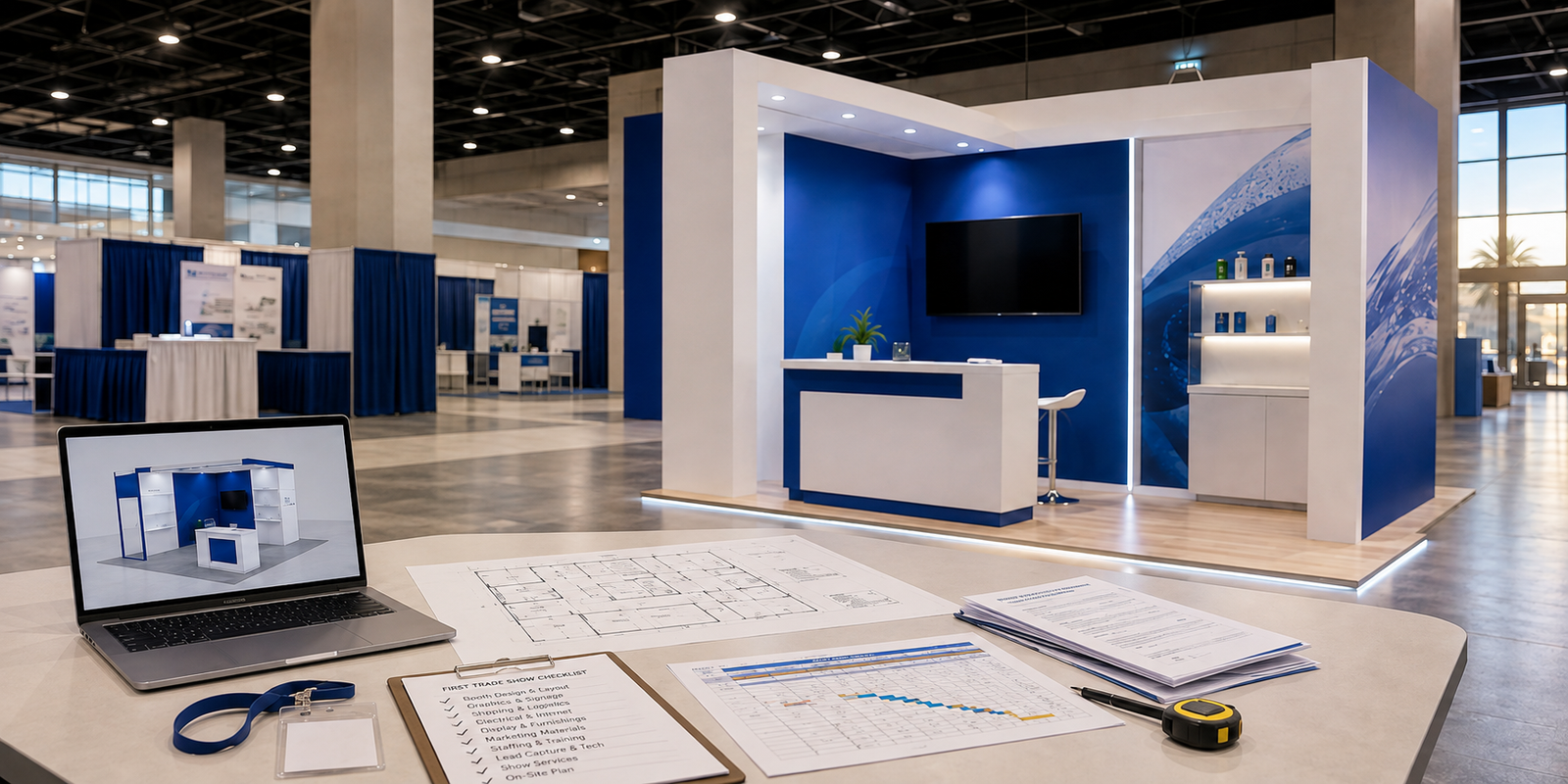
Your first trade show in Las Vegas can feel exciting until shipping deadlines, venue rules, union labor, drayage, and installation details start stacking up. I have seen exhibitors arrive with strong products but weak operational plans. The solution is a practical checklist that turns the show from a stressful gamble into a controlled project.
To prepare for your first trade show in Las Vegas, confirm your booth design, shipping method, advance warehouse deadline, venue rules, labor requirements, electrical needs, graphics, installation schedule, dismantling plan, and post-show storage before you arrive. International exhibitors should also budget for customs, drayage, material handling, and on-site labor.
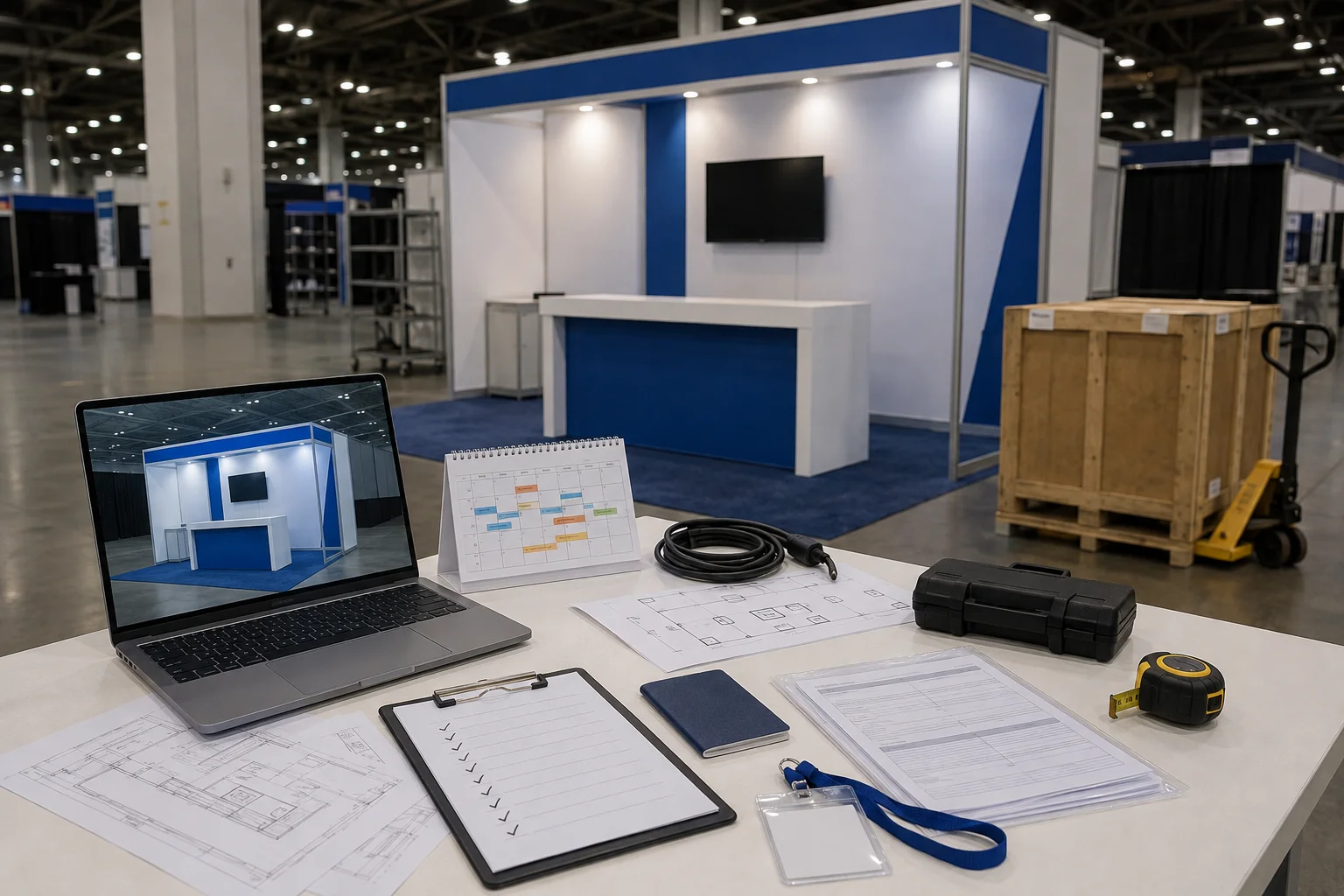
A Las Vegas trade show is not just a marketing event. It is a logistics project with strict deadlines and real cost consequences. Below, I will walk through the same operational areas I review when helping exhibitors prepare for booth design, fabrication, delivery, installation, and dismantling.
Why is your first trade show in Las Vegas harder than it looks?
First-time exhibitors often focus on the booth design and forget the physical journey of the exhibit. That creates pressure later. Freight arrives late, graphics do not fit, crates are misplaced, or labor is booked too late. I have seen small oversights become expensive problems during move-in.
Your first trade show in Las Vegas is harder because the city’s major exhibition venues operate on strict schedules, formal service systems, union labor rules, and material handling procedures1. International exhibitors must also manage customs, domestic freight, warehouse deadlines, show-site delivery, installation labor, dismantling, and outbound shipping.2
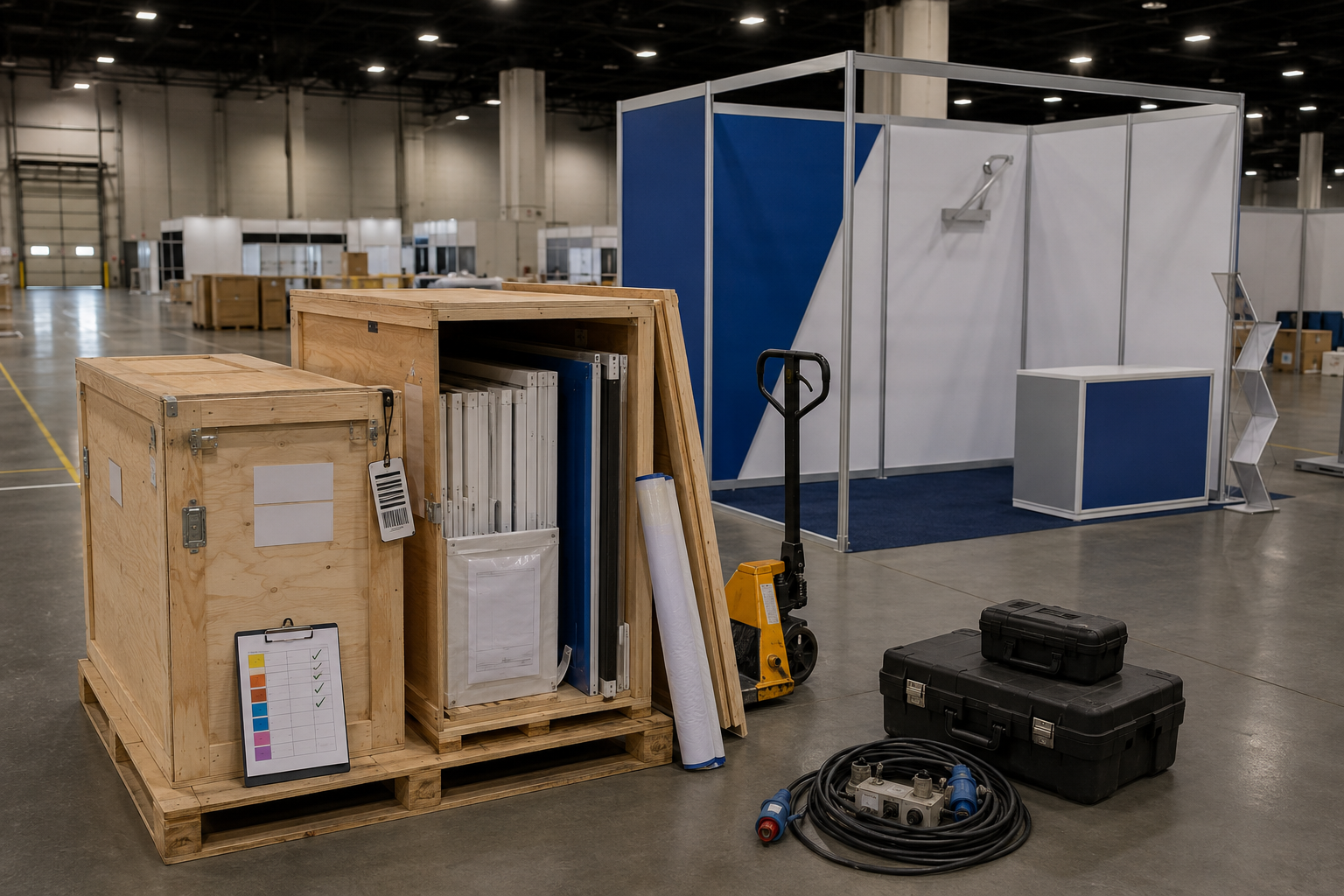
The real challenge is coordination, not only design
A beautiful booth does not guarantee a smooth show. In my work around exhibit production and on-site execution, I have learned that coordination is the difference between a professional opening day and a stressful one.
Las Vegas venues host some of the largest trade shows in the United States.3 This means thousands of booths, hundreds of trucks, scheduled move-in windows, and strict contractor processes. If your freight misses the advance warehouse deadline, it may go directly to show site at a higher cost. If your electrical order is incomplete, your screen or lighting may not be ready when your booth team arrives.
For international exhibitors, the challenge is bigger because the U.S. exhibition system may work differently from what they know at home.
Common differences include:
- Drayage and material handling fees charged by weight.
- Union labor rules for certain installation tasks.
- Advance warehouse deadlines before the show opens.
- Separate orders for electrical, rigging, internet, cleaning, and furniture.
- Strict target move-in and move-out times.
- Outbound paperwork required immediately after the show closes.
Here is a simple way to view the operational risk:
| Area | Common first-time mistake | Practical impact |
|---|---|---|
| Freight | Shipping too close to the show | Late delivery or rush charges |
| Booth build | Finalizing design without venue review | Fire, height, or hanging sign issues |
| Labor | Assuming your team can install everything | Compliance problems or delays |
| Electrical | Ordering power too late | Higher rates or incomplete setup |
| Dismantling | No outbound freight plan | Forced shipment or storage charges |
My practical advice is simple: treat the show like a construction project with a public opening date. Every task needs an owner, a deadline, and a backup plan.
The earlier you connect booth design, fabrication, shipping, installation, and venue services, the more control you have over cost and timing. This is especially important for exhibitors entering the U.S. market for the first time.
What should be on your first trade show in Las Vegas logistics checklist?
Logistics can look simple on paper. You ship the booth, receive it, install it, and send it back. In practice, every step has conditions. If one detail is missing, the booth may still arrive, but the cost and stress can increase quickly.
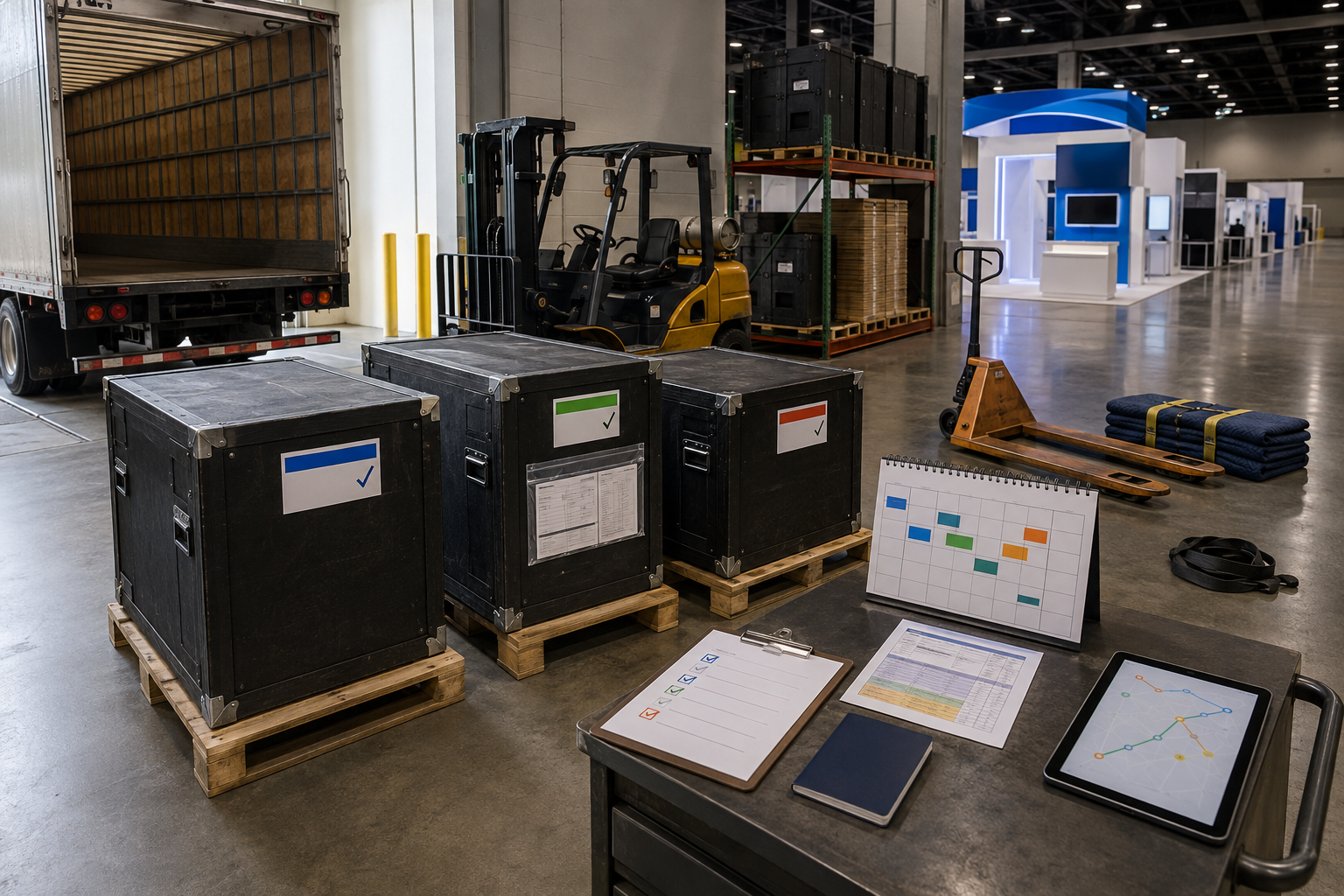
Your first trade show in Las Vegas logistics checklist should include customs planning, freight method, crate labels, advance warehouse dates, material handling estimates, show-site delivery rules, forklift needs, storage arrangements, empty crate return, dismantling labor, and outbound shipment documents. You should confirm each item before freight leaves your country.
Start with the freight path
I advise international exhibitors to map the full freight path before confirming booth production. The booth does not simply move from your factory to the booth space. It usually moves through several checkpoints.
A typical path may look like this:
- Factory or exhibit workshop
- Export packing location
- International freight forwarder
- U.S. customs clearance
- Domestic freight carrier
- Advance warehouse or show site
- Material handling to booth space
- Empty crate storage
- Return of empties after show close
- Outbound carrier pickup
Each handoff creates a possible delay. That is why I prefer to see labeled crates, complete packing lists, and photos of packed components before shipment. These small records help when someone needs to identify missing parts or confirm crate contents under time pressure.
Budget for the costs exhibitors often miss
Many exhibitors plan for booth fabrication and international shipping but underestimate Las Vegas show services. Material handling is one of the most common surprises.
Material handling, often called drayage, usually covers receiving freight, moving it to the booth, removing empty containers, returning empty containers after the show, and moving freight back to the loading dock.4 The rate is often based on hundredweight, also called CWT, which means per 100 pounds5. Rates vary by show and contractor, so exhibitors should always check the official exhibitor services manual.
A practical cost planning table may include:
| Cost item | Why it matters | When to confirm |
|---|---|---|
| International freight | Moves booth into the U.S. | 10–16 weeks before show |
| Customs brokerage | Prevents border delays | 8–12 weeks before show |
| Domestic freight | Moves freight to Las Vegas | 6–10 weeks before show |
| Advance warehouse receiving | Often safer than show-site delivery | 4–8 weeks before show |
| Material handling/drayage | Can be a major on-site cost | Before shipping |
| Empty crate storage | Needed during the show | Before move-in |
| Outbound freight | Required immediately after show close | Before the show opens |
Use advance warehouse when possible
For many first-time exhibitors, the advance warehouse is safer than shipping directly to show site. The warehouse receives freight before move-in begins.6 This gives the general contractor more time to process freight and deliver it to the booth during scheduled move-in.
However, advance warehouse service has deadlines. If freight arrives after the deadline, higher charges may apply. If freight arrives too early, storage rules may apply.7 The official service manual is the source to verify.
My practical logistics checklist
Before freight leaves, I like to confirm:
- Booth drawings and packed dimensions match the actual crates.
- Each crate has show name, booth number, exhibitor name, and contractor labels.
- Commercial invoice and packing list are consistent.
- Customs broker has all required documents.
- U.S. delivery address is correct.
- Advance warehouse deadline is confirmed.
- Material handling estimate is reviewed.
- Insurance coverage is understood.
- On-site contact information is printed and digital.
- Outbound shipping labels are prepared before show close.
This level of planning may feel detailed, but it protects your schedule. When the move-in clock starts, time becomes expensive.
How do Las Vegas venue rules affect your first trade show in Las Vegas?
Venue rules can feel like fine print until they stop the work. A booth may look acceptable in a rendering but still need adjustments for fire safety, height limits, hanging signs, labor jurisdiction, or access timing. I have learned to check rules before fabrication whenever possible.
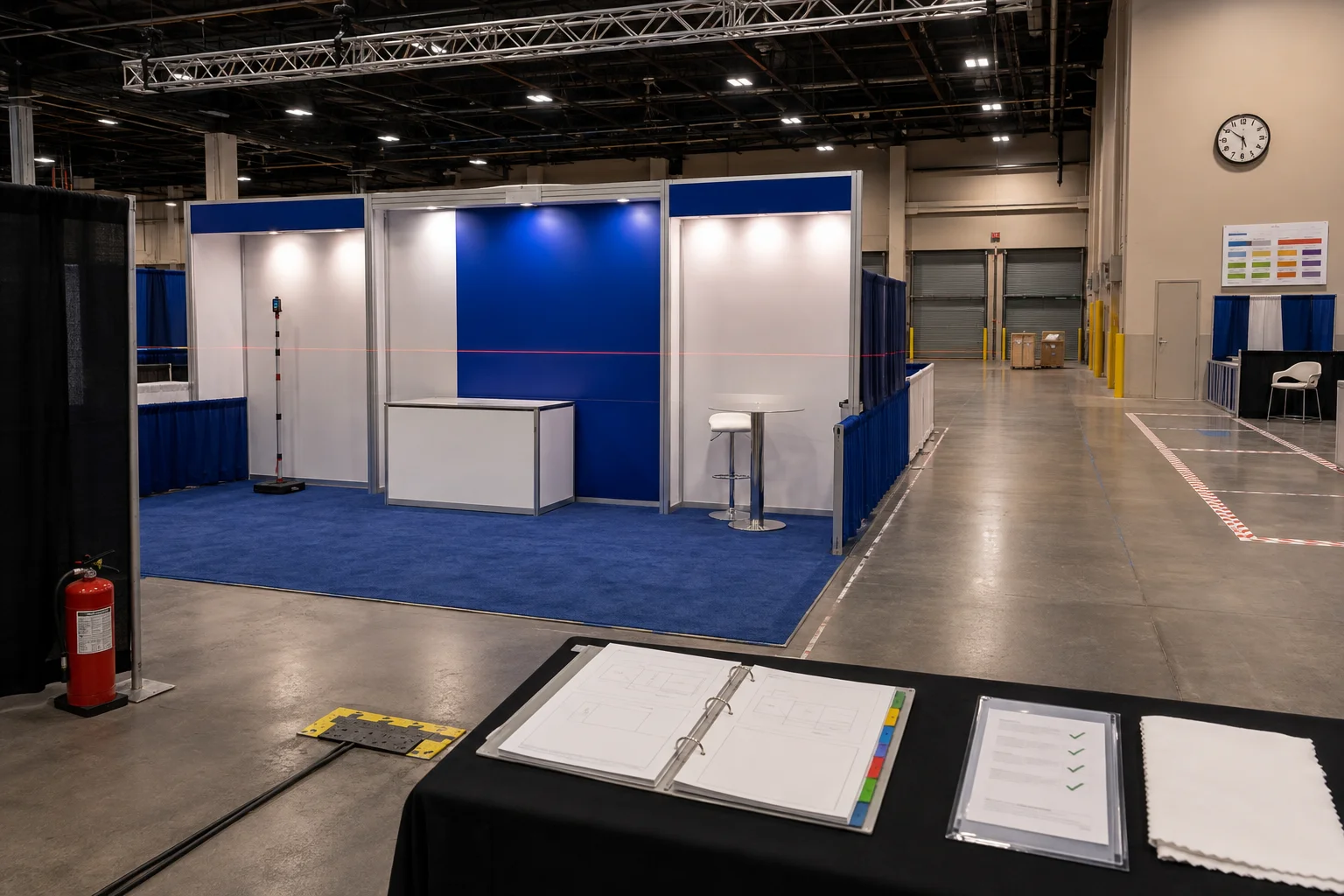
Las Vegas venue rules affect your first trade show in Las Vegas by controlling booth height, fire-rated materials, rigging, electrical installation, freight access, labor tasks, move-in times, and dismantling procedures. Exhibitors should review the official exhibitor manual and coordinate with approved service providers before building or shipping the booth.
The exhibitor manual is your operating map
Every serious Las Vegas show provides an exhibitor service manual or online exhibitor portal. I treat this document as the operating map for the entire project. It usually includes:
- Official contractor contacts
- Move-in and move-out schedules
- Shipping labels
- Electrical order forms
- Internet and AV forms
- Booth display rules
- Fire and safety guidelines
- Cleaning services
- Rigging forms
- Deadline dates
- Insurance requirements
The manual is not exciting reading, but it saves money. Many services have discount deadlines. Orders placed after the deadline can cost significantly more.8 More important, late orders may not be completed when you need them.
Understand labor and installation limits
Las Vegas exhibition halls often involve union labor and official service providers for specific work. The exact rules depend on the venue, show, and task. Exhibitors should not assume that their staff can handle every installation activity.
Common regulated areas may include:
- Electrical connection
- Rigging and hanging signs
- Forklift operation
- Certain booth assembly tasks
- Plumbing or compressed air
- Material handling from dock to booth
- Large AV or structural installation
I am careful here because rules vary by show. The right move is to verify the current requirements in the exhibitor manual and ask the general contractor or local exhibit partner before the booth is built.
Design with venue compliance in mind
Booth design should never happen in isolation. A design may need review if it includes:
| Booth feature | Why it needs early review |
|---|---|
| Tall walls | Height limits may apply by booth type |
| Hanging sign | Rigging approval and labor may be required |
| [Covered ceiling | Fire safety review may be needed](https://www.clarkcountynv.gov/government/departments/fire/fire-prevention)%%%FOOTNOTE_REF_9%%% |
| Enclosed rooms | Visibility and safety rules may apply |
| LED video wall | Power, structure, and heat must be planned |
| Double deck structure | Engineering and approval may be required |
| Product display machinery | Weight, power, and safety need review |
At Exhibitsmax, when I think through a Las Vegas booth, I look beyond appearance. I ask practical questions:
- Can the booth be installed within the assigned move-in time?
- Can the crates fit through freight access points?
- Does the booth require special tools or certified labor?
- Are electrical drops located in the right place?
- Are graphics easy to replace if damaged?
- Can the booth be dismantled quickly after the show?
Move-in and move-out are not flexible suggestions
Move-in schedules exist because large shows need traffic control. Your freight may have a target delivery date or time. Your labor may need to work within a specific window. If your shipment arrives outside that window, your setup can be delayed or charged differently.
Move-out is even more sensitive. When the show closes, aisles fill with crates, carpet is pulled, forklifts move, and exhibitors rush to pack. If your outbound carrier misses the deadline, the freight may be rerouted through a forced carrier.10 That can create cost and tracking issues.
This is why I recommend preparing outbound paperwork before the show opens. Do not wait until the last hour.
How should you plan booth installation and dismantling?
Installation and dismantling often decide whether the show feels controlled or chaotic. A team may spend months preparing the booth, then lose time because tools are missing, crates are not sequenced, or graphics were packed in the wrong place. These are preventable issues.
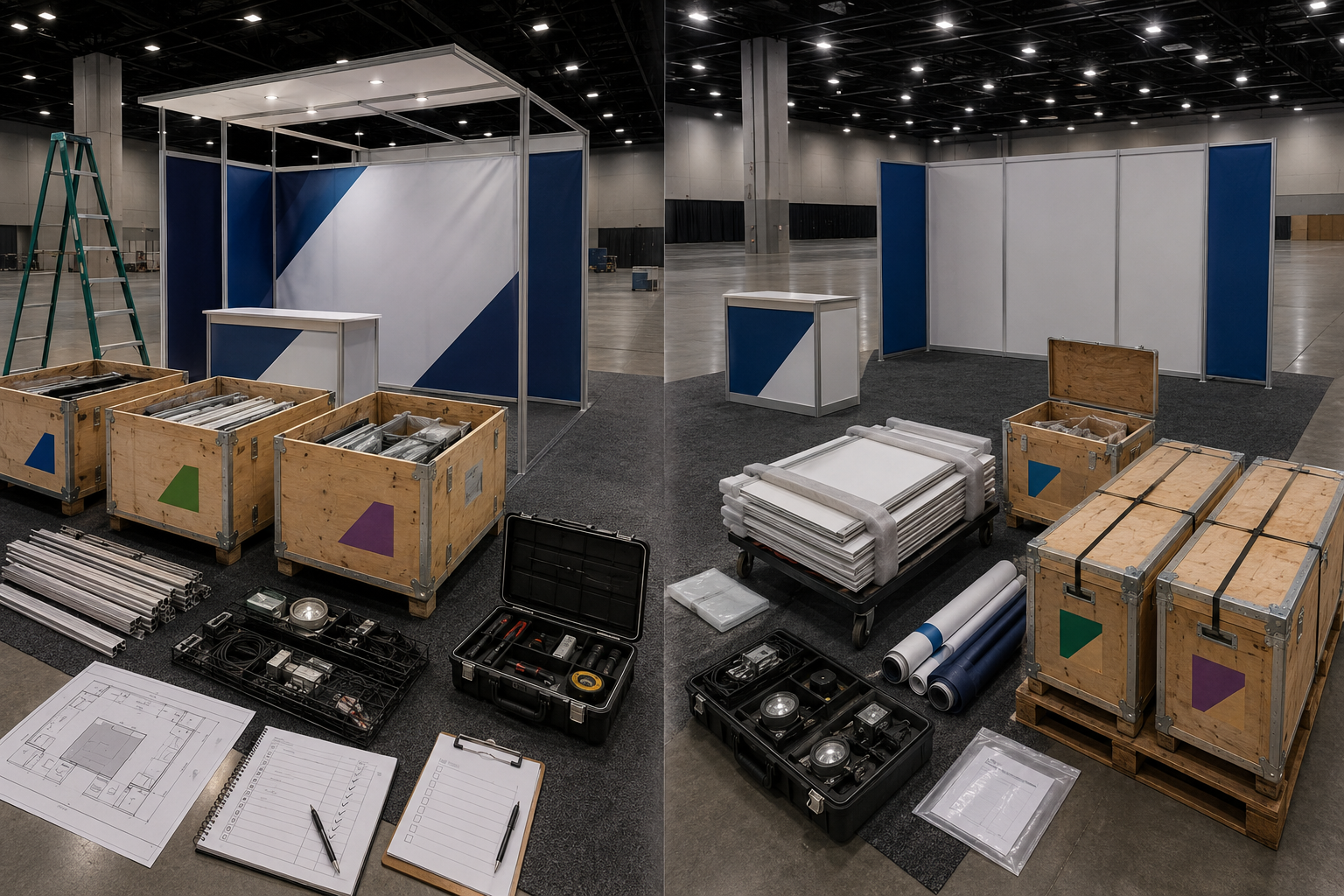
You should plan booth installation and dismantling by creating a step-by-step install schedule, assigning labor responsibilities, confirming tools and equipment, sequencing crates, checking graphics, preparing a punch list, and arranging outbound freight before the show opens. The dismantling plan should be as detailed as the installation plan.
Build the installation plan before the booth ships
A good installation plan starts in the workshop, not on the show floor. When booth components are packed in the order they will be used, the on-site team works faster. When crates are packed randomly, installers waste time opening everything just to find one part.
I prefer an installation packet that includes:
- Final booth rendering
- Floor plan with dimensions
- Electrical plan
- Crate inventory
- Graphic placement guide
- Hardware list
- Tool list
- Contact list
- Emergency replacement plan
- Dismantling instructions
This packet should be available both digitally and in print. Internet access can be unreliable during move-in, so printed copies still matter.
Use a simple installation sequence
A standard installation sequence may look like this:
- Confirm booth space and floor markings.
- Check freight arrival and crate condition.
- Open crates in planned order.
- Build main structure.
- Install electrical under or behind structures as required.
- Mount graphics and signage.
- Install lighting, monitors, and AV.
- Place furniture and product displays.
- Clean the booth.
- Complete final inspection and photo documentation.
For a first trade show in Las Vegas, I also suggest adding time for problem solving. Even with careful planning, a crate may be delayed, a graphic may be scratched, or a monitor mount may need adjustment. A schedule with no buffer is risky.
Dismantling needs equal attention
Many exhibitors plan installation carefully and treat dismantling as an afterthought. That is a mistake. Dismantling happens under pressure. Everyone wants to leave. Labor is busy. Freight deadlines are close. The risk of damage or missing parts increases.
A good dismantling plan should include:
- Photos of the booth before dismantling.
- Packing order for each component.
- Graphic protection materials.
- Labels for damaged or missing items.
- Crate numbers and contents.
- Outbound shipping labels.
- Bill of lading instructions.
- Carrier name and pickup deadline.
- Storage destination if the booth stays in the U.S.
If the booth will be reused, dismantling quality affects the next show. I have seen exhibitors save money by renting or reusing booth components, but only when packing and storage are handled properly.
Installation and dismantling checklist
| Task | Installation | Dismantling |
|---|---|---|
| Labor scheduled | Yes | Yes |
| Supervisor assigned | Yes | Yes |
| Crate list printed | Yes | Yes |
| Tools confirmed | Yes | Yes |
| Graphics inspected | Yes | Yes |
| Photos taken | Yes | Yes |
| Freight paperwork ready | Not always | Required |
| Damage report completed | If needed | Recommended |
| Storage plan confirmed | Optional | Important |
The main point is simple. The show is not finished when the booth opens. It is finished when the booth is packed, shipped, stored, and ready for the next use.
What final readiness checks prevent surprise costs at your first trade show in Las Vegas?
Surprise costs usually appear when details are handled late. A missing power order, a wrong shipping label, or an unplanned labor task may not seem serious at first. Then the show clock starts, and every solution becomes urgent and more expensive.
Final readiness checks for your first trade show in Las Vegas should confirm all service orders, payment deadlines, booth approvals, labor schedules, freight tracking, electrical layouts, graphic files, on-site contacts, insurance documents, and outbound shipment plans. These checks should be completed one to two weeks before move-in.

Create a two-week control checklist
Two weeks before move-in, I like to switch from planning mode to control mode. At this stage, the question is no longer “What should we do?” The question is “What has been confirmed, paid, printed, and assigned?”
A practical two-week checklist includes:
- Exhibitor badges registered.
- Hotel and flight details confirmed.
- Booth service orders submitted.
- Electrical floor plan approved.
- Internet order confirmed if needed.
- AV rental or LED video wall plan confirmed.
- Furniture order confirmed.
- Cleaning order confirmed.
- Freight tracking active.
- Customs clearance status checked.
- Labor schedule confirmed.
- Installation supervisor assigned.
- Emergency contact list shared.
- Product samples shipped separately if needed.
- Outbound carrier booked.
- Storage plan confirmed.
This checklist may feel repetitive, but repetition prevents mistakes.
Watch the small items that create big delays
Small missing items can slow installation. I have seen teams lose valuable time because a simple adapter, cable, mounting bracket, or printed graphic was not available. Las Vegas has many suppliers, but show-floor rush solutions are rarely cheap or calm.
Pack or locally source these items in advance:
- Power adapters
- HDMI or display cables
- Extension cords where allowed
- Cleaning cloths
- Touch-up materials
- Extra Velcro or approved fasteners
- Spare printed graphics
- Business card holders
- Product literature
- QR code signs
- Basic office supplies
- Portable chargers
Always check what your team is allowed to bring and use. Some electrical and installation items may require official labor or approved service providers.
Separate marketing readiness from operational readiness
Many exhibitors prepare sales scripts, brochures, and lead capture tools. That matters. However, operational readiness is different. It answers questions like:
- Will the booth arrive?
- Can it be built legally and safely?
- Will power be available in the right location?
- Will the graphics fit?
- Will the team know who to call?
- Will the booth leave the venue correctly?
For international exhibitors, I recommend using a shared tracker. A simple spreadsheet is enough.
| Readiness area | Owner | Status | Deadline |
|---|---|---|---|
| Booth fabrication | Exhibit partner | In progress | 6 weeks out |
| Freight booking | Logistics team | Confirmed | 5 weeks out |
| Customs documents | Export team | Pending | 4 weeks out |
| Electrical order | Show services | Confirmed | 3 weeks out |
| Labor schedule | Exhibit partner | Confirmed | 2 weeks out |
| Graphics | Production team | Approved | 2 weeks out |
| Outbound freight | Logistics team | Confirmed | 1 week out |
Plan for the first hour on site
The first hour at the venue sets the tone. I advise exhibitors to arrive with a focused plan:
- Locate the booth space.
- Confirm freight delivery status.
- Meet the installation lead.
- Check the floor plan against the booth space.
- Confirm electrical placement.
- Inspect crates for damage.
- Review the installation sequence.
- Escalate missing items immediately.
This first-hour discipline helps your team avoid confusion. It also gives you more time to solve problems before opening day.
Frequently Asked Questions
How early should I start preparing for my first trade show in Las Vegas?
I recommend starting at least 4 to 6 months before the show, especially for international exhibitors.11 Custom booth design, fabrication, freight planning, customs documents, venue orders, and labor scheduling all take time. Larger or complex booths may need an even longer timeline.
Should I ship my booth to the advance warehouse or directly to show site?
The advance warehouse is often safer for first-time international exhibitors because it allows freight to arrive before official move-in. Direct-to-show-site shipping can work, but timing must be precise. You should compare deadlines, rates, and risk using the official exhibitor manual.
What costs do first-time exhibitors usually underestimate in Las Vegas?
Many exhibitors underestimate material handling, labor, electrical, storage, rush orders, and outbound freight. International exhibitors may also overlook customs brokerage, domestic U.S. freight, and insurance. I advise building a contingency budget instead of planning only around booth fabrication and shipping.
Can my own team install the booth in Las Vegas?
Your team may be able to handle some tasks, but rules vary by venue and show. Electrical, rigging, forklift use, and certain installation work may require official or union labor.12 You should verify the current labor rules in the exhibitor manual before making assumptions.
What should I do after the trade show ends?
You should supervise dismantling, photograph the booth condition, protect graphics, confirm crate contents, submit outbound freight paperwork, and verify carrier pickup. If you plan to exhibit again in the U.S., you should also arrange storage and note any repairs needed before the next show.
Conclusion
Your first trade show in Las Vegas becomes much easier when you treat preparation as an operational checklist, not a last-minute task list. The key areas are logistics, venue rules, labor planning, installation, dismantling, and final readiness checks. I have seen exhibitors avoid major stress simply by confirming details early. If you want help with booth design, fabrication, logistics, installation, dismantling, storage, or LED video wall rental in Las Vegas, Exhibitsmax can help you plan the physical side of your next U.S. exhibition.
"Mandalay Bay Convention Center: Installation & Drayage Guide", https://exhibitsmax.com/mandalay-bay-convention-center-installation-drayage-guide/. Official exhibitor service manuals for Las Vegas trade shows commonly specify target move-in dates, approved service contractors, labor jurisdictions, and material handling procedures; the exact requirements depend on the show and venue. Evidence role: general_support; source type: institution. Supports: Official exhibitor manuals for Las Vegas shows describe move-in schedules, service order systems, labor jurisdictions, and material handling procedures.. Scope note: The support is contextual because rules are show-specific and may change each year. ↩
"Trade Shows - Exhibiting a Product - help.CBP.gov", https://www.help.cbp.gov/s/article/Article1286?language=en_US. U.S. Customs and Border Protection guidance on temporary imports and ATA Carnets supports the need for international exhibitors to plan customs documentation for exhibition goods; it does not by itself document every domestic show-service step listed here. Evidence role: general_support; source type: government. Supports: U.S. customs guidance explains that goods brought into the United States for exhibitions may require import documentation, temporary import procedures, or customs brokerage coordination.. Scope note: The source directly supports the customs component, while the warehouse, labor, dismantling, and outbound-shipping details require show-specific manuals. ↩
"Consumer Electronics Show", https://en.wikipedia.org/wiki/Consumer_Electronics_Show. Encyclopedic and institutional summaries of CES, SEMA Show, and CONEXPO-CON/AGG report attendance and exhibit-scale figures that place several Las Vegas events among the largest U.S. trade shows; this supports the scale context rather than proving that every Las Vegas venue hosts a top-ranked show. Evidence role: statistic; source type: encyclopedia. Supports: Several Las Vegas-based shows, such as CES, SEMA Show, and CONEXPO-CON/AGG, are reported as very large U.S. trade shows by attendance or exhibit scale.. Scope note: The support is contextual because rankings vary by metric, year, and source. ↩
"Mandalay Bay Trade Show Booth Setup Guide: What Should ...", https://exhibitsmax.com/mandalay-bay-trade-show-booth-setup-guide-what-should-international-exhibitors-know/. Industry exhibitor-service definitions describe material handling, or drayage, as including receipt of exhibit freight, delivery to the booth, handling of empty containers, and movement of packed freight back to the loading dock. Evidence role: definition; source type: institution. Supports: Industry and exhibitor-service materials define material handling or drayage as the movement and handling of exhibit freight within the show logistics system.. ↩
"Hundredweight - Wikipedia", https://en.wikipedia.org/wiki/Hundredweight. Measurement references define CWT as hundredweight, and in U.S. customary usage a hundredweight is 100 pounds. Evidence role: definition; source type: government. Supports: A measurement reference defines CWT as hundredweight and identifies the U.S. hundredweight as 100 pounds.. ↩
"What Is Drayage? Common Mistakes Foreign Exhibitors Make", https://exhibitsmax.com/what-is-drayage-common-mistakes-foreign-exhibitors-make/. Exhibitor service manuals define advance warehouse service as the pre-show receipt of exhibitor freight before the move-in period, followed by delivery to the booth according to the show schedule. Evidence role: definition; source type: institution. Supports: Exhibitor manuals describe advance warehouse service as receiving freight before show-site move-in and later delivering it to the booth.. ↩
"What Is Drayage? Common Mistakes Foreign Exhibitors Make", https://exhibitsmax.com/what-is-drayage-common-mistakes-foreign-exhibitors-make/. Official exhibitor service manuals commonly specify advance warehouse receiving windows and note that late or outside-window freight may be subject to additional handling or storage charges; the exact fee structure is show-specific. Evidence role: general_support; source type: institution. Supports: Show service manuals commonly list advance warehouse receiving windows, late-arrival charges, and storage conditions.. Scope note: The support is contextual because deadlines and charges vary by event and contractor. ↩
"Las Vegas Trade Show Booth Rentals: What Should You ...", https://exhibitsmax.com/las-vegas-trade-show-booth-rentals-what-should-you-really-expect/. Exhibitor service order forms commonly distinguish advance or discount-deadline pricing from higher standard, late, or floor-order pricing; this supports the general cost-risk claim but not a fixed percentage increase. Evidence role: general_support; source type: institution. Supports: Exhibitor service manuals often publish lower advance-order rates and higher standard or floor-order rates after a stated deadline.. Scope note: The support is contextual because price differences depend on the service, show, venue, and order date. ↩
"Fire Prevention - Welcome to Clark County, NV", https://www.clarkcountynv.gov/government/departments/fire/fire-prevention. Fire-prevention guidance for exhibition booths treats covered, canopied, or enclosed structures as features that may require fire-safety review because they can affect sprinkler coverage, flame-resistance requirements, and emergency access; application depends on local authority approval. Evidence role: mechanism; source type: government. Supports: Fire-safety guidance for assembly and exhibition spaces addresses covered, canopied, or enclosed exhibit structures because they can affect sprinkler coverage, flame spread, and emergency safety review.. Scope note: The support is contextual because the need for review depends on booth dimensions, materials, sprinkler configuration, and the authority having jurisdiction. ↩
"[PDF] Helpful Resources", https://agr.mt.gov/_docs/marketing-docs/tradeshows/TradeShowTrainingGuide_Resources.pdf. Exhibitor service manuals define forced freight as outbound exhibit freight that is reassigned to an official or designated carrier when the exhibitor’s carrier does not check in or collect the shipment by the stated deadline. Evidence role: definition; source type: institution. Supports: Exhibitor manuals describe forced freight procedures when packed freight remains after the carrier check-in or pickup deadline.. ↩
"How to Prepare for a Business Trade Show", https://www.trade.gov/how-prepare-business-trade-show. Government trade-promotion guidance recommends beginning trade show planning well in advance to coordinate budgeting, shipping, travel, promotional materials, and compliance tasks; this supports the reasonableness of a four- to six-month planning window but does not establish it as a universal rule. Evidence role: expert_consensus; source type: government. Supports: Government export and trade-promotion guidance encourages early planning for trade shows, including budgeting, logistics, travel, marketing materials, and compliance tasks.. Scope note: The support is contextual because lead time depends on booth complexity, country of origin, shipping mode, and show deadlines. ↩
"[PDF] Helpful Resources", https://agr.mt.gov/_docs/marketing-docs/tradeshows/TradeShowTrainingGuide_Resources.pdf. Official trade show exhibitor manuals commonly assign electrical, rigging, forklift, and material-handling work to designated contractors or union labor; the exact jurisdiction depends on the specific show and venue. Evidence role: general_support; source type: institution. Supports: Official exhibitor manuals identify tasks such as electrical work, rigging, forklift operation, and material handling as work that may require approved or union labor.. Scope note: The support is contextual because exhibitor self-work allowances and labor jurisdictions differ across events. ↩