
Exhibitsmax Logo
EXHIBITOR GUIDE

What are the Latest Trends in Exhibitions?

Published on August 3, 2026
What are the Latest Trends in Exhibitions?

Navigating the dynamic landscape of trade shows can be challenging, often leaving exhibitors wondering if their strategies are keeping pace with visitor expectations. Without understanding the latest trends in exhibitions, you risk delivering an unengaging experience, diminishing your impact and return on investment. Staying informed isn't just about chasing the new; it's about making strategic choices that elevate your brand and connect with your audience.

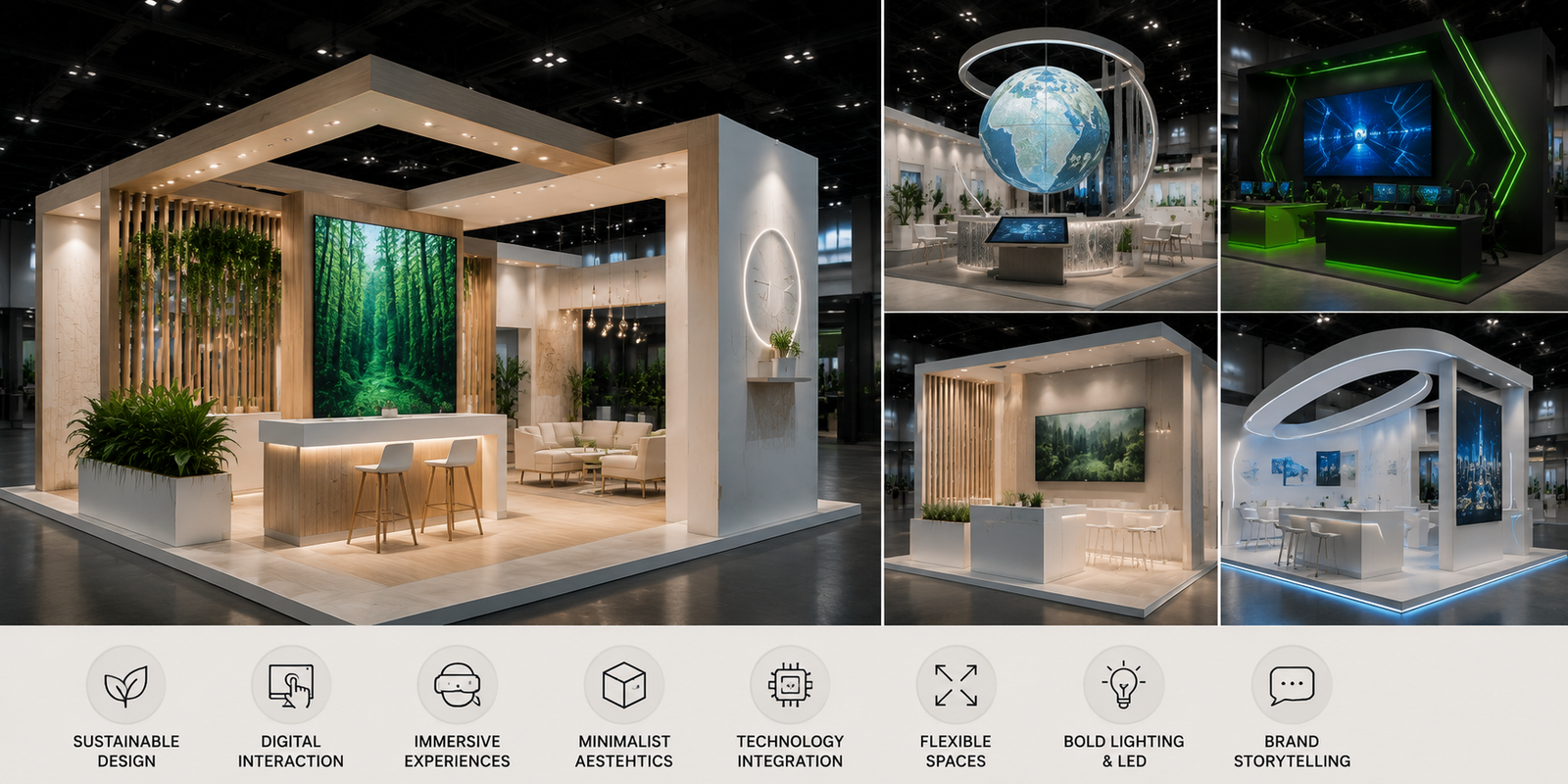
The latest trends in exhibitions focus on enhancing visitor engagement through interactive digital experiences, prioritizing sustainability, optimizing data collection for personalized follow-ups, and creating immersive environments that tell a compelling brand story.1 These innovations are not mere fleeting fads but strategic tools designed to increase ROI and create memorable interactions, ultimately transforming a passive viewing into an active brand experience.

Latest trends in exhibitions focus on interactive digital experiences and sustainability

These emerging trends are reshaping how exhibitors connect with their audiences, offering powerful new ways to communicate value and capture attention. But how do you discern which trends genuinely serve your business goals and which are simply distractions? Let's explore how to strategically integrate these innovations into your next trade show presence.

Why are the latest trends in exhibitions important for your strategy?

Are you feeling the pressure to incorporate cutting-edge elements into your exhibit, yet unsure if they'll truly benefit your bottom line? Many exhibitors struggle with distinguishing between genuine strategic advantages and expensive novelties. Overlooking the strategic importance of the latest trends in exhibitions can lead to missed opportunities, making your booth feel outdated and failing to capture the attention of a digitally savvy audience.

The latest trends in exhibitions are important because they offer new avenues to differentiate your brand, enhance visitor engagement, collect valuable data, and demonstrate your commitment to innovation and sustainability.2 By strategically adopting relevant trends, you can strengthen your brand's presence, improve lead quality, and ultimately drive greater ROI from your trade show participation.

Strategic importance of the latest trends in exhibitions for business growth

Understanding that trends are tools, not just spectacles, is the cornerstone of effective exhibit planning. My experience with numerous clients has shown that the most successful implementations are those where trends align directly with clear business objectives and target audience needs, often without requiring an exorbitant budget.

Aligning Trends with Business Objectives

When I work with clients, the first thing we discuss is not what technology they want, but what they want to achieve. Do you need to generate more leads? Launch a new product? Strengthen brand awareness? Each objective might call for a different trend or application of technology. For instance, if lead generation is paramount, an interactive touch screen that captures visitor data in exchange for valuable content could be far more effective than a passive, elaborate VR experience that only a few people can try at a time. The trend serves as a bridge between your message and your audience's interaction.

We've seen exhibitors invest heavily in complex augmented reality (AR) setups only to find that the long queues and technical glitches hindered, rather than helped, engagement. Conversely, a simple, well-designed digital game that reinforces a product's key benefits and collects contact information can yield an impressive number of qualified leads. The key is to assess how a trend directly contributes to your specific marketing and sales goals. Does it make your product easier to understand? Does it streamline the lead capture process? Does it tell your brand story more effectively? Without this alignment, a trend is just a costly distraction. We approach every trend evaluation by asking, "How does this help our client sell more or build stronger relationships?"

Measuring ROI from Trend Adoption

Debunking the myth that "latest trends equal most expensive tech" is crucial. Many impactful trends can be implemented cost-effectively. For example, rather than a full custom-built LED wall, I’ve helped clients utilize rental LED video walls to create dynamic content displays that draw attention without the capital expenditure. The focus should always be on the return on investment. How will a particular trend contribute to lead quality, brand recall, or direct sales? If you integrate an interactive product configurator, are you tracking how many visitors use it, how many configure a product, and how many convert to sales post-show?

Measuring ROI requires careful planning from the outset. This means defining key performance indicators (KPIs) before the show even begins. For a client looking to launch a new, complex industrial product, we integrated a simple QR code on their exhibit that led to a detailed product video and technical spec sheet, available via email capture. This low-cost digital integration resulted in a significantly higher number of qualified inquiries compared to their previous approach of handing out printed brochures, directly tying a simple digital trend to a tangible sales outcome. We often recommend tools for real-time lead scanning and post-show analytics to quantify the effectiveness of each adopted trend, ensuring that every investment, big or small, contributes to a measurable benefit.

How can digital integration in exhibitions enhance engagement?

Are you struggling to capture and hold visitor attention in a crowded exhibition hall? Many exhibitors find that traditional static displays no longer resonate with an audience accustomed to dynamic digital experiences.3 Without effective digital integration in exhibitions, your booth risks blending into the background, failing to create memorable interactions or generate meaningful leads.

Digital integration in exhibitions enhances engagement by offering interactive experiences like touchscreens, AR/VR demonstrations, and personalized content delivery, transforming passive viewing into active participation.4 These technologies captivate visitors, allow for deeper product exploration, facilitate efficient data capture, and create immersive brand stories, leading to more impactful and memorable interactions.

Digital integration in exhibitions for enhanced visitor engagement

My team frequently advises on implementing digital solutions, and we've learned that true digital integration goes far beyond simply placing a screen in your booth. It's about creating a seamless, interactive journey for the visitor, from the initial attraction to post-show follow-up.

Beyond the Screen: Interactive Digital Experiences

When we talk about digital integration, many people immediately think of large video walls, and while these are effective for passive display, true engagement lies in interactivity. Imagine an international manufacturer showcasing a complex machine. Instead of just displaying it, we can integrate a large touchscreen that allows visitors to "disassemble" the machine virtually, explore its internal components, and watch animated demonstrations of its functions. Or, for a brand launching a new consumer product, an augmented reality (AR) experience could let visitors "try on" the product virtually, seeing how it looks or functions in their own environment using a tablet or their phone.

These interactive digital experiences are powerful because they cater to different learning styles and preferences.5 They allow visitors to delve deeper into what interests them, creating a personalized experience. For example, I once worked on a project for a company selling modular office furniture. We created a digital configurator that allowed visitors to design their own office layout on a large touchscreen, selecting different pieces, colors, and arrangements. This not only captivated them but also provided us with invaluable data on their preferences and needs, which our sales team could then use for targeted follow-up. The key is to design these interactions to be intuitive, informative, and fun, turning a mere visit into an active exploration.

Data Capture and Post-Show Follow-Up

One of the most powerful, yet often overlooked, aspects of digital integration is its potential for robust data capture. Traditional methods rely on business card drops or manual form filling, which are prone to errors and provide limited insights.6 Digital tools, however, allow for systematic and insightful data collection. Imagine visitors engaging with a digital survey or game within your booth that automatically captures their contact information and specific interests based on their interactions. This isn't just about collecting a name; it's about understanding their pain points, product preferences, and intent.

We often implement lead retrieval systems that go beyond simple badge scanning. By integrating these systems with interactive kiosks or dedicated tablets, booth staff can add notes, qualify leads based on predefined criteria, and even trigger automated personalized follow-up emails instantly. For instance, if a visitor expresses interest in a specific product feature during an interactive demo, that information can be tagged and used to send them a follow-up email with relevant case studies or technical specifications specific to that feature. This level of personalized follow-up significantly increases the chances of conversion.7 The precision and efficiency of digital data capture ensure that your sales team receives high-quality, actionable leads, maximizing the ROI of your trade show presence long after the show floor closes.

What operational challenges do new exhibition trends present?

Adopting the latest trends in exhibitions often sounds exciting in the design phase, but have you considered the practical hurdles of implementing them on the show floor? Many exhibitors underestimate the logistical and technical complexities involved, leading to frustrating delays, system failures, and a less-than-ideal visitor experience. Ignoring the operational challenges can quickly turn a cutting-edge concept into an on-site nightmare.

New exhibition trends, particularly those involving advanced technology, present significant operational challenges related to technical setup, reliable connectivity, power demands, on-site support, and staff training.8 Overcoming these requires meticulous planning, robust technical infrastructure, experienced project management, and clear communication with all vendors to ensure seamless integration and flawless execution.

Operational challenges for new exhibition trends in trade show booths

As an exhibit builder, I've seen firsthand how an innovative concept can falter due to poor operational planning. From ensuring stable Wi-Fi for interactive displays to managing power distribution for LED walls, the success of any trend implementation hinges on expert project management and an understanding of the gritty details of execution.

Navigating Technical Complexities On-Site

Integrating advanced technologies like large LED video walls, virtual reality (VR) stations, or interactive projection mapping into an exhibition booth introduces a myriad of technical complexities. Connectivity is often the biggest hurdle. Public Wi-Fi at convention centers can be unreliable, making dedicated, hard-wired internet connections essential for any data-intensive application.9 I always recommend clients invest in dedicated internet lines to prevent slow load times or complete system outages that can derail an interactive experience. Power demands are another critical consideration; large digital displays, multiple charging stations, and lighting effects require significant, stable power. My team meticulously plans power drops and distribution to ensure every element receives adequate and reliable electricity, preventing overloads or flickering screens.

Furthermore, compatibility issues between different hardware and software components can arise. It's not uncommon to find that a custom-built app isn't perfectly optimized for the rental hardware, or that a specific sensor requires a proprietary driver. My project managers conduct thorough pre-show testing in our facility whenever possible, simulating the on-site environment to identify and resolve these issues well before the installation begins. This proactive approach saves countless hours and avoids stress on the show floor, ensuring that when the doors open, everything works exactly as intended.

The Role of Project Management in Trend Implementation

Effective project management is the linchpin for successful trend implementation. It’s not enough to simply purchase the latest technology; you need a detailed plan for its integration, transport, installation, operation, and dismantling. For example, when integrating complex digital signage or interactive kiosks, my project managers coordinate with multiple vendors—content creators, hardware suppliers, software developers, and the show's general contractor. This involves creating a comprehensive timeline, managing budgets, and ensuring all parties understand their roles and deadlines. We look at everything from crating and shipping specialized equipment to scheduling on-site technicians for daily maintenance and troubleshooting.

One challenging project involved deploying several custom-built interactive stations for an automotive client. Each station required specific calibration, network access, and daily content updates. Our project manager developed a detailed run-of-show plan, assigned dedicated technicians, and established clear communication protocols with the client's marketing team. They also coordinated training for the client's booth staff on how to use the interactive elements and troubleshoot minor issues. Without this level of meticulous planning and on-site oversight, even the most innovative technologies can become liabilities. A strong project management team ensures that every piece of the puzzle fits together seamlessly, transforming ambitious trends into operational successes.

Can sustainable practices be considered a key trend in exhibitions?

As businesses increasingly prioritize corporate social responsibility, many exhibitors wonder if adopting eco-friendly measures is merely a niche concern or a significant driver of modern exhibit design. Are you questioning whether sustainable practices are genuinely relevant to your exhibition strategy, or if they're simply a passing fad that offers little ROI? Overlooking the growing importance of sustainable practices in exhibitions can alienate environmentally conscious audiences and miss opportunities to enhance your brand's reputation.

Yes, sustainable practices are a significant and growing trend in exhibitions, reflecting a broader shift in consumer and business values.10 Exhibitors are increasingly adopting eco-friendly materials, minimizing waste, reducing energy consumption, and implementing responsible sourcing to enhance their brand image, appeal to conscious audiences, and comply with evolving industry standards. This trend moves beyond simple compliance to become a key differentiator.

Sustainable practices in exhibitions showcasing eco-friendly designs

My firm has observed a steady increase in requests for sustainable exhibit solutions. It's no longer just about "going green" for green's sake; it's about making conscious choices that align with brand values, contribute to environmental stewardship, and resonate positively with an increasingly aware global audience.

Eco-Friendly Materials and Waste Reduction

The choice of materials is at the forefront of sustainable exhibit design. We're moving away from single-use, disposable components towards materials that are recyclable, reusable, or made from recycled content.11 For example, instead of traditional plywood that often ends up in a landfill, we increasingly specify materials like bamboo, recycled plastics, or certified responsibly sourced wood products for custom fabrication. Fabric graphics, which are lightweight and can be easily rolled and reused across multiple shows, are gaining preference over heavier, less sustainable vinyl banners.

Waste reduction is also a major focus. This means designing exhibits for modularity and reusability, allowing components to be reconfigured for different shows or different booth sizes. I've worked with clients who previously built a brand-new custom exhibit for every major show. By switching to a highly modular and reconfigurable system, we not only significantly reduced their waste footprint but also lowered their long-term operational costs related to disposal and new construction. We also focus on minimizing packaging waste during shipment and selecting suppliers who practice responsible manufacturing processes. Simple changes, like offering digital brochures via QR code instead of printed ones, can also drastically reduce paper waste.

Energy Efficiency and Responsible Sourcing

Beyond materials, energy consumption is another critical area for sustainable practices. Traditional halogen lighting, for instance, consumes far more electricity and generates more heat than modern LED lighting.12 Switching to LED lighting in exhibit booths is a straightforward way to reduce energy usage, lower power costs, and create a cooler, more comfortable environment for both staff and visitors. Many of our designs now incorporate energy-efficient appliances and optimize lighting schemes to minimize power draw without compromising visual impact.

Responsible sourcing extends to every aspect of the exhibit, from the textiles used in soft furnishings to the electronic components in digital displays. This involves selecting suppliers who demonstrate ethical labor practices, minimize their environmental impact, and have transparent supply chains. For an international exhibitor, this means verifying that all components of their U.S. exhibit adhere to responsible sourcing standards, reflecting their global corporate values. We often ask our fabrication partners to provide certifications for their materials and processes, ensuring that our commitment to sustainability is upheld throughout the entire production cycle. Ultimately, integrating sustainable practices isn't just about being environmentally friendly; it's about building a brand image that is forward-thinking, responsible, and aligned with the values of today's discerning audience.

Frequently Asked Questions

How do I choose the right trends for my specific trade show?

Choosing the right trends involves aligning them with your specific marketing objectives, target audience, and budget. Start by defining your goals (e.g., lead generation, brand awareness). Then, research which trends resonate with your audience and can realistically be implemented within your budget and logistical constraints. Prioritize trends that offer measurable ROI.

Are AI and VR essential for every exhibit now?

No, AI and VR are not essential for every exhibit. While powerful, their effectiveness depends entirely on your specific goals, product, and audience. They are most impactful when used to solve a specific problem, such as demonstrating complex machinery or offering immersive product experiences. Evaluate their cost-benefit against simpler, equally effective interactive solutions.

What's the most cost-effective way to incorporate new trends?

The most cost-effective way often involves utilizing rental equipment, repurposing modular exhibit components, and leveraging digital content over physical installations. Focus on high-impact, low-cost digital integrations like interactive QR codes for information, engaging social media walls, or simple touchscreens for lead capture, ensuring they align directly with your objectives.

Conclusion

Understanding and strategically applying the latest trends in exhibitions is no longer optional; it's a critical component of a successful trade show strategy. By viewing trends as strategic tools rather than mere novelties, you can enhance visitor engagement, optimize data collection, and reinforce your brand's commitment to innovation and sustainability. Our experience at Exhibitsmax shows that thoughtful digital integration, careful operational planning, and a focus on measurable ROI are paramount to turning these trends into tangible business success. Don't just follow trends; master them to create impactful and memorable exhibition experiences.

Ready to transform your next trade show presence with strategic, impactful exhibition trends? Contact Exhibitsmax today to discuss how our expert design, fabrication, and project management services can bring your vision to life within your budget and objectives.


  1. "Trade Show Industry Trends for 2026 and Beyond", https://www.taylor.com/blog/the-latest-trends-to-watch-for-trade-show-exhibitors. This claim identifies key trends in the exhibition industry, including interactive digital experiences, sustainability, data optimization, and immersive environments, which are widely recognized as current strategic focuses for enhancing visitor engagement and ROI. Evidence role: expert_consensus; source type: research. Supports: the identified trends are current and significant in the exhibition industry..

  2. "6 Impressive Benefits of Attending an Exhibition: Blog", https://www.triumfo.de/6-impressive-benefits-of-attending-an-exhibition/. This statement highlights the strategic advantages of integrating current exhibition trends, such as improved brand differentiation, enhanced visitor engagement, and better data collection, which are supported by industry analyses on trade show effectiveness. Evidence role: general_support; source type: research. Supports: the strategic benefits of adopting current exhibition trends for brand differentiation, engagement, data collection, and demonstrating innovation.. Scope note: The direct causal link to 'greater ROI' is a general business principle and not directly proven by a single source.

  3. "(PDF) Engaging Audiences Through Digital Technologies", https://www.academia.edu/75298377/Engaging_Audiences_Through_Digital_Technologies. This statement reflects a common observation in the exhibition industry that modern audiences, accustomed to dynamic digital experiences, often find traditional static displays less engaging, necessitating interactive approaches. Evidence role: expert_consensus; source type: research. Supports: modern audiences, accustomed to digital interactions, find traditional static displays less engaging in exhibition settings..

  4. "How to Enhance Trade Show Engagement with Digital ...", https://skyline.com/blog/how-to-enhance-trade-show-engagement-with-digital-integration. This claim outlines the mechanisms through which digital integration, including interactive touchscreens and AR/VR, enhances visitor engagement in exhibitions by fostering active participation rather than passive viewing. Evidence role: mechanism; source type: research. Supports: the mechanisms by which digital integration, such as interactive experiences and personalized content, enhances engagement in exhibitions..

  5. "Roundup on Research: The Myth of 'Learning Styles'", https://onlineteaching.umich.edu/articles/the-myth-of-learning-styles/. This statement suggests that interactive digital experiences are effective because they cater to diverse learning styles and preferences, a principle often supported by educational psychology and user experience research. Evidence role: mechanism; source type: research. Supports: interactive digital experiences are effective due to their ability to accommodate various learning styles and preferences..

  6. "8 Best Trade Show Lead Retrieval Apps (2026)", https://www.lensmor.com/blog/lead-retrieval-app-trade-shows. This claim asserts that traditional lead capture methods, such as business card drops and manual form filling, are often prone to errors and yield limited insights, a common finding in studies on data quality and lead management efficiency. Evidence role: general_support; source type: research. Supports: traditional lead capture methods like business card drops and manual forms are prone to errors and provide limited insights..

  7. "Sales Follow Up Strategies to Boost Your Conversion Rates", https://www.atlassian.com/blog/loom/sales-follow-up. This statement suggests that personalized follow-up significantly increases conversion rates, a principle widely supported by marketing and sales effectiveness research on lead nurturing. Evidence role: general_support; source type: research. Supports: personalized follow-up significantly increases conversion rates.. Scope note: The specific context is trade show follow-up, but the general principle of personalized marketing's effectiveness is broadly applicable.

  8. "Top 5 Trade Show Exhibiting Challenges, Solved", https://highmarktech.com/news/how-to-conquer-the-top-5-challenges-of-trade-show-exhibiting/. This claim identifies significant operational challenges associated with implementing new technology trends in exhibitions, including technical setup, connectivity, power demands, and support, which are frequently cited in industry analyses of event technology. Evidence role: expert_consensus; source type: research. Supports: new exhibition trends involving advanced technology present significant operational challenges in areas like technical setup, connectivity, and power..

  9. "Information on Convention Center WiFi and Other Amenities", https://tradeshowinternet.com/convention-center-wifi. This statement highlights the common unreliability of public Wi-Fi in convention centers, underscoring the necessity of dedicated, hard-wired internet connections for data-intensive exhibition applications, a point frequently emphasized by event technology experts. Evidence role: expert_consensus; source type: research. Supports: public Wi-Fi in convention centers can be unreliable, making dedicated hard-wired internet connections essential for data-intensive applications..

  10. "Sustainable Event Management: A Guide to ...", https://online.jwu.edu/blog/sustainable-event-management-a-guide-to-sustainable-events/. This claim asserts that sustainable practices represent a significant and growing trend in the exhibition industry, reflecting broader shifts in consumer and business values towards environmental responsibility, as evidenced by industry reports and market analyses. Evidence role: expert_consensus; source type: research. Supports: sustainable practices are a significant and growing trend in the exhibition industry, driven by evolving consumer and business values..

  11. "Sustainable Management of Construction and Demolition ...", https://www.epa.gov/smm/sustainable-management-construction-and-demolition-materials. This statement describes a shift in the exhibition industry towards using recyclable, reusable, or recycled content materials, moving away from single-use components, a trend supported by sustainable event design guidelines and material innovation reports. Evidence role: expert_consensus; source type: research. Supports: the exhibition industry is transitioning from single-use components to recyclable, reusable, or recycled materials..

  12. "LED lamp", https://en.wikipedia.org/wiki/LED_lamp. This statement accurately describes that traditional halogen lighting consumes substantially more electricity and generates greater heat than modern LED lighting, a well-established fact in lighting technology and energy efficiency studies. Evidence role: mechanism; source type: research. Supports: traditional halogen lighting consumes significantly more electricity and generates more heat compared to modern LED lighting..